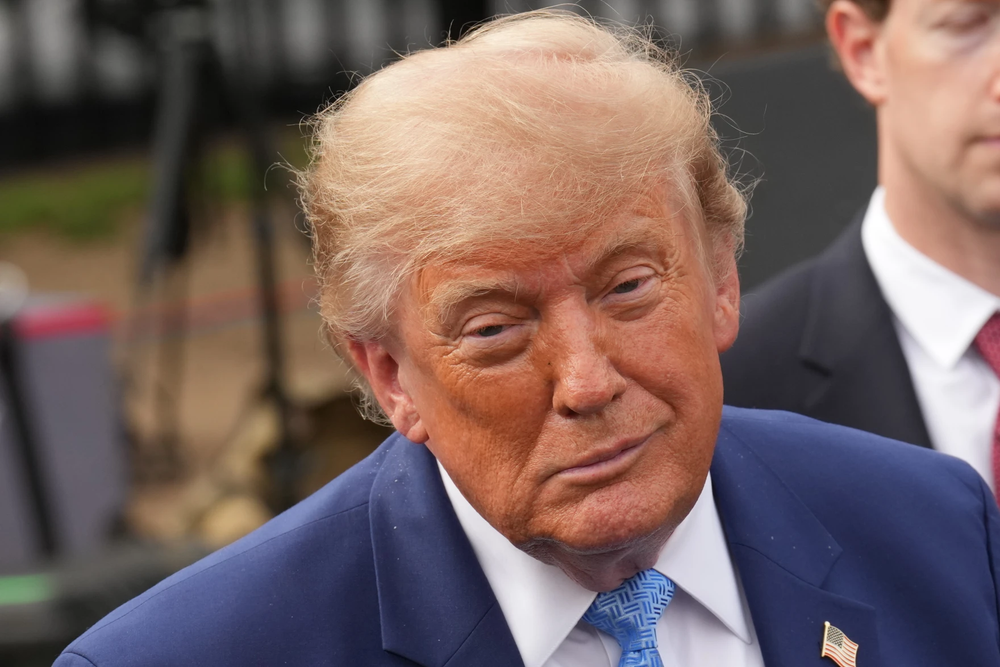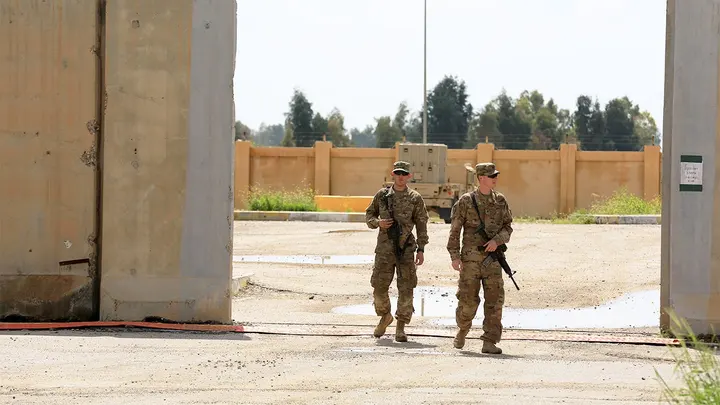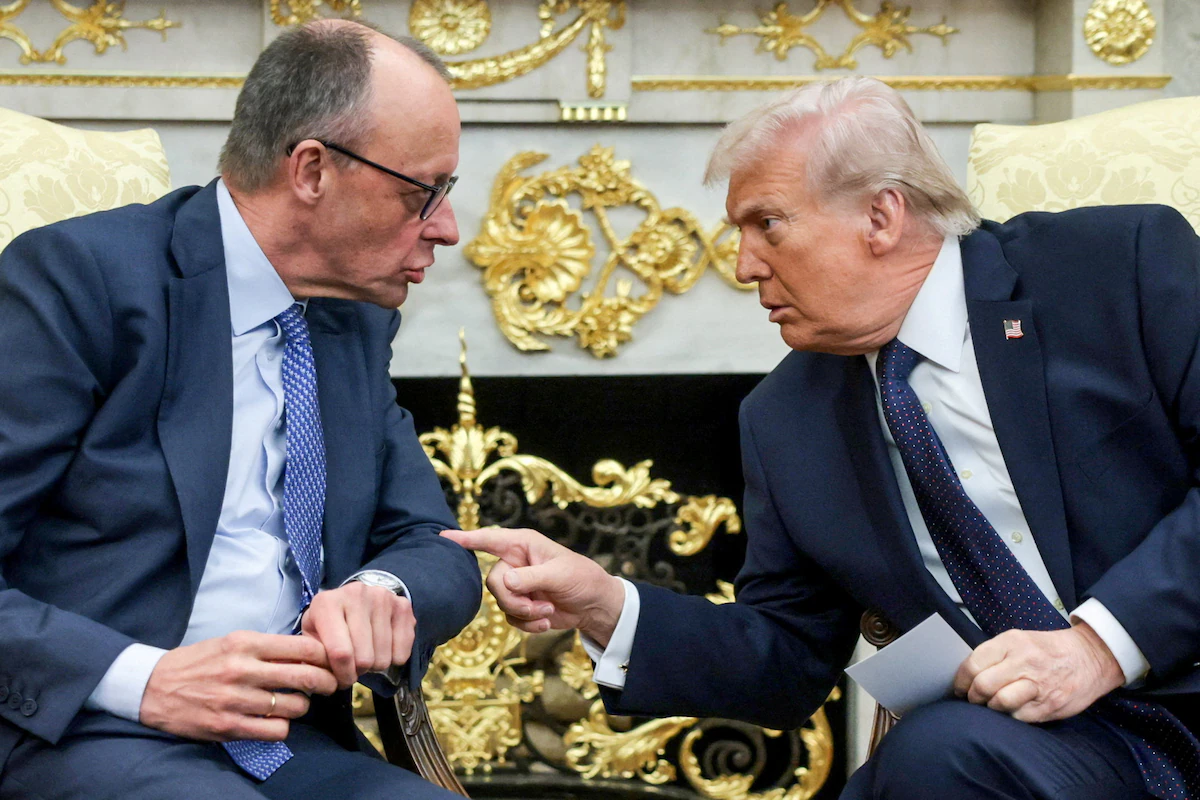
The Pentagon on Friday announced that the United States will withdraw approximately 5,000 troops from Germany over the next six to twelve months, ending a week of escalating personal and political conflict between President Donald Trump and German Chancellor Friedrich Merz over the U.S.-Israeli war in Iran.
Pentagon chief spokesman Sean Parnell said the order was issued by Secretary of War Pete Hegseth following what he described as a "thorough review of the Department's force posture in Europe." The withdrawal will affect roughly 14 percent of the 36,436 active-duty American service members stationed in Germany as of December 31, 2025 — the largest U.S. military presence in Europe and the second largest U.S. troop deployment in any foreign country, behind only Japan.
"This decision follows a thorough review of the Department's force posture in Europe and is in recognition of theater requirements and conditions on the ground," Parnell said in a statement. "We expect the withdrawal to be completed over the next six to twelve months."
A senior Defense Department official, speaking on condition of anonymity under ground rules set by the administration, was less measured. The official described Merz's recent remarks as "inappropriate and unhelpful" and said the planned withdrawal aligned with the Trump administration's broader pivot away from Europe and toward the Western Hemisphere and the Indo-Pacific. "We've urged them to take a practical, businesslike approach to building a Europe-led NATO," the official said. "They didn't take that advice, and this is the result."
The trigger
The decision came four days after Merz, speaking to high school students at the Carolus-Magnus-Gymnasium in Marsberg on Monday, delivered the most direct public criticism of the Iran war from any major European leader.
"The Iranians are obviously very skilled at negotiating, or rather, very skillful at not negotiating, letting the Americans travel to Islamabad and then leave again without any result," Merz said. "An entire nation is being humiliated by the Iranian leadership, especially by these so-called Revolutionary Guards."
He went further on the question of strategy. "The Americans clearly have no strategy, and the problem with conflicts like this is always that you don't just have to go in; you also have to get out again."
Trump responded on Truth Social on Wednesday, writing that the administration was "studying and reviewing" a possible troop reduction in Germany. The personal attacks on Merz intensified the next day. "The Chancellor of Germany should spend more time on ending the war with Russia/Ukraine (Where he has been totally ineffective!), and fixing his broken Country, especially Immigration and Energy, and less time on interfering with those that are getting rid of the Iran Nuclear threat, thereby making the World, including Germany, a safer place!" Trump wrote.
In a separate post, Trump said Merz "thinks it's OK for Iran to have a Nuclear Weapon. He doesn't know what he's talking about!"
Asked Thursday whether he might extend the punitive approach to other allies, Trump did not equivocate. "Yeah, probably, I probably will. Why shouldn't I?" he told reporters in the Oval Office, naming Italy and Spain. "Italy has not been of any help to us, and Spain has been horrible. Absolutely horrible." Italy currently hosts approximately 12,662 U.S. service members; Spain hosts 3,814.
What is being pulled — and what stays
The withdrawal targets an Army brigade combat team already deployed in Germany and a long-range fires battalion that had been scheduled to arrive later this year. Additional units may follow, the senior defense official indicated. A standard infantry brigade combat team consists of between 3,000 and 5,000 personnel.
Pentagon officials have not yet specified how many U.S. troops will remain in Germany or in Europe more broadly once the withdrawal is complete. Roughly 80,000 to 100,000 U.S. personnel rotate through European bases at any given time, depending on exercises and operational tempo. The reduction would return American force levels in Europe to roughly where they stood before Russia's full-scale invasion of Ukraine in February 2022, after which the Biden administration surged additional forces to the continent to deter further Russian action.
Several major German installations will continue to operate. Ramstein Air Base, the largest U.S. Air Force facility in Europe and a critical hub for arms shipments to Ukraine, is not affected. Neither are the headquarters of U.S. European Command and U.S. Africa Command, both based in Stuttgart, nor the Landstuhl Regional Medical Center, which has treated American casualties from every overseas conflict since the 1950s. U.S. nuclear weapons stationed at Büchel Air Base remain in place.
Germany's Foreign Minister Johann Wadephul, speaking from Morocco on Thursday, said Berlin was "prepared" for a reduction in U.S. troops and was "discussing it closely and in a spirit of trust in all NATO bodies." He drew a clear line, however: "Large American bases in Germany are not up for discussion at all," citing Ramstein's "irreplaceable function for the United States and for us alike."
Domestic and congressional reaction
The withdrawal is likely to face resistance on Capitol Hill. Under language inserted into recent National Defense Authorization Acts, the Pentagon must submit a detailed plan to Congress before reducing the number of U.S. service members in Europe below 76,000. When the Pentagon withdrew a brigade from Romania last fall, Senate Armed Services Committee Chairman Roger Wicker, a Mississippi Republican, and House Armed Services Committee Chairman Mike D. Rogers, an Alabama Republican, issued a rare joint statement opposing the decision.
"We will not accept significant changes to our warfighting structure that are made without a rigorous interagency process," Wicker and Rogers wrote at the time. It was not immediately clear whether Friday's announcement would meet the statutory threshold to require formal notification.
Senator Jack Reed of Rhode Island, the ranking Democrat on the Senate Armed Services Committee, called for an immediate reversal. "Withdrawing thousands of American troops from one of our most important strategic positions in the middle of a war is a serious mistake that will reverberate well beyond this moment," Reed said in a statement. "Weakening our military footprint in Europe at a time when Russian forces continue to mercilessly attack Ukraine and harass our NATO allies is a priceless gift to Vladimir Putin and suggests American commitments to our allies are dependent on the president's mood."
The withdrawal also lands at a particularly sensitive moment for U.S.-NATO logistics. Washington has warned several European allies — including the United Kingdom, Poland, Estonia, and Lithuania — to expect significant delays in arms shipments as the Iran war continues to drain American munitions stockpiles. The depletion has raised parallel concerns about the supply pipeline to Ukraine.
Historical context and the broader pattern
The U.S. military presence in Germany dates to 1945 and reflects the post-war division of Europe and the long Cold War standoff with the Soviet Union. American troop levels in West Germany peaked at roughly 250,000 during the late 1980s before steady reductions following the fall of the Berlin Wall.
This is not Trump's first attempt to reduce that footprint. During his first term in 2020, he announced plans to withdraw approximately 9,500 of the roughly 34,500 U.S. troops then stationed in Germany, citing what he described as Berlin's failure to meet NATO's 2 percent of GDP defense spending benchmark. The plan was never formally executed and was halted by President Joe Biden after he took office in January 2021.
The current withdrawal is meaningfully different in two respects. First, it is being executed rather than threatened — the Pentagon has issued the order and identified the units. Second, it is explicitly framed by senior administration officials as a response to Berlin's posture on the Iran war rather than to longer-running disputes over defense spending. Germany has, in fact, been increasing its defense outlays sharply in recent years, including unveiling its first-ever national military strategy that envisions the country becoming Europe's strongest conventional fighting force by 2039. German Chief of Defense Gen. Carsten Breuer met with senior Trump administration officials in Washington just last week and reported that he had encountered "a great appreciation" for the strategy.
How the withdrawal interacts with two other unresolved questions — Trump's broader posture toward NATO, and the U.S. ammunition pipeline to Ukraine — will shape the next several months of transatlantic diplomacy. The Trump administration has signaled that further reductions in U.S. troop levels in Europe remain on the table, particularly for allies the president has identified as insufficiently supportive of his Iran policy. Whether those signals translate into additional executed withdrawals or remain at the level of public pressure is the central question now facing European capitals.
Author

We cover the world’s chaos so you don’t have to scroll twelve feeds to understand it.
Sign up for Atlas newsletters.
Stay up to date with curated collection of our top stories.