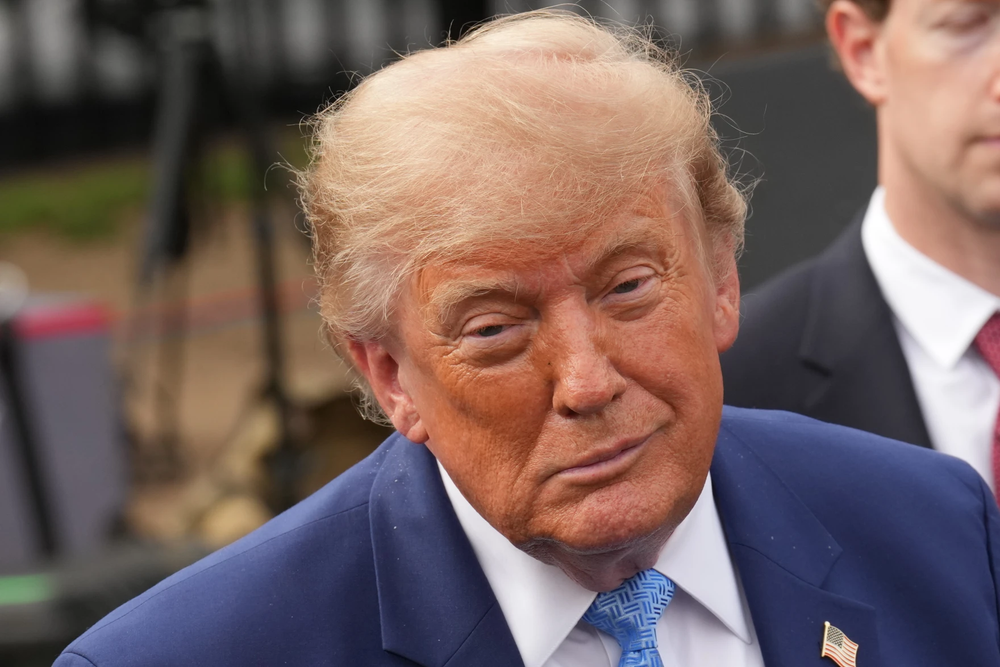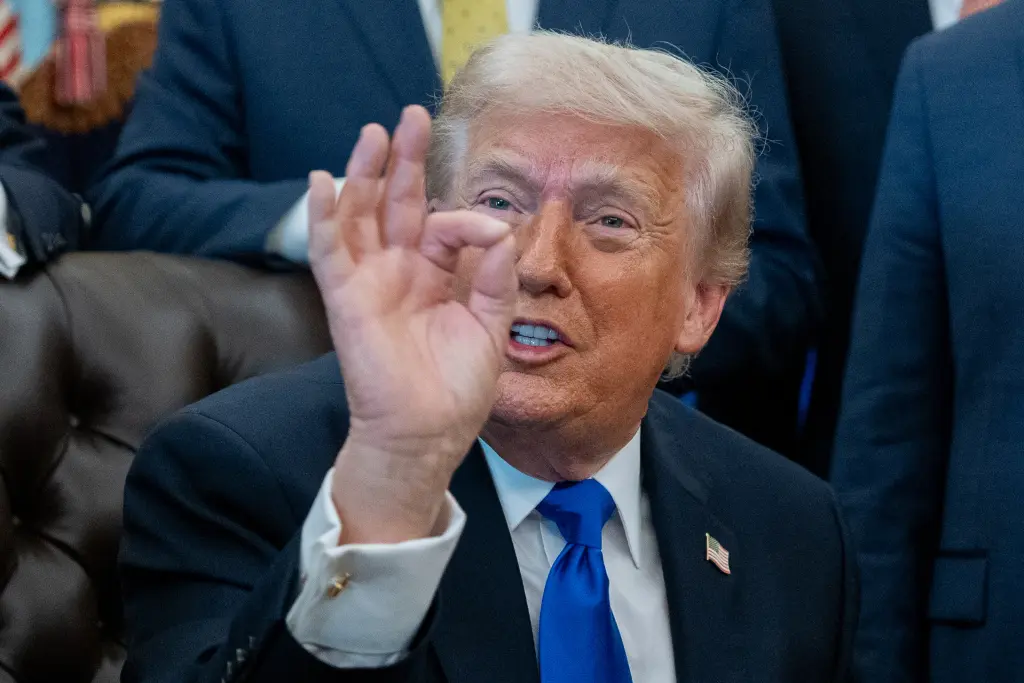
President Donald Trump announced Friday that the United States will raise tariffs on cars and trucks imported from the European Union to 25 percent next week, accusing the bloc of failing to comply with the trade framework signed last summer at his Turnberry resort in Scotland. The decision will jolt a transatlantic relationship already strained by the Iran war, the U.S. troop withdrawal from Germany announced the same week, and an unresolved dispute over the legal authority underpinning much of the Trump administration's tariff regime.
"Based on the fact the European Union is not complying with our fully agreed to Trade Deal, next week I will be increasing Tariffs charged to the European Union for Cars and Trucks coming into the United States," Trump wrote on Truth Social. "It is fully understood and agreed that, if they produce Cars and Trucks in U.S.A. Plants, there will be NO TARIFF."
Speaking to reporters before departing the White House for Florida, Trump said the higher tariffs were intended to compress the timeline for European automakers to relocate production. "We have a trade deal with the European Union. They were not adhering to it," he said. "So I raised the tariffs on cars and trucks to 25 percent, that's billions of dollars coming into the United States, and it forces them to move their factory production much faster."
Trump did not specify which day next week the new rate would take effect, nor did he immediately identify the legal authority under which it would be imposed. The White House later indicated that the increase would be executed under Section 232 of the Trade Expansion Act of 1962, which allows duties on national-security grounds — a different statutory basis from the International Emergency Economic Powers Act that the Supreme Court struck down in February.
The Turnberry framework
The new rate effectively unwinds the central concession the EU received in last July's bilateral trade deal. Under the framework — signed at Trump's Turnberry golf course and named for it — the United States lowered Section 232 tariffs on EU-built vehicles from 27.5 percent to 15 percent, retroactive to August 1, 2025. In return, the EU agreed to eliminate duties on U.S. industrial goods, including American-built automobiles, accept U.S. safety and emissions standards on certain vehicle categories, and commit to substantial U.S. energy purchases and investment.
The 15 percent rate was projected to save European automakers between 500 million and 600 million euros per month — roughly $585 million to $700 million at current exchange rates. Total EU-U.S. trade in goods and services reached 1.7 trillion euros, or about $2 trillion, in 2024, averaging some 4.6 billion euros per day, according to figures from EU statistics agency Eurostat.
Implementation of the EU side of the bargain has lagged behind the American side. The European Parliament conditionally advanced enabling legislation in late March of this year, but with several built-in safeguard clauses — a "sunrise" provision tying EU concessions to verified U.S. compliance, a suspension mechanism if Washington imposes new tariffs, and a 2028 sunset date. Final passage is expected in June.
That delay appears to be central to Trump's complaint. A Trump administration official, asked to explain the move, said simply: "The EU has not complied with the autos deal after eight months." Kelly Ann Shaw, a top trade adviser to Trump during his first term and now a partner at Akin Gump Strauss Hauer & Feld, argued the rupture was foreseeable. "The U.S. effectively implemented the Turnberry agreement as of August, and we're nearly a year later and we have yet to see the EU cut a single tariff," she said.
The Supreme Court's February ruling complicated matters further. The 6-3 majority found that IEEPA "does not authorize the President to impose tariffs," vacating much of the broader reciprocal tariff regime that had served as the backdrop for the Turnberry negotiations. The administration responded by imposing a 10 percent baseline tariff under Section 122 of the Trade Act of 1974 — a statute that comes with a 150-day time limit — and is now leaning on Section 232 and Section 301 investigations to rebuild a tariff structure on different legal footing.
Brussels rejects the premise
The European Commission rejected Trump's characterization within hours. A spokesperson said the bloc "remains fully committed to a predictable, mutually beneficial transatlantic relationship" and is implementing its commitments "in line with standard legislative practice." The commission added that it "will keep our options open to protect EU interests" should the United States breach the agreement's terms.
Bernd Lange, chair of the European Parliament's international trade committee, was sharper. "President Trump's behavior is unacceptable," he said. "This latest move demonstrates just how unreliable the U.S. side is. We have already witnessed these arbitrary attacks from the U.S. in the case of Greenland; this is no way to treat close partners. Now we can only respond with the utmost clarity and firmness, drawing on the strength of our position."
The German auto industry, which absorbs the largest share of any EU country in U.S. tariff exposure, was equally direct. Hildegard Mueller, president of Germany's VDA auto association, urged both sides to honor the existing framework and warned of substantial cost pass-through to American consumers. Marcel Fratzscher, president of the DIW economic institute in Berlin, called for retaliatory tariffs and a digital services tax targeting U.S. technology companies. "The German government and the European Commission must now finally show some backbone and stand up to Trump," he said. "Only that can prevent a continuing escalation."
Brussels has parallel tracks running. The same week Trump's announcement landed, the EU brought its long-negotiated Mercosur trade deal into provisional effect, creating one of the world's largest free-trade zones with roughly 720 million potential consumers across South America. The timing was not coincidental: the EU has accelerated several pacts over the past year, with India, Mexico, and others, partly to offset Trump-era volatility.
Market reaction
Equity markets responded immediately. Shares of Ford fell as much as 2.4 percent on the New York Stock Exchange after the announcement, with Stellantis dropping as much as 3.3 percent and General Motors falling 1.5 percent. Ferrari shares declined on the news as well. The S&P 500 futures cascaded lower in the minutes after Trump's Truth Social post.
The European automakers most exposed to the change are Mercedes-Benz, BMW, and Volkswagen, all of which import a significant share of the vehicles they sell in the United States from European plants. Mercedes-Benz announced in March that it would invest $4 billion in its Tuscaloosa, Alabama, facility through 2030, with $7 billion in total U.S. investment planned. The company is in the process of shifting production of its GLC sport-utility vehicle from Germany to Alabama. It reported in February that group operating profit was more than halved to 5.8 billion euros — about $6.9 billion — in part due to 1 billion euros in tariff costs absorbed during the transition period.
Jennifer Safavian, CEO of Autos Drive America, which represents the U.S. operations of foreign automakers, said the increase "would threaten the progress that has already been made to open EU markets and grow the U.S. auto industry."
Industry analysts at Cato Institute and elsewhere flagged a structural concern: that the durability of any Trump-era trade agreement is in question. "These trade deals are vaporware," said Scott Lincicome of Cato's Center for Trade Policy Studies. "They all rely on handshakes and winks and hopes that Trump doesn't get mad about something."
The political and geopolitical context
The tariff escalation arrived in the same news cycle as two other significant transatlantic actions. The Pentagon announced earlier Friday that Secretary of War Pete Hegseth had ordered the withdrawal of approximately 5,000 U.S. troops from Germany over the next six to twelve months, a move that senior defense officials linked publicly to recent comments from German Chancellor Friedrich Merz about U.S. strategy in the Iran war. On Wednesday, Trump posted that he was "studying and reviewing" troop reductions in Germany, and on Thursday he said he might also pull forces from Italy and Spain over those countries' Iran war positions.
Inflation domestically is also rising. The annual Consumer Price Index reached 3.3 percent in March, above the level Trump inherited, and AP-NORC polling shows just 30 percent of U.S. adults approve of his handling of the economy. Higher tariffs on European autos would feed directly into that figure, particularly given limited near-term substitution options. The Trump administration has pointed to more than $100 billion in announced or under-construction U.S. auto plant investments — many from European, Japanese, Korean, Canadian, and Mexican manufacturers — as evidence that the strategy is producing onshoring effects.
The European response will not arrive immediately, but the EU's safeguard mechanisms in the Turnberry implementing legislation give it some pre-positioned tools. The bloc could suspend its own tariff cuts, accelerate a digital services tax that has been the subject of separate U.S. tariff threats, or activate retaliatory measures on U.S. agricultural and consumer goods. Whether Brussels reaches for those tools will likely depend on whether Trump's next-week announcement of the new 25 percent rate is accompanied by additional escalations, as several officials in Berlin and Brussels are now openly anticipating.
The administration, in the meantime, has signaled it is comfortable with the friction. "We've urged them to take a practical, businesslike approach to building a Europe-led NATO," a senior Pentagon official said earlier in the day. "They didn't take that advice, and this is the result." Whether the auto tariff escalation produces a similar response from Brussels — or a deal — is now the central transatlantic economic question for the next several weeks.President Donald Trump announced Friday that the United States will raise tariffs on cars and trucks imported from the European Union to 25 percent next week, accusing the bloc of failing to comply with the trade framework signed last summer at his Turnberry resort in Scotland. The decision will jolt a transatlantic relationship already strained by the Iran war, the U.S. troop withdrawal from Germany announced the same week, and an unresolved dispute over the legal authority underpinning much of the Trump administration's tariff regime.
"Based on the fact the European Union is not complying with our fully agreed to Trade Deal, next week I will be increasing Tariffs charged to the European Union for Cars and Trucks coming into the United States," Trump wrote on Truth Social. "It is fully understood and agreed that, if they produce Cars and Trucks in U.S.A. Plants, there will be NO TARIFF."
Speaking to reporters before departing the White House for Florida, Trump said the higher tariffs were intended to compress the timeline for European automakers to relocate production. "We have a trade deal with the European Union. They were not adhering to it," he said. "So I raised the tariffs on cars and trucks to 25 percent, that's billions of dollars coming into the United States, and it forces them to move their factory production much faster."
Trump did not specify which day next week the new rate would take effect, nor did he immediately identify the legal authority under which it would be imposed. The White House later indicated that the increase would be executed under Section 232 of the Trade Expansion Act of 1962, which allows duties on national-security grounds — a different statutory basis from the International Emergency Economic Powers Act that the Supreme Court struck down in February.
The Turnberry framework
The new rate effectively unwinds the central concession the EU received in last July's bilateral trade deal. Under the framework — signed at Trump's Turnberry golf course and named for it — the United States lowered Section 232 tariffs on EU-built vehicles from 27.5 percent to 15 percent, retroactive to August 1, 2025. In return, the EU agreed to eliminate duties on U.S. industrial goods, including American-built automobiles, accept U.S. safety and emissions standards on certain vehicle categories, and commit to substantial U.S. energy purchases and investment.
The 15 percent rate was projected to save European automakers between 500 million and 600 million euros per month — roughly $585 million to $700 million at current exchange rates. Total EU-U.S. trade in goods and services reached 1.7 trillion euros, or about $2 trillion, in 2024, averaging some 4.6 billion euros per day, according to figures from EU statistics agency Eurostat.
Implementation of the EU side of the bargain has lagged behind the American side. The European Parliament conditionally advanced enabling legislation in late March of this year, but with several built-in safeguard clauses — a "sunrise" provision tying EU concessions to verified U.S. compliance, a suspension mechanism if Washington imposes new tariffs, and a 2028 sunset date. Final passage is expected in June.
That delay appears to be central to Trump's complaint. A Trump administration official, asked to explain the move, said simply: "The EU has not complied with the autos deal after eight months." Kelly Ann Shaw, a top trade adviser to Trump during his first term and now a partner at Akin Gump Strauss Hauer & Feld, argued the rupture was foreseeable. "The U.S. effectively implemented the Turnberry agreement as of August, and we're nearly a year later and we have yet to see the EU cut a single tariff," she said.
The Supreme Court's February ruling complicated matters further. The 6-3 majority found that IEEPA "does not authorize the President to impose tariffs," vacating much of the broader reciprocal tariff regime that had served as the backdrop for the Turnberry negotiations. The administration responded by imposing a 10 percent baseline tariff under Section 122 of the Trade Act of 1974 — a statute that comes with a 150-day time limit — and is now leaning on Section 232 and Section 301 investigations to rebuild a tariff structure on different legal footing.
Brussels rejects the premise
The European Commission rejected Trump's characterization within hours. A spokesperson said the bloc "remains fully committed to a predictable, mutually beneficial transatlantic relationship" and is implementing its commitments "in line with standard legislative practice." The commission added that it "will keep our options open to protect EU interests" should the United States breach the agreement's terms.
Bernd Lange, chair of the European Parliament's international trade committee, was sharper. "President Trump's behavior is unacceptable," he said. "This latest move demonstrates just how unreliable the U.S. side is. We have already witnessed these arbitrary attacks from the U.S. in the case of Greenland; this is no way to treat close partners. Now we can only respond with the utmost clarity and firmness, drawing on the strength of our position."
The German auto industry, which absorbs the largest share of any EU country in U.S. tariff exposure, was equally direct. Hildegard Mueller, president of Germany's VDA auto association, urged both sides to honor the existing framework and warned of substantial cost pass-through to American consumers. Marcel Fratzscher, president of the DIW economic institute in Berlin, called for retaliatory tariffs and a digital services tax targeting U.S. technology companies. "The German government and the European Commission must now finally show some backbone and stand up to Trump," he said. "Only that can prevent a continuing escalation."
Brussels has parallel tracks running. The same week Trump's announcement landed, the EU brought its long-negotiated Mercosur trade deal into provisional effect, creating one of the world's largest free-trade zones with roughly 720 million potential consumers across South America. The timing was not coincidental: the EU has accelerated several pacts over the past year, with India, Mexico, and others, partly to offset Trump-era volatility.
Market reaction
Equity markets responded immediately. Shares of Ford fell as much as 2.4 percent on the New York Stock Exchange after the announcement, with Stellantis dropping as much as 3.3 percent and General Motors falling 1.5 percent. Ferrari shares declined on the news as well. The S&P 500 futures cascaded lower in the minutes after Trump's Truth Social post.
The European automakers most exposed to the change are Mercedes-Benz, BMW, and Volkswagen, all of which import a significant share of the vehicles they sell in the United States from European plants. Mercedes-Benz announced in March that it would invest $4 billion in its Tuscaloosa, Alabama, facility through 2030, with $7 billion in total U.S. investment planned. The company is in the process of shifting production of its GLC sport-utility vehicle from Germany to Alabama. It reported in February that group operating profit was more than halved to 5.8 billion euros — about $6.9 billion — in part due to 1 billion euros in tariff costs absorbed during the transition period.
Jennifer Safavian, CEO of Autos Drive America, which represents the U.S. operations of foreign automakers, said the increase "would threaten the progress that has already been made to open EU markets and grow the U.S. auto industry."
Industry analysts at Cato Institute and elsewhere flagged a structural concern: that the durability of any Trump-era trade agreement is in question. "These trade deals are vaporware," said Scott Lincicome of Cato's Center for Trade Policy Studies. "They all rely on handshakes and winks and hopes that Trump doesn't get mad about something."
The political and geopolitical context
The tariff escalation arrived in the same news cycle as two other significant transatlantic actions. The Pentagon announced earlier Friday that Secretary of War Pete Hegseth had ordered the withdrawal of approximately 5,000 U.S. troops from Germany over the next six to twelve months, a move that senior defense officials linked publicly to recent comments from German Chancellor Friedrich Merz about U.S. strategy in the Iran war. On Wednesday, Trump posted that he was "studying and reviewing" troop reductions in Germany, and on Thursday he said he might also pull forces from Italy and Spain over those countries' Iran war positions.
Inflation domestically is also rising. The annual Consumer Price Index reached 3.3 percent in March, above the level Trump inherited, and AP-NORC polling shows just 30 percent of U.S. adults approve of his handling of the economy. Higher tariffs on European autos would feed directly into that figure, particularly given limited near-term substitution options. The Trump administration has pointed to more than $100 billion in announced or under-construction U.S. auto plant investments — many from European, Japanese, Korean, Canadian, and Mexican manufacturers — as evidence that the strategy is producing onshoring effects.
The European response will not arrive immediately, but the EU's safeguard mechanisms in the Turnberry implementing legislation give it some pre-positioned tools. The bloc could suspend its own tariff cuts, accelerate a digital services tax that has been the subject of separate U.S. tariff threats, or activate retaliatory measures on U.S. agricultural and consumer goods. Whether Brussels reaches for those tools will likely depend on whether Trump's next-week announcement of the new 25 percent rate is accompanied by additional escalations, as several officials in Berlin and Brussels are now openly anticipating.
The administration, in the meantime, has signaled it is comfortable with the friction. "We've urged them to take a practical, businesslike approach to building a Europe-led NATO," a senior Pentagon official said earlier in the day. "They didn't take that advice, and this is the result." Whether the auto tariff escalation produces a similar response from Brussels — or a deal — is now the central transatlantic economic question for the next several weeks.
Author

We cover the world’s chaos so you don’t have to scroll twelve feeds to understand it.
Sign up for Atlas newsletters.
Stay up to date with curated collection of our top stories.