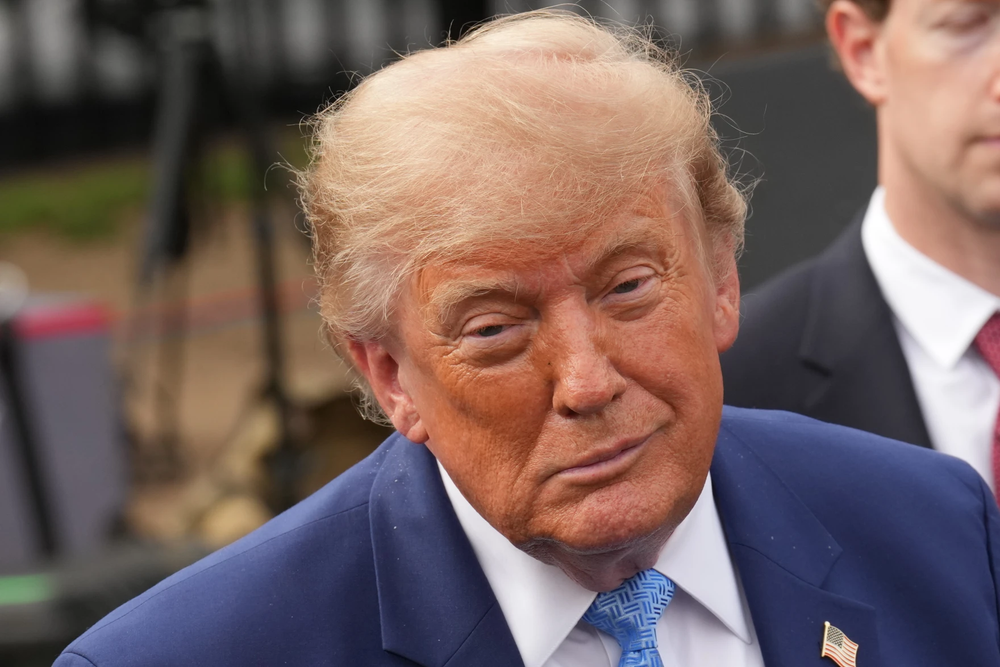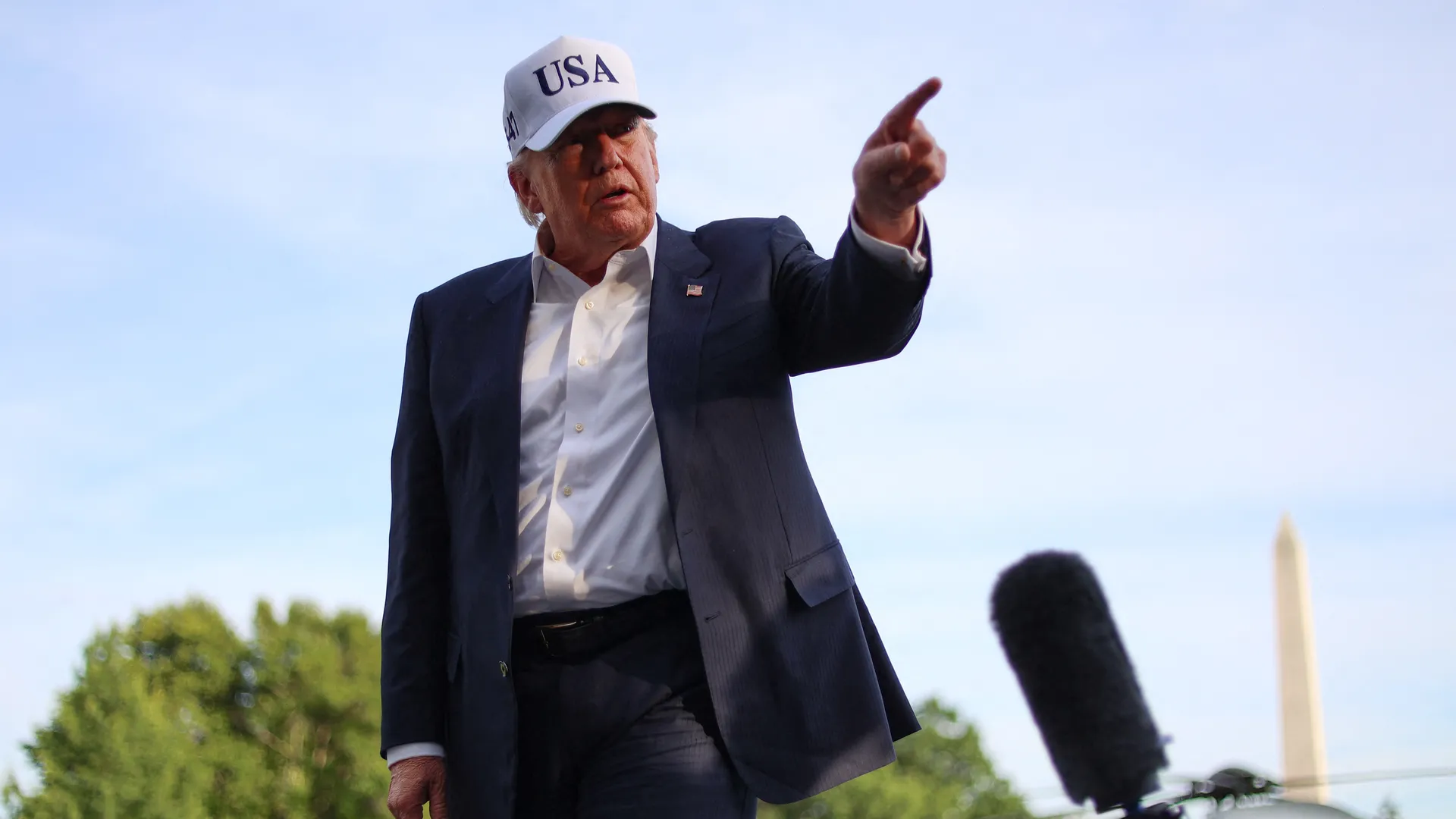
President Donald Trump said Monday he was holding off on a planned U.S. military strike against Iran scheduled for Tuesday, telling the public he would give a new round of negotiations a chance to produce a deal.
"I have been asked by the Emir of Qatar, the Crown Prince of Saudi Arabia and the President of the United Arab Emirates to hold off on our planned Military attack of the Islamic Republic of Iran, which was scheduled for tomorrow," Trump wrote on Truth Social. He said the Gulf leaders had told him "serious negotiations are now taking place" and that a deal "very acceptable to the United States" was in reach.
Trump said he had instructed Defense Secretary Pete Hegseth and Joint Chiefs Chairman Gen. Dan Caine to suspend the attack plans but to remain ready to move "with a full, large scale assault of Iran, on a moment's notice, in the event that an acceptable Deal is not reached."
Speaking later at the White House, Trump described the pause as a reprieve of "two or three days." Negotiators have fallen short before, he said. "There seems to be a very good chance that they can work something out. If we can do that without bombing the hell out of them, I would be very happy."
The war the United States and Israel opened on February 28 has been on an indefinite ceasefire for roughly six weeks. Trump has extended deadlines and postponed planned strikes at least half a dozen times since the conflict began.
The Arab Intervention
The decision followed phone calls with the leaders of Saudi Arabia, Qatar, and the UAE in the 24 hours before Trump's announcement. According to U.S. officials, the three governments delivered what one described as "a unified message from Doha, Abu Dhabi, and Riyadh" — give negotiations a chance, because if the United States hits Iran, every Gulf state will pay the cost.
A second source familiar with the talks said Trump told some of his more hawkish allies that the Arab leaders specifically warned him "they don't want their oil and energy facilities blown up" if Tehran retaliates.
The warning is grounded in recent events. A drone struck the United Arab Emirates' Barakah Nuclear Energy Plant on Sunday, causing a fire on the perimeter but no casualties. Iran has not claimed responsibility, but UAE diplomatic adviser Anwar Gargash pointed at Tehran and its proxies. The UAE has accused Iran of at least two other attacks on its territory this month, including a missile and drone barrage that set fire to an oil refinery in Fujairah.
Tehran Responds
Iran confirmed it had sent a revised peace proposal to Washington through Pakistan, the official mediator. Foreign Ministry spokesman Esmaeil Baqaei said Tehran's "concerns" had been conveyed.
Iranian President Masoud Pezeshkian, considered a moderate within a system increasingly dominated by hardline figures since the start of the war, framed the talks as a position of strength. "Dialogue does not mean surrender," he wrote on X. "The Islamic Republic of Iran enters into dialogue with dignity, authority, and the preservation of the nation's rights, and will under no circumstances retreat from the legal rights of the people and the country."
Iran's top joint military command, Khatam al-Anbiya, struck a different tone. Its commander, Ali Abdollahi, told the Tasnim news agency that the armed forces are "ready to pull the trigger" if the United States resumes the campaign. "Any renewed aggression and invasion will be responded to quickly, decisively, powerfully, and extensively," he said.
Pezeshkian also acknowledged the economic toll. "We will definitely have inflation," he said in a speech Monday. "We are fighting, and we must accept the hardship that comes with it."
What's on the Table
The Iranian proposal — broadly similar to the one Trump dismissed last week as "garbage," a senior Iranian source said — would focus first on ending the war, reopening the Strait of Hormuz, lifting U.S. maritime sanctions, and halting Israel's campaign in Lebanon. Tehran wants the contentious nuclear and uranium enrichment questions deferred to later rounds.
The same Iranian source said Washington had moved on two points. The U.S. now appears willing to release a quarter of Iran's frozen funds — tens of billions of dollars held in foreign banks — and to permit Iran to continue some peaceful nuclear activity under International Atomic Energy Agency supervision. Iran wants all of its assets released. American officials have not publicly confirmed either concession. A U.S. official also dismissed a separate Tasnim report that Washington had agreed to waive oil sanctions during the negotiating period as "false."
A Pakistani source involved in shuttling messages between the two sides described progress as difficult. The two sides "keep changing their goalposts," the source said. "We don't have much time."
On the ground, Iran has continued to tighten its hold on the Strait of Hormuz. The newly created Persian Gulf Strait Authority is now issuing real-time updates and treating passage through the waterway without authorization as illegal. Iran is also in talks with Oman over a joint mechanism to direct shipping through the strait. U.S. Central Command said its naval blockade of Iranian ports, in place since April 13, has turned away 84 ships.
Pressure at Home and Abroad
Trump is balancing the diplomacy against political pressure at home. Sen. Lindsey Graham, a South Carolina Republican and one of the most hawkish voices on the war, lobbied Trump on Monday to go forward with the strikes. "We must finish what we started," he posted on X, calling for "a short but forceful response now" to "reset the conflict in all the right ways."
The polling is moving the other way. A New York Times/Siena survey released Monday found 63 percent of voters believe going to war was the wrong choice, including roughly three-quarters of independents. Seventy percent of Republicans still back the decision. Trump's overall approval stood at 37 percent — a 4-point drop since January.
The war has also reached the gas pump. Brent crude touched $110 a barrel on Monday. The average U.S. price of a gallon of regular was about $4.52, up 52 percent since February 28.
European governments have urged both sides to settle. German Chancellor Friedrich Merz posted Monday that "Iran must enter into serious negotiations with the USA, stop threatening its neighbors, and open the Strait of Hormuz without restrictions." For now, the next move is Iran's. Trump has signaled that the reprieve is short.
Author

We cover the world’s chaos so you don’t have to scroll twelve feeds to understand it.
Sign up for Atlas newsletters.
Stay up to date with curated collection of our top stories.