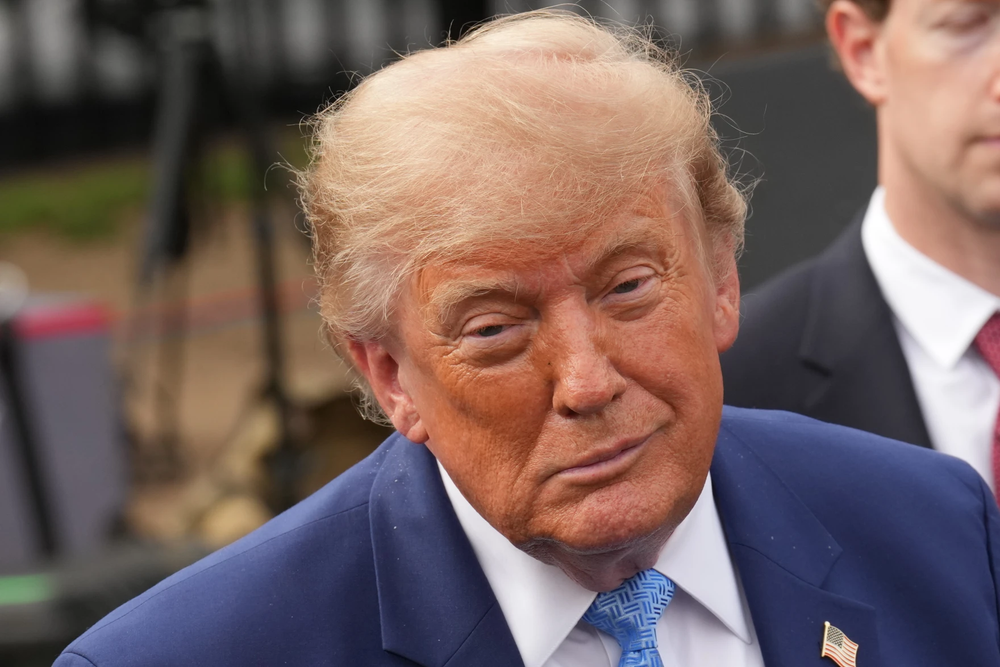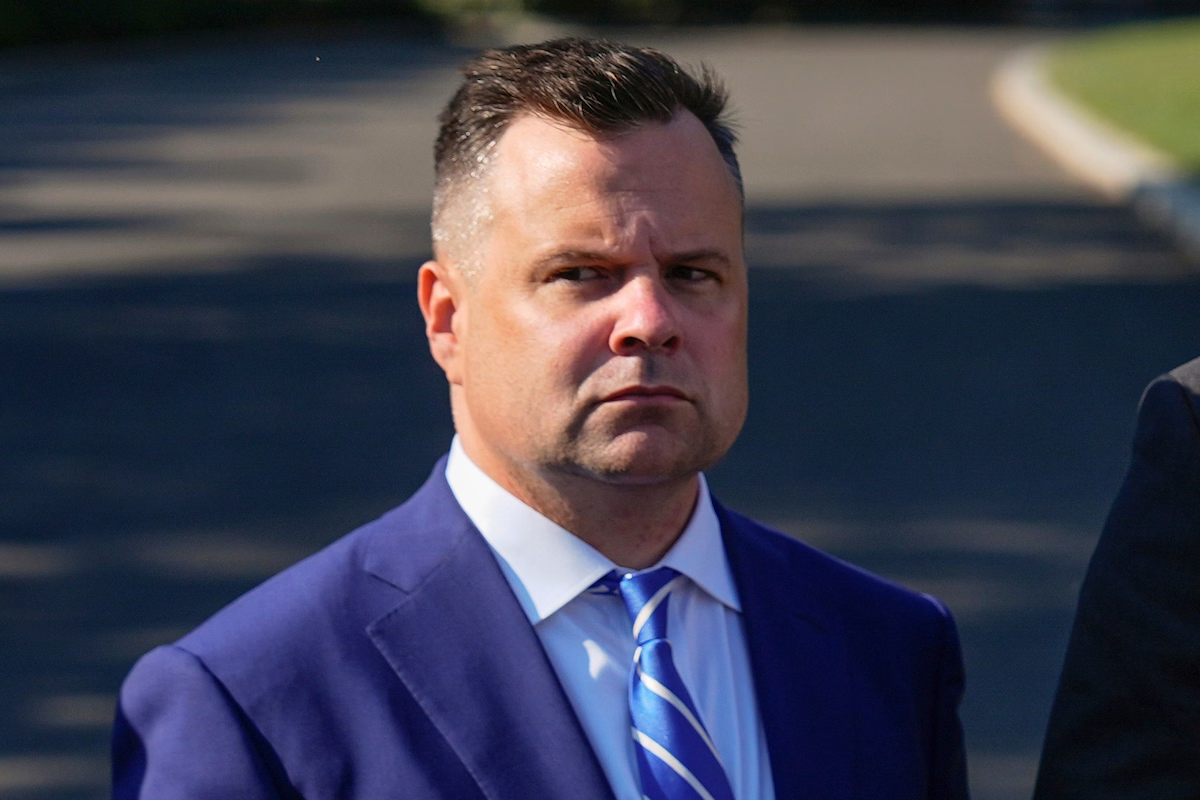
President Donald Trump on Tuesday named Federal Housing Finance Agency Director Bill Pulte as the acting director of national intelligence, elevating one of his most aggressive political allies to the head of the U.S. intelligence apparatus and bypassing the deputy who had been previously designated to take the role.
Trump announced the move on Truth Social, framing Pulte's experience overseeing the federal housing finance regulator and the government-sponsored mortgage entities Fannie Mae and Freddie Mac as relevant to the intelligence portfolio. "William has deep experience managing the most sensitive matters in America, the safety and soundness of the Markets, and over 10 Trillion Dollars at Fannie Mae/Freddie Mac, a substantial increase from where it was just 12 months ago," Trump wrote. He added that Pulte would retain both his FHFA directorship and his chairmanship of Fannie Mae and Freddie Mac while taking on the intelligence role.
The pick replaces Tulsi Gabbard, who announced her resignation last month to focus on her husband Abraham's treatment for a rare form of bone cancer. Gabbard's last day in the role is June 30. Trump had previously said Aaron Lukas, the principal deputy director of national intelligence, would step into the position as acting director after Gabbard's departure. Tuesday's announcement reversed that plan. Pulte, 38, has no prior experience in intelligence or national security work; under the Federal Vacancies Reform Act, he can serve as acting director for 210 days from the start of the vacancy, putting his maximum tenure at January 26, 2027.
The FHFA Record and the Criminal Referrals
Pulte, the grandson of the founder of homebuilder PulteGroup, was confirmed to lead the FHFA in March 2025 by a Senate vote of 56-43. The role normally carries a low public profile. Pulte has used it to issue criminal referrals against several high-profile political opponents of the president for alleged mortgage fraud.
The most prominent referrals targeted New York Attorney General Letitia James, Sen. Adam Schiff of California, former Rep. Eric Swalwell of California, and Federal Reserve Governor Lisa Cook. None have resulted in a conviction. The case against James was dismissed in November after a federal judge concluded that the interim U.S. attorney who brought the indictment, a former Trump lawyer, had been invalidly appointed; a grand jury subsequently declined to reindict her. Cook remains in her seat at the Federal Reserve after Trump cited Pulte's findings to attempt to remove her, with her appeal pending before the Supreme Court. Lawyers for all four officials have denied any wrongdoing.
Cook's attorney has accused Pulte of pursuing the fraud allegations on a partisan basis and refusing to investigate similar allegations against Republicans. Pulte has said publicly that at least one of his criminal referrals involved a Republican official but has not identified the individual.
The Government Accountability Office, a nonpartisan congressional watchdog, confirmed in December that it was investigating the FHFA's mortgage fraud referral procedures and any recent changes to that process. The office said Tuesday that it expected to publish its findings in late 2026 or early 2027.
Pulte has also clashed publicly with other senior figures across the administration. In September, Politico reported that Treasury Secretary Scott Bessent had threatened to punch Pulte at a private dinner after learning that Pulte had been criticizing him to the president. Pulte was also an aggressive critic of then-Federal Reserve Chair Jerome Powell during the central bank's interest rate decisions earlier in the year.
Senate Republican Skepticism
The Senate Republican reaction to Pulte's selection was notably reserved. Senate Majority Leader John Thune of South Dakota told reporters Tuesday that he was seeking more information about the administration's "current state of thinking" on the position. "We don't need a weaponized DNI, we need professionals there," Thune said. He added that if the White House intended to nominate Pulte for the permanent role, "he's got a lengthy road ahead of him."
Several Republican senators on the Senate Intelligence Committee offered similar reactions. Sen. John Cornyn of Texas, a senior member of the committee, said he saw "no evidence of qualifications for that job." Sen. Susan Collins of Maine said she did not know whether Pulte even held a security clearance. Sen. Bill Cassidy of Louisiana said the pick "doesn't seem qualified," and Sen. Thom Tillis of North Carolina said he had not known Pulte had any national security experience when reviewing his FHFA confirmation. Sen. Tom Cotton of Arkansas, who chairs the committee, declined to comment, saying he had "no observations on the matter."
Vice President JD Vance defended the choice, calling Pulte a "great guy who recognizes that the bureaucracy of the intel community must respond to the elected leadership rather than the other way around." Kevin Hassett, the director of the National Economic Council, called Pulte a "terrific guy" and a "really, really close friend to everybody in the White House."
Democratic Alarm
Democratic lawmakers responded sharply and uniformly. Sen. Mark Warner of Virginia, the ranking member on the Senate Intelligence Committee, said in a statement that Pulte had been chosen "precisely because the White House believes he will provide the narrative it wants, not the intelligence we need." Warner pointed to the statute creating the director of national intelligence after the September 11 attacks, which requires the officeholder to have "extensive national security experience."
Senate Minority Leader Chuck Schumer called Pulte a "partisan thug with no experience in intelligence." Rep. Jim Himes of Connecticut, the top Democrat on the House Intelligence Committee, said Pulte's "sole qualification is unconditional devotion to Donald Trump" and called on the administration to conduct a full security clearance review before allowing him to enter the building.
Sen. Angus King of Maine, an independent who was considered for the DNI position by the Biden administration in 2020, said the appointment "makes no sense" on any objective measure of experience or expertise. Schiff, one of the targets of Pulte's mortgage fraud referrals, said Pulte "politicized and weaponized the housing agencies and will do the same in the intelligence community."
The Role and What Comes Next
The director of national intelligence oversees 18 federal intelligence agencies, including the CIA and the National Security Agency, and serves as the principal intelligence adviser to the president, the National Security Council, and the Homeland Security Council. The position has no operational authority over covert intelligence activities; its influence depends heavily on the relationship between the director and the president.
Pulte inherits the office in the midst of a significant institutional restructuring initiated under Gabbard. Her "ODNI 2.0" initiative reduced the office's workforce by roughly 40 percent, consolidated analytic functions, and according to current and former officials, has narrowed the office's traditional role as a coordinating analytic hub. Several long-running ODNI products, including the quadrennial "Global Trends" report first published in 1997, appear to have been discontinued. A pending report on Anomalous Health Incidents, also known as Havana Syndrome, that Gabbard was reportedly preparing to release before her departure remains under review.
If Trump formally nominates Pulte for the permanent role, the nomination would need to clear the closely divided Senate Intelligence Committee, where opposition from a single Republican could derail it. The administration has not indicated whether it intends to do so.
Author

We cover the world’s chaos so you don’t have to scroll twelve feeds to understand it.
Sign up for Atlas newsletters.
Stay up to date with curated collection of our top stories.