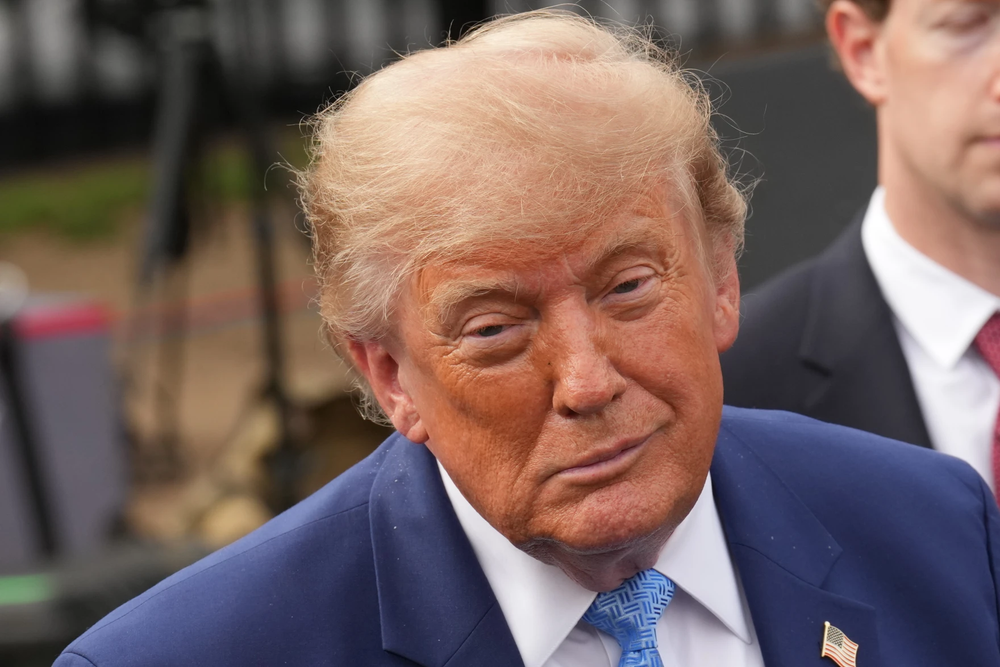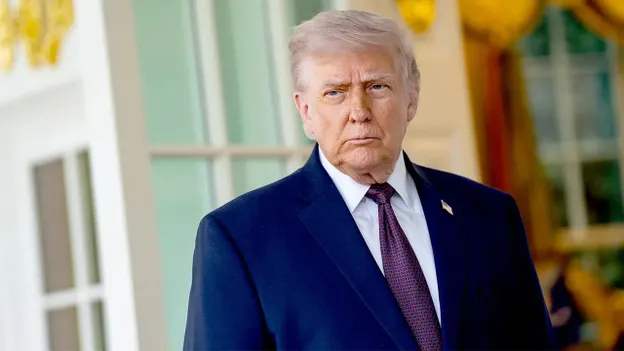
President Donald Trump on Sunday told U.S. negotiators not to rush into a final agreement with Iran, even as regional officials briefed on the talks said the two sides were closing in on a deal that would end the war and reopen the Strait of Hormuz.
In a Truth Social post Sunday, Trump said negotiations were "proceeding in an orderly and constructive manner" but warned that "both sides must take their time and get it right. There can be no mistakes!" He added: "I have informed my representatives not to rush into a deal" and that "time is on our side."
The president made clear the U.S. blockade of Iranian ports would not be eased before a signed agreement. "The Blockade will remain in full force and effect until an agreement is reached, certified, and signed," he wrote. He repeated that Iran "cannot develop or procure a Nuclear Weapon or Bomb."
The pause comes a day after Trump said on Saturday that the agreement to reopen the Strait of Hormuz had been "largely negotiated and subject to finalization." The shift in tone is consistent with the administration's pattern over the past six weeks, in which the two sides have repeatedly appeared near a deal only to falter at the last stage.
Secretary of State Marco Rubio, speaking during a four-day visit to India, said that "significant progress, although not final progress, has been made" in negotiations. Speaking separately to The New York Times, Rubio said: "We're not kicking it till later. Nuclear talks are highly technical matters. You can't do a nuclear thing in 72 hours on the back of a napkin."
The 60-Day Framework
The shape of the emerging deal has come into focus over the weekend. Regional officials briefed on the negotiations said the agreement would extend the existing ceasefire by 60 days, during which the United States and Iran would work out the details of two parallel tracks: the gradual reopening of the Strait of Hormuz and the future of Iran's enriched uranium stockpile.
Under the framework, the strait would reopen step by step as the United States ends its blockade of Iranian ports. Iran would be allowed to sell its oil through sanctions waivers, and discussions over broader sanctions relief and the release of Iran's frozen overseas funds would continue during the 60-day window. A U.S. official confirmed the timeline, adding that if Iran does not surrender its stockpile during that period, sanctions relief will not be granted.
The deal would also formally end the war between Israel and the Iran-backed Lebanese group Hezbollah, which began two days after the strikes on Iran. A U.S. official said the agreement would guarantee Israel's right to act against what it considers imminent threats.
Iranian Foreign Ministry spokesman Esmail Baghaei told state television Iran was finalizing a "memorandum of understanding" that would allow additional negotiations toward a final agreement. He described the gaps between the two sides' positions as "narrowing." Iranian media reported that "one or two" points remain unresolved. Pakistan's Deputy Prime Minister Ishaq Dar, who has been part of the mediation effort, said the recent talks were "grounds for optimism."
The Uranium Question
The central technical question remains what to do with Iran's stockpile of highly enriched uranium. The International Atomic Energy Agency assesses that Iran is holding 440.9 kilograms — about 972 pounds — of uranium enriched to 60 percent purity, a short technical step from the 90 percent purity used in weapons.
Under the emerging deal, two regional officials said, some of the material would be diluted inside Iran while the rest would be transferred to a third country. Russia has offered to take possession of the stockpile as a face-saving exit for Tehran. The precise mechanism would be worked out during the 60-day window.
Iran has not publicly committed to handing over the material. President Masoud Pezeshkian told state television that the country was prepared "to assure the world that we are not after a nuclear weapon," while reiterating Iran's longstanding position that its program is peaceful and that it retains a right to enrich uranium.
Rubio told India Today that the talks would unfold in two phases. The "first stage" is the full reopening of the strait. "The second is that Iran needs to enter into serious negotiations on three topics: their pledge never to have nuclear weapons, restrictions long-term on their enrichment capabilities, and what do you do with the highly enriched uranium?"
Republican Pushback and Israeli Concerns
The contours of the deal have split Republicans on Capitol Hill. Sen. Ted Cruz of Texas described the framework as a "disastrous mistake." Sen. Roger Wicker of Mississippi, the chairman of the Senate Armed Services Committee, said a 60-day ceasefire extension would mean "everything accomplished by Operation Epic Fury would be for naught."
Rep. Mike Lawler of New York, a member of the House Foreign Affairs Committee, took the opposite view, arguing that the administration had managed to "force the remnants of this regime into a negotiation, a real negotiation."
Trump used his Sunday post to defend the diplomatic track against critics within his own party. "If I make a deal with Iran, it will be a good and proper one, not like the one made by Obama, which gave Iran massive amounts of CASH, and a clear and open path to a Nuclear Weapon," he wrote. "Don't listen to the losers, who are critical about something they know nothing about."
Israeli Prime Minister Benjamin Netanyahu spoke with Trump on Saturday about the memorandum and the broader negotiations. Netanyahu's office said the two leaders agreed that any final agreement "must eliminate the nuclear danger" by dismantling Iran's enrichment facilities and removing enriched material from the country. Trump reaffirmed Israel's right to defend itself, including against threats from Lebanon.
Markets and the War Backdrop
The U.S.-Israeli campaign against Iran began on February 28 and lasted roughly six weeks before a ceasefire took hold on April 7. A separate U.S.-brokered ceasefire in Lebanon took effect on April 17, though sporadic fighting has continued in the south. More than 3,000 people have been killed in the Lebanon fighting since the war began, according to the Lebanese health ministry, and 22 Israeli soldiers and a defense contractor have died in or near southern Lebanon.
The closure of the Strait of Hormuz has driven the worst energy disruption in decades. The strait carried roughly 20 percent of the world's seaborne oil and liquefied natural gas before the war. Crude prices have roughly doubled since mid-December, from $55.44 a barrel on December 16 to $112.25 on May 18. The national average for a gallon of regular gasoline in the United States has climbed from $3.18 a year ago to $4.51 on Sunday, with California averaging $6.11 — the highest in the country.
The United States launched Operation Project Freedom on May 5 to escort commercial vessels through the strait. Rubio said Iran's blockade has stranded nearly 23,000 civilians from 87 countries on ships unable to move. The U.S. counter-blockade of Iranian ports remains in place, and Trump made clear in his Sunday post it would stay there until an agreement is signed.
Author

We cover the world’s chaos so you don’t have to scroll twelve feeds to understand it.
Sign up for Atlas newsletters.
Stay up to date with curated collection of our top stories.