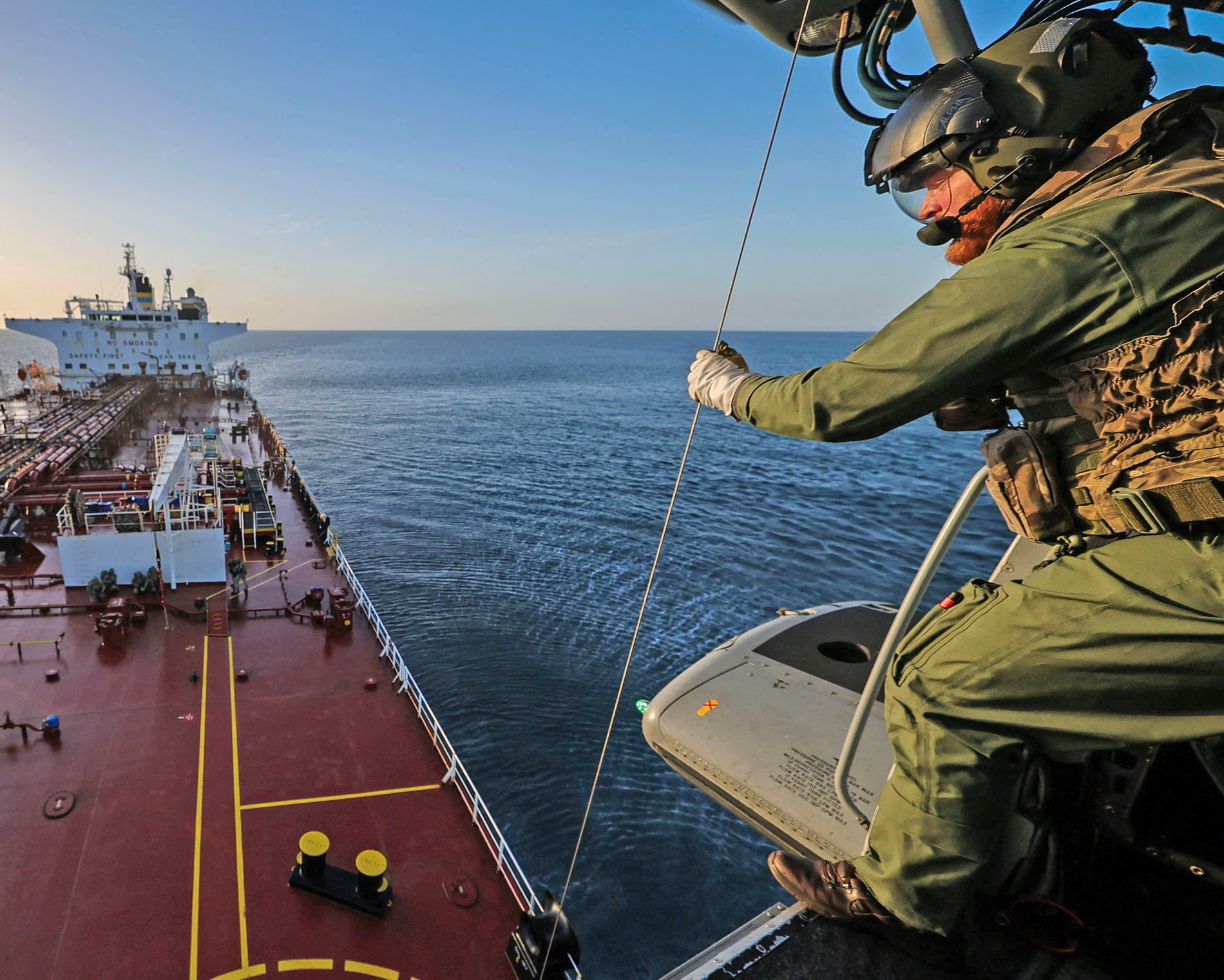
British commandos boarded and seized a sanctioned Russian oil tanker in the English Channel early Sunday, the first time the United Kingdom has led an operation against Moscow's so-called shadow fleet rather than backing an ally's.
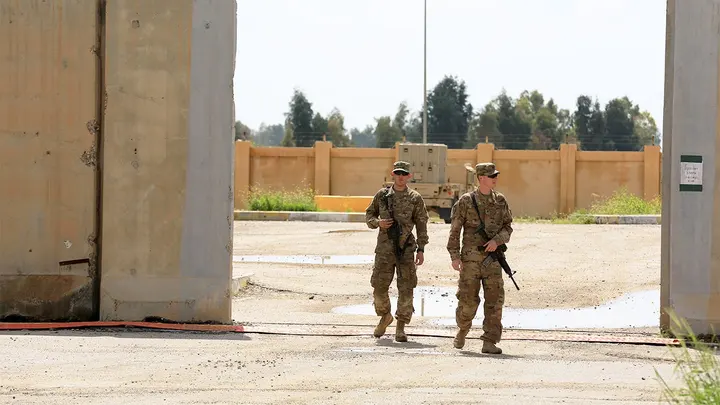
The vessel, the Smyrtos, was taken in a six-hour operation that began in the predawn hours. Royal Marine Commandos and officers from the National Crime Agency fast-roped onto the tanker from helicopters, then worked through its cabins and paperwork before moving it under guard toward the English coast. Footage released by the Ministry of Defense showed armed personnel descending onto the deck and searching the ship.
The operation drew on a substantial show of force. Aircraft from the Maritime Air Group, including Chinook, Merlin, and Wildcat helicopters, and an RAF P-8 surveillance plane supported the boarding, along with the frigate HMS Sutherland and the minehunter HMS Ledbury. The Ministry of Defense said the action took place in international waters, more than 12 nautical miles from the British coast, and complied with domestic and international law.
The ship and the crew
The Smyrtos had been sailing under a Cameroon flag, but it was expelled from that country's registry, leaving it legally stateless, a status that opened the door to the boarding. Under the international law of the sea, a warship may stop a vessel to verify its flag when there are grounds to suspect it has no nationality, and a ship found to be stateless can be dealt with under domestic law.
The tanker had left the Russian Baltic port of Ust-Luga on June 5, carrying more than 100,000 tonnes of Russian crude, and crossed into the Channel over the weekend. It had been sanctioned in July 2025 and, in the months since, changed both its name and its flag more than once, tactics common to the fleet.
Of the 25 crew members aboard, of various nationalities, none resisted, the operation's commanding officer said. The National Crime Agency arrested a 38-year-old Indian national on suspicion of sanctions offenses, while the remaining crew, described as Georgian and Indian nationals, stayed aboard to assist the investigation. The Smyrtos is now anchored off the south coast near Weymouth, where it will be monitored for environmental and safety risks.
A first for Britain, and the fleet it targets
Until Sunday, the United Kingdom had confined itself to supporting roles in such operations, lending air and naval assets to French and American interdictions. France has boarded several sanctioned tankers in recent months, including one stopped in the Atlantic west of Brittany at the end of May, another in the Mediterranean in January, and a third detained at Marseille in March. Sunday's boarding, conducted in close coordination with France, was the first the British military initiated and led.
Russia relies on its shadow fleet, a network of more than 700 aging vessels, to move roughly 75 percent of its sanctioned oil and sustain the revenue that funds the war in Ukraine. Britain has sanctioned nearly 600 of the ships, barring them from its ports and prohibiting British firms from providing insurance, financing, or other services. Officials say the measures are biting: Russia's oil revenues are down 27 percent from October 2024, their lowest level since the war began, and fell 24 percent year-on-year in 2025.
Reaction at home and abroad
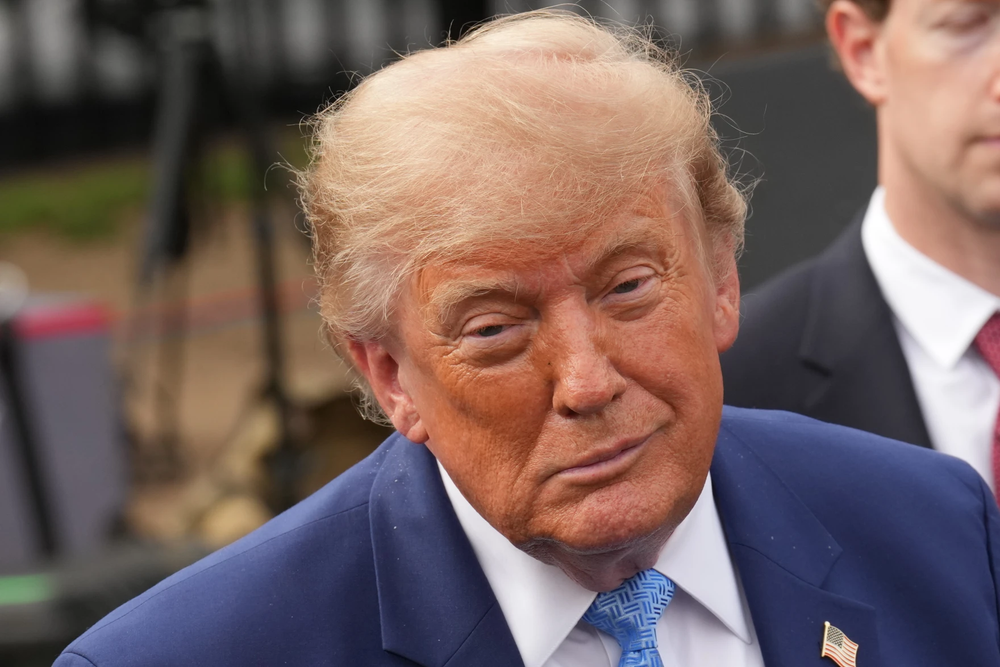
Prime Minister Keir Starmer, who said he personally directed the operation, framed it as a warning. "This successful operation delivers yet another blow to Russia and reminds those fueling Putin's war in Ukraine that they cannot hide," he said. Defense Secretary Dan Jarvis, who took the post on Thursday, said the interdiction reduced Russia's "capacity to threaten security across Europe and beyond." Attorney General Richard Hermer said the government would pursue the shadow fleet "under the full force of international law."
Ukraine welcomed the move. President Volodymyr Zelensky said he was grateful to Britain and urged European partners to go further, calling for laws that would allow not just the detention of tankers but the confiscation of the oil they carry. "Every such vessel stopped means less money for Russia's war machine," Ukraine's foreign minister, Andriy Sybiha, said. The opposition leader, Kemi Badenoch, praised the "brave" personnel involved and voiced support for the government's stance.
Moscow did not comment publicly, and the Russian embassy in London did not respond to requests for comment. Russia has previously denounced such seizures as piracy, and one Russian senator suggested rigging the country's tankers with explosives so they could be destroyed if captured.
A boarding against a turbulent backdrop
The operation, which the Ministry of Defense said had been months in the planning, came at a politically fraught moment for Starmer. Days earlier, on Thursday, Defense Secretary John Healey resigned in a dispute over military spending, warning that the level of funding the government proposed fell "well short" of what the country needed at a time of rising threats. The armed forces minister, Al Carns, stepped down as well, and Starmer has faced questions about a potential leadership challenge.
The prime minister has pledged to raise defense spending to 2.5 percent of economic output by 2027 and 3 percent by 2035, but critics inside and outside the military argue the increases are not keeping pace. Against that backdrop, the seizure offered the government a visible demonstration of resolve.
It also reflected a wider European tightening around the fleet. The European Union recently expanded the mandate of its Mediterranean naval mission to stop and inspect suspected shadow vessels, a step Russia condemned. The authority for Sunday's boarding traced to March, when Starmer cleared British forces to board and detain sanctioned ships passing through the country's waters. Carns, the departing armed forces minister, said that with the first such boarding now complete, "we're probably going to see more, should the opportunities present themselves."
Author
We cover the world’s chaos so you don’t have to scroll twelve feeds to understand it.
Sign up for Atlas newsletters.
Stay up to date with curated collection of our top stories.