The State Department on Tuesday added five Cuban state entities and one individual to the Treasury's sanctions list, escalating a pressure campaign against Havana even as the island's government moves to liberalize its battered economy.
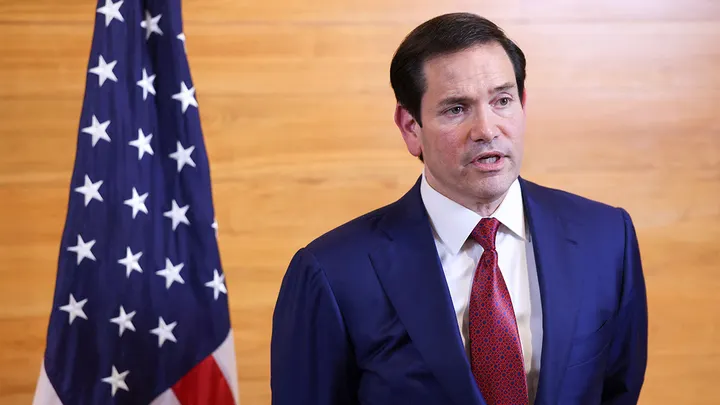
Secretary of State Marco Rubio announced the designations, which target the financial and logistics arms of Cuba's military-run business empire along with two companies in the mining and metals sector. The move marked Washington's first major response to the sweeping market reforms Cuban leaders unveiled the week before.
The Targets
Three of the sanctioned entities are tied to Grupo de Administración Empresarial S.A., the conglomerate run by Cuba's Revolutionary Armed Forces and known as GAESA. Analysts estimate the group commands close to 40 percent of the country's gross domestic product, and internal documents reported earlier placed its liquid reserves at roughly $14.5 billion as of early 2024.
Among the GAESA-linked targets is Banco Financiero Internacional S.A., a commercial bank that handles the bulk of transactions involving foreign companies operating in Cuba. Also designated was Rafin S.A., an opaque financial institution that observers describe as the conglomerate's corporate financial arm, holding capital on behalf of the government and GAESA rather than functioning as a conventional bank.
The third GAESA entity is Almacenes Universales S.A., the logistics and warehousing company that controls container traffic at the Port of Mariel Special Development Zone west of Havana. It serves as the main storage operator for the state, the private sector and foreign investors alike.
The two remaining entities come from Cuba's extractive industries. GeoMinera S.A. is a state-owned mining company that oversees foreign-backed ventures and manages the island's non-nickel metallic mineral assets, including a joint venture with Australia's Antilles Gold. The other is Empresa Siderúrgica José Martí, also called Antillana de Acero, described as Cuba's largest raw steel producer, which recently completed a modernization financed by Russian firms.
The individual named in the action is Annalie Lilliam Rueda Cardero, the wife of Gen. Alejandro Castro Espín, a son of Raúl Castro and a former head of Cuban intelligence who was sanctioned earlier this month.
Rubio's Case
Rubio, the son of Cuban immigrants, framed the designations as an effort to choke off revenue that the government diverts from public needs. He said GAESA functions as the financial muscle behind the regime's security apparatus and accused regime elites of stealing the island's resources for repression, subversion and spying rather than schools, power plants and basic goods.
He also issued a warning to firms abroad. Anyone providing services to the sanctioned actors risks being sanctioned as well, he said, urging foreign banks and other companies to freeze those activities immediately. That threat carries weight because the designations were made under a May executive order that exposes foreign partners of the listed entities to secondary sanctions and the loss of access to the U.S. financial system.
The entities targeted Tuesday had faced U.S. measures before, but the new authorities broaden the reach. Analysts said the designations send a clear signal to outside investors that any business touching the listed companies could trigger a ban. One Cuba scholar at the University of Miami said that for most companies, the risk would prove a bridge too far, and a former Treasury sanctions officer called the bank designation significant given its role as a key nexus for GAESA funds.
Havana's Response and Its Reforms
Cuban officials rejected the sanctions sharply. Foreign Minister Bruno Rodríguez wrote on social media that Washington, led by a dishonest and mendacious secretary of state, was tightening the noose around the island's economy, and he argued that Cuba had proven more resilient than the administration expected. Cuba's ambassador to the United Nations accused Rubio of orchestrating a chorus of lies.
The timing is notable. Days earlier, lawmakers approved 176 economic reforms that one analyst called potentially the most significant liberalization of the Cuban economy in six decades. President Miguel Díaz-Canel, in a nationally televised address, said the laws were meant to unleash production and reduce restrictions, granting state enterprises import and export powers and the ability to retain some foreign currency.
Díaz-Canel cast the changes as consistent with the island's communist principles even as they loosened state control of the market. A State Department spokesperson dismissed the reforms as modest, long overdue and ultimately superficial, predicting the government would roll back any change that threatened its grip.
Wider Pressure on the Island
The sanctions arrived amid a broader squeeze. The administration has tightened oil restrictions on Cuba since January, when it threatened tariffs against any country supplying fuel to the island after the capture of Venezuelan leader Nicolás Maduro halted subsidized shipments that had been a critical lifeline. The cutoff has worsened blackouts that in some areas exceed 20 hours a day, alongside shortages of food, water and medicine.
The pressure has also moved through the courts. The Supreme Court ruled 6-3 on Tuesday that the foreign sovereign immunity defense is unavailable to Cuban state firms sued under the 1996 Helms-Burton Act, clearing the way for Exxon Mobil to pursue more than $1 billion in damages over property the Castro government confiscated in 1959. The decision could open the door to similar suits against other Cuban entities holding seized assets.
Separately, the U.N. high commissioner for human rights urged Washington this month to lift its sanctions, warning that fuel and supply shortages were endangering access to water, food and health care. The U.S. government did not immediately respond to that appeal.
Author

We cover the world’s chaos so you don’t have to scroll twelve feeds to understand it.
Sign up for Atlas newsletters.
Stay up to date with curated collection of our top stories.