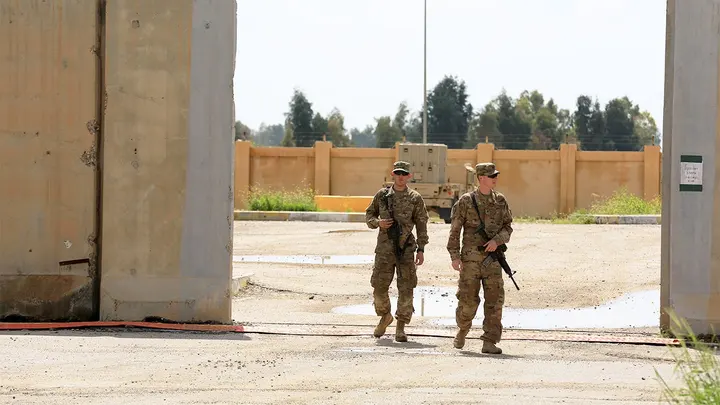
Two U.S. service members went missing in southwestern Morocco after an incident near the Cap Draa Training Area, prompting a joint search-and-rescue operation involving American, Moroccan, and other partner forces taking part in the African Lion exercise. U.S. Africa Command said the incident occurred on May 2 and remained under investigation as the search continued the following day. The missing personnel were identified by defense officials as U.S. Army soldiers.
The available accounts converged on one point early: the soldiers were last seen near ocean cliffs outside Tan Tan, close to the Atlantic coast. Initial reports indicated they may have fallen into the ocean. Defense officials said no foul play was suspected, and officials familiar with the incident said it did not appear to be related to terrorism.
By Sunday, the search had drawn in aircraft, ships, divers, mountain rescue teams, and ground personnel. U.S. and Moroccan forces were joined by additional participants from the wider multinational exercise. Moroccan helicopters, a Moroccan navy frigate, unmanned aircraft, and a U.S. CH-47 Chinook were among the assets reported in use.
The incident immediately altered the tempo of the exercise in the Morocco sector. Personnel embedded at the site reported that activities were halted as resources were redirected toward recovery operations. Helicopters and other aircraft operated through the night after the two soldiers failed to return.
What happened near Cap Draa
The missing soldiers were last seen near the coastal cliffs around the Cap Draa Training Area, a stretch of terrain where desert and semi-desert plains meet the Atlantic. Several reports said the incident took place around 9 p.m. local time. Moroccan military officials said the area involved steep ground near the shoreline, while U.S. defense officials said the men may have fallen from the cliffs into the water below.
The most consistent description from defense officials was that the soldiers were not engaged in active training when they disappeared. One account said the day’s exercise events had already concluded and the two were out on what was described as a recreational hike or evening walk. Another version said they were last seen during scheduled activity near the cliffs, but all of the main accounts agreed that the incident was not tied to hostile action and was being treated as accidental.
That distinction mattered because African Lion is a combat-readiness exercise involving live-fire, air-ground coordination, and large-scale maneuver. In this case, however, defense officials said the disappearance did not arise from one of those formal training events. The working assumption in the first phase of the search was that the soldiers had gone missing in difficult coastal terrain and may have entered the ocean.
Names of the missing soldiers had not been released in the initial reporting. Officials also withheld unit-level identification at the outset, consistent with standard practice while notifications and the active search were ongoing.
African Lion and the setting of the disappearance
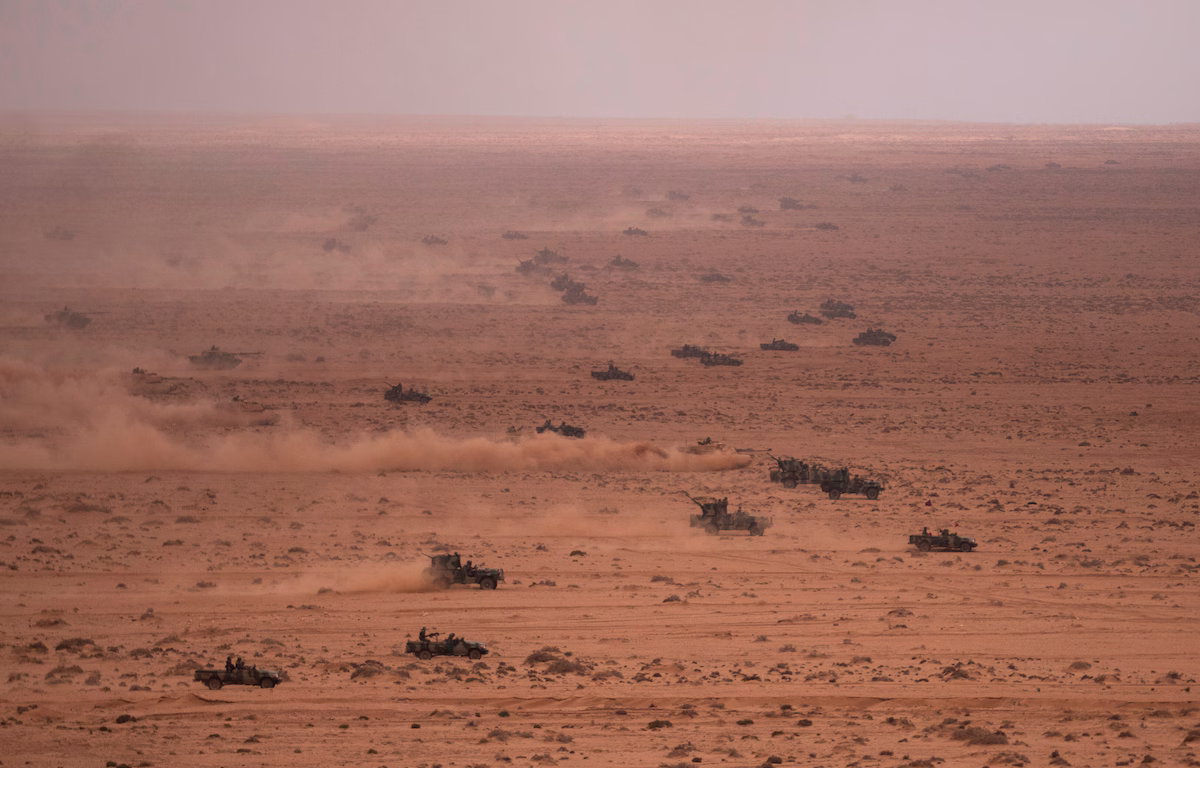
The disappearance occurred during African Lion 2026, the largest annual U.S.-led military exercise on the African continent. The drill is run by U.S. Africa Command in coordination with host countries and partner militaries. It has operated since 2004 and this year’s edition stretched across Morocco, Tunisia, Ghana, and Senegal.
The exercise is designed to test joint operations across multiple domains and includes participants from African countries, NATO members, and the United States. Accounts varied slightly on the overall scale, with some placing participation at more than 7,000 personnel from over 30 nations, while another report cited around 10,000 personnel from 20 nations. Those differences likely reflected changing counts across host-country segments or different stages of the exercise, but all descriptions pointed to a large multinational deployment.
Morocco has long been one of Washington’s principal security partners in North Africa, and African Lion is one of the central vehicles for that relationship. The exercise typically includes land, air, and maritime components and is used to refine interoperability, command relationships, and readiness for crisis response. U.S. officials have long described it as a venue for strengthening regional security cooperation and improving preparedness for both conflict and disaster scenarios.
The Cap Draa area, outside Tan Tan, sits in a remote part of southern Morocco where the Sahara approaches the Atlantic. That geography helps explain the mix of rescue assets used after the soldiers disappeared. The search zone combined coastal waters, cliffs, desert terrain, and mountain approaches, which required both maritime and overland teams.
African Lion has seen serious accidents before. In 2012, two U.S. Marines were killed and two others injured in a helicopter crash near Agadir during the exercise. That history was noted in several of the first reports on the missing soldiers, underscoring that the exercise, despite its routine annual character, has previously carried fatal risk.
The search operation and what remains unknown
The search that followed was multinational from the outset. AFRICOM said U.S., Moroccan, and other exercise participants immediately launched a coordinated operation using ground, air, and maritime assets. More detailed accounts indicated the effort included Moroccan Royal Armed Forces units, Moroccan naval elements, divers, mountaineers, U.S. aviation support, and unmanned systems scanning the coastline.
Reporters on the scene described a rapid escalation in activity after a base-wide head count late Saturday. Aircraft were heard overhead through the night, and by Sunday morning drones, planes, and helicopters were operating around the coastal search zone. That on-the-ground detail suggested commanders were treating the disappearance as an urgent recovery mission rather than a delayed administrative response.
Even so, many specifics remained unsettled in the first day of coverage. Officials had not publicly explained exactly how the soldiers became separated, how long they had been missing before the alert was raised, or whether either had left behind equipment or other traceable indicators. The timing and terrain were clear. The exact chain of events was not.
There was also some variation in how the men’s status immediately before the incident was described. One account said they were on a recreational hike. Another said they were last seen during scheduled activity near the cliffs. Those differences did not change the central facts, but they did show that the early reporting was being built from preliminary official briefings rather than a completed investigative narrative.
What was established by the end of the first day was narrower but firm. Two U.S. Army soldiers went missing near the Cap Draa Training Area during African Lion in Morocco. Initial reports indicated they may have fallen into the ocean from coastal cliffs. The search involved American, Moroccan, and other partner forces across land, sea, and air. Officials said there was no indication of terrorism or foul play. Beyond that, the matter remained an active search-and-rescue operation, with the outcome still unresolved.
Author

We cover the world’s chaos so you don’t have to scroll twelve feeds to understand it.
Sign up for Atlas newsletters.
Stay up to date with curated collection of our top stories.