The Pentagon announced Monday that it is suspending its participation in the Permanent Joint Board on Defense, the oldest bilateral defense institution in North America, citing what it described as Canada's failure to meet its defense commitments.
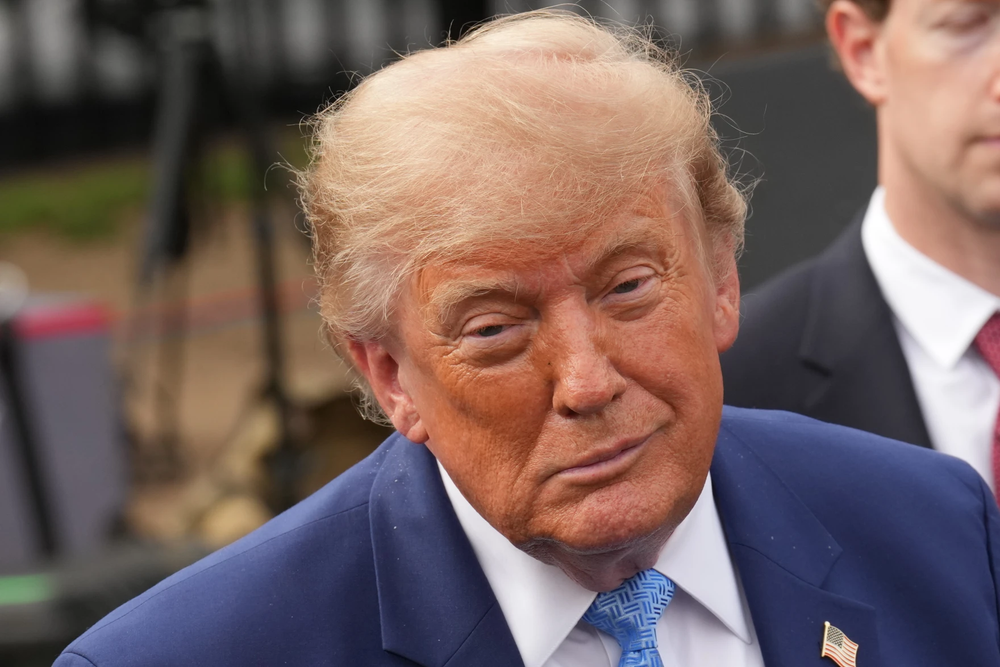
The decision was made public by Elbridge Colby, the U.S. Undersecretary of Defense for Policy, in a series of posts on X. "A strong Canada that prioritizes hard power over rhetoric benefits us all," Colby wrote. "Unfortunately, Canada has failed to make credible progress on its defense commitments. DoW is pausing the Permanent Joint Board on Defense to reassess how this forum benefits shared North American defense."
The board was created in August 1940 by President Franklin D. Roosevelt and Canadian Prime Minister William Lyon Mackenzie King at the height of the Second World War. It brings together senior military officers and civilian officials from both countries to coordinate on continental defense planning, NORAD modernization, and Arctic security. A pause in U.S. participation is unprecedented in the board's history.
The board officially meets semiannually, but the last meeting on record took place in Ottawa in November 2024. The body has not convened since President Donald Trump returned to the White House in January 2025.
The Davos Backdrop
Colby's posts pointed directly at Prime Minister Mark Carney. One was paired with a link to the transcript of Carney's January 20 speech at the World Economic Forum in Davos.
In that speech, the Canadian leader said the rules-based international order built after the Cold War had ruptured and called on "middle powers" to band together rather than rely on superpowers. "The middle powers must act together," Carney said, "because if we're not at the table, we're on the menu." He also accused unnamed governments of using "economic integration as a weapon, and tariffs as leverage."
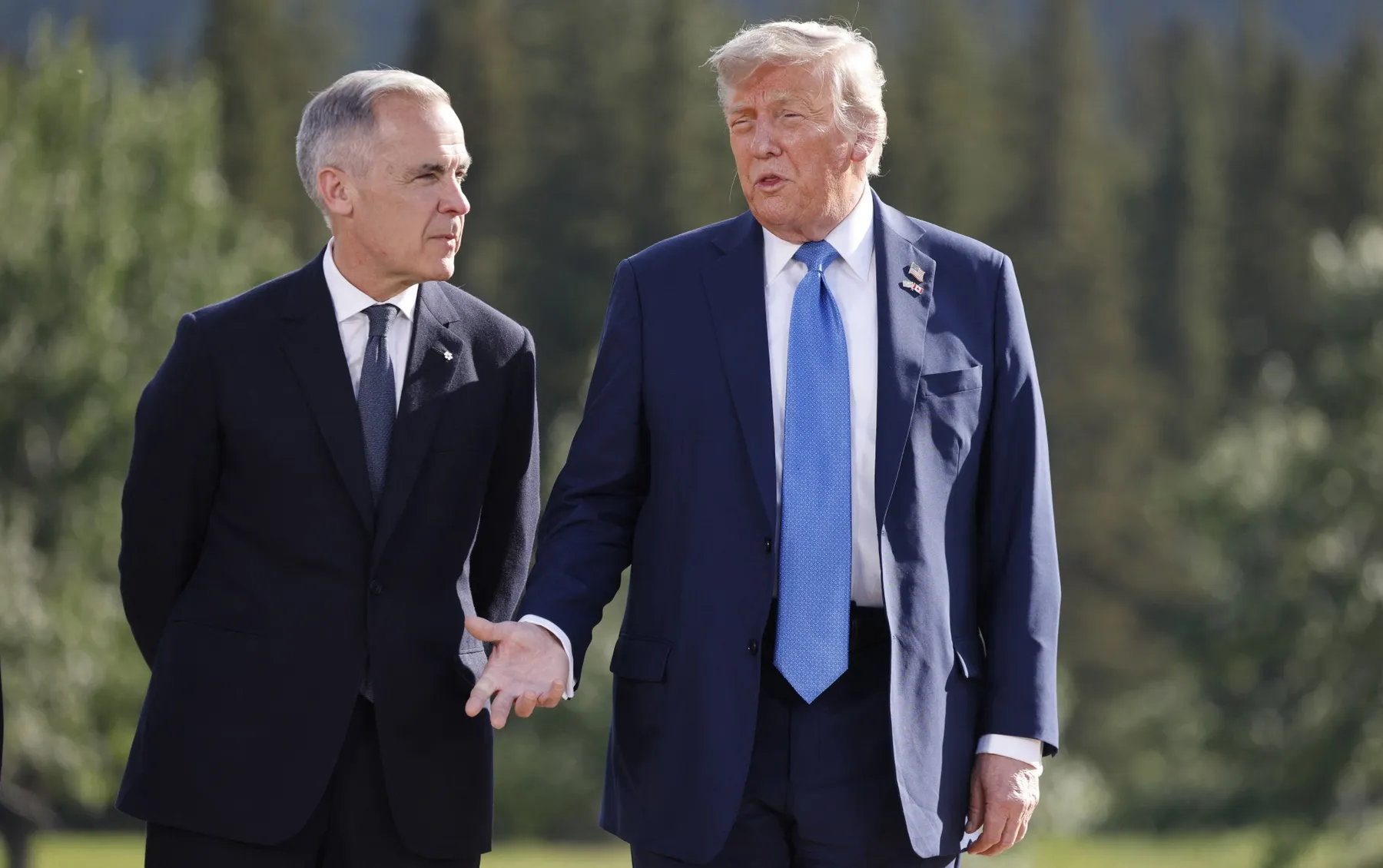
The address came days after Carney visited Beijing and signed a "strategic partnership" with Chinese President Xi Jinping, which included an opening for Chinese-made electric vehicles in the Canadian market. Trump responded by threatening 100 percent tariffs on Canadian goods and rescinding an earlier invitation for Carney to join the newly formed Board of Peace.
Colby's announcement also followed a meeting at the Pentagon with U.S. Ambassador to Canada Pete Hoekstra. "We're working closely to ensure every NATO partner, including Canada, reaches the Hague Summit's 3.5% GDP defense spending target, a vital investment for North American and Arctic defense," Colby wrote alongside a photo of the two.
The NATO Numbers and the F-35 Question
Canada hit the longstanding NATO benchmark of 2 percent of GDP on defense for the first time last year, following a C$9.3-billion increase to the military budget that included raising troop pay and folding the Canadian Coast Guard into defense spending. Total spending reached roughly C$63 billion in the last fiscal year.
NATO members agreed at this year's Hague summit to raise the floor to 5 percent of GDP over the next decade — 3.5 percent on core military spending and 1.5 percent on related infrastructure. Carney's government has committed to that path, with a target year of 2035, and announced a C$500-billion investment in the country's domestic defense industry in February.
The F-35 file remains a particular point of friction. Canada ordered 88 of the Lockheed Martin-built jets in 2023, but Ottawa froze the order beyond the first 16 aircraft already paid for, citing the dispute with Washington. Hoekstra warned earlier this year that if the full order does not go through, the joint NORAD command "would have to be altered." Colby's post did not mention the F-35 program by name.
Carney Pushes Back
Carney addressed the announcement at a news conference in Quebec on Tuesday. He said he would not "overplay" the magnitude of the decision and reaffirmed that defense cooperation between the two countries would continue.
"There's lots of cooperation [with the U.S.], we will continue to do so," Carney said. "But we will also be cooperating with other partners and diversifying our defense cooperation as we should as a member of NATO and lastly as we should in critical areas such as Ukraine."
Defense Minister David McGuinty, asked for a response, pointed to recent commitments including new military investments in the North and the procurement of under-ice submarines. "Canada will work with trusted partners who are ready to work with us, always remaining ready to come to the table for constructive discussions about the best ways to strengthen mutual defence and security," McGuinty said.
The Prime Minister's Office said in March that the government had moved "at unprecedented speed and scale" across more than a dozen federal departments to deliver the largest single-year increase in Canadian defense spending in generations.
Reactions and What It Signals
The decision drew critical responses from former officials on both sides of the border. Rep. Don Bacon, a Republican from Nebraska, wrote on X that "cooler and wiser brains are needed to preserve a close alliance w/ our neighbor," adding that "this all started w/ taunts of 'Canada will be the 51st state.'"
John McKay, the former Canadian co-chair of the board at its last meeting, called the move "short-sighted" and "foolish." He said it cast doubt over the renegotiation of the NORAD agreement, military cooperation in the Arctic, and Canada's outstanding F-35 decision. Jason Kenney, the former premier of Alberta, called the suspension "nonsensical and counterproductive," and former Conservative leader Erin O'Toole called it "profoundly misguided."
Imran Bayoumi of the Scowcroft Center for Strategy and Security said the announcement could be a pressure tactic to push Canada toward more U.S. military purchases. "Cancelling it is a needless provocation that sends the wrong message to Ottawa and other U.S. allies," he said.
Sean Maloney, a military historian at Royal Military College, said the body has done substantive defense-planning work but predicted limited impact on day-to-day operations. "Regardless of the acrimony that can exist at certain levels in between the two countries, we still have to have a functional relationship on the defence side," he said. The United States, Canada, and Mexico are scheduled to begin renegotiation of the USMCA trade pact later this year.
Author

We cover the world’s chaos so you don’t have to scroll twelve feeds to understand it.
Sign up for Atlas newsletters.
Stay up to date with curated collection of our top stories.