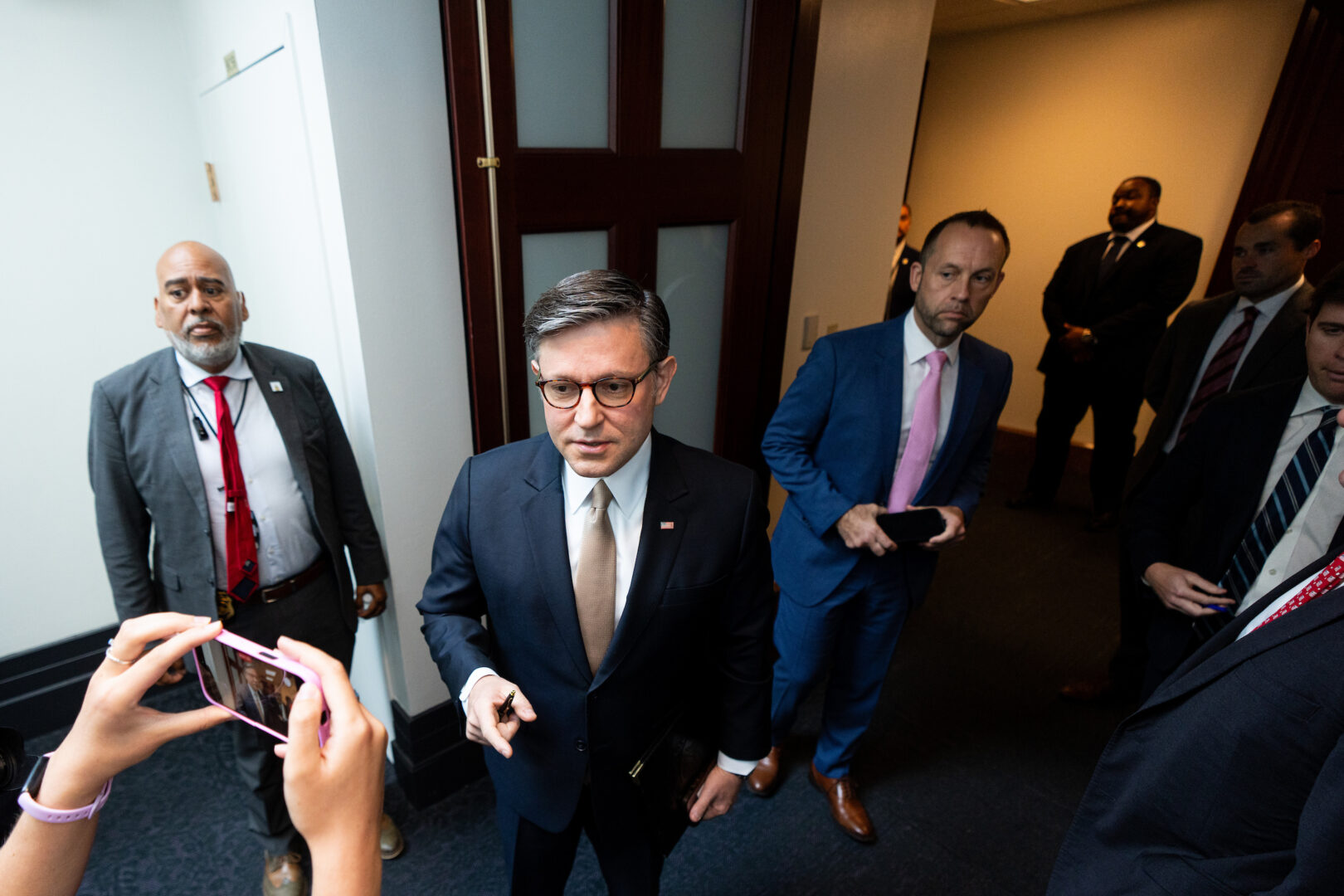
For the second week running, Speaker Mike Johnson lost control of his own floor. A cluster of Republican hardliners tanked a procedural vote Tuesday, blocking the annual defense bill and a stack of other legislation, and by late afternoon Johnson gave up and sent the House home two days early for the July Fourth break. Lawmakers aren't due back until July 13.
The vote wasn't close in the way that matters. The rule needed to open debate failed 224-198, with 14 Republicans crossing over to join Democrats. One of those no votes belonged to Majority Leader Steve Scalise, who flipped purely as a procedural move so leaders could bring the measure back later. The rest were the real thing.
What Blew Up
At the center was the National Defense Authorization Act, a roughly $1.15 trillion policy bill that sets Pentagon priorities and carries pay raises for the troops. Johnson had tried to thread a needle: attach President Trump's top legislative priority, the SAVE America Act, to the must-pass defense measure and dare the Senate to strip it out.
The hardliners weren't buying the mechanics. Rather than allow a straight amendment from Florida Rep. Anna Paulina Luna to write the voter ID bill directly into the NDAA, leadership drafted the rule to automatically merge the February version of the SAVE Act with the defense bill after passage, then send both to the Senate as one package. Johnson called it the most efficient path. Luna called it a "procedural head fake," arguing the Senate would peel the voting language right back out.
"I will vote for the rule if you allow my amendment for voter ID, plus proof of citizenship, to be placed into the text of the NDAA," Luna told reporters after the vote. "They're saying they won't. So now you saw what happened."
The collapse froze more than just the defense bill. Also left on the table were the fiscal 2027 State Department spending bill, a measure easing financial disincentives for people with disabilities to work, and a resolution marking the first anniversary of the GOP tax-cut law. The rule would have opened debate on more than 300 amendments, including proposals to cement Trump's ban on transgender military service, block Ukraine aid, and roll back collective bargaining protections for civilian defense workers.
The SAVE Act Standoff
The whole fight traces back to a bill that has nowhere to go. The SAVE America Act would require proof of citizenship to register to vote in federal elections and a photo ID to cast a ballot, and would compel states to hand over their voter rolls. Trump has called it his number one priority and has refused to sign a bipartisan housing bill, which he dismissed as "a yawn," until the voting measure reaches his desk.
The House has passed versions of it three times. Each has died in the Senate, where Republicans hold a 53-47 edge but lack the 60 votes to break a Democratic filibuster and the 50 to kill the filibuster outright. Senate Majority Leader John Thune had already filed cloture on the Senate's own version of the NDAA before leaving town, meaning the two chambers are headed for a conference committee that would almost certainly drop any voter ID language anyway.
Democrats and voting rights groups argue the bill would disenfranchise Americans who lack ready access to passports or birth certificates, aimed at a problem, noncitizen voting, that research shows is exceedingly rare. Johnson, for his part, tried to shift the blame across the Capitol. "I would pass the SAVE America Act every day in the House if I thought it would do any good," he said, adding that the onus now sits with the Senate.
More Than One Grievance
Voter ID was the loudest complaint, but not the only one. Several hardliners said leadership had broken a promise to bring up the HR 2 border security package before the recess, a bill that codifies many of Trump's immigration executive orders and passed the House last Congress before stalling in the Senate.
"They haven't even tried to bring HR 2 to the floor for a vote, which was a leadership promise," said Missouri Rep. Eric Burlison. Freedom Caucus Chairman Andy Harris of Maryland called the immigration issue "central" to the meltdown, and Texas Rep. Chip Roy said it was his "main reason" for voting no. Scalise said the immigration bill needed more time because there was no consensus yet, even among members in swing districts.
The revolt drew in members with narrower gripes too. Ohio Rep. Mike Turner, a senior Armed Services member, broke with his party after the Rules Committee denied a vote on his amendment to restore pension benefits to retirees of the defunct auto parts maker Delphi, and cosponsor Victoria Spartz of Indiana joined him. Missouri's Burlison was also irked that leaders wouldn't allow his amendment forcing the release of records on unidentified anomalous phenomena, better known as UFOs.
A Speaker Boxed In
Johnson downplayed the setback as the cost of governing with almost no room to spare. "This is life with a small margin, small majority, and we'll work through it," he told reporters, noting the party is "nearing an election" and that "people get very emotional about things, and sometimes they make irrational decisions."
The math is brutal. With a 218-212 majority, Johnson can afford to lose no more than three Republicans on a party-line vote when the rule comes back up. Some of Tuesday's defectors look flippable. Colorado Rep. Lauren Boebert admitted she jumped aboard mainly because the measure was already sinking. "I was gonna behave and be a good girl, but it was going down, way down," she said. "So I just decided to play."
The rebellion also defied Trump directly. After last week's blockade, the president had told Republicans on social media to "unify, and stop voting down 'Rules' or threatening to do so." Luna and her allies ignored him. Some in the party were blunt about the fallout. Retiring Nebraska Rep. Don Bacon accused the rebels of torching their own agenda out of frustration with the Senate, saying they were "shitting in their own house because they're mad at the neighbor." Retiring Rep. Thomas Massie offered a simpler explanation for the restlessness: a number of members are past their primaries now, and some, he said, have little left to lose.
The timing landed hard. A year ago this same week, Trump gathered Republicans on the White House lawn to sign their marquee tax-and-spending law. This July Fourth, with the country marking its 250th birthday, the House left town having passed one last thing on its way out: a 420-0 vote to disclose which members used taxpayer money to settle sexual misconduct claims. Then everyone went home.
Author

We cover the world’s chaos so you don’t have to scroll twelve feeds to understand it.
Sign up for Atlas newsletters.
Stay up to date with curated collection of our top stories.