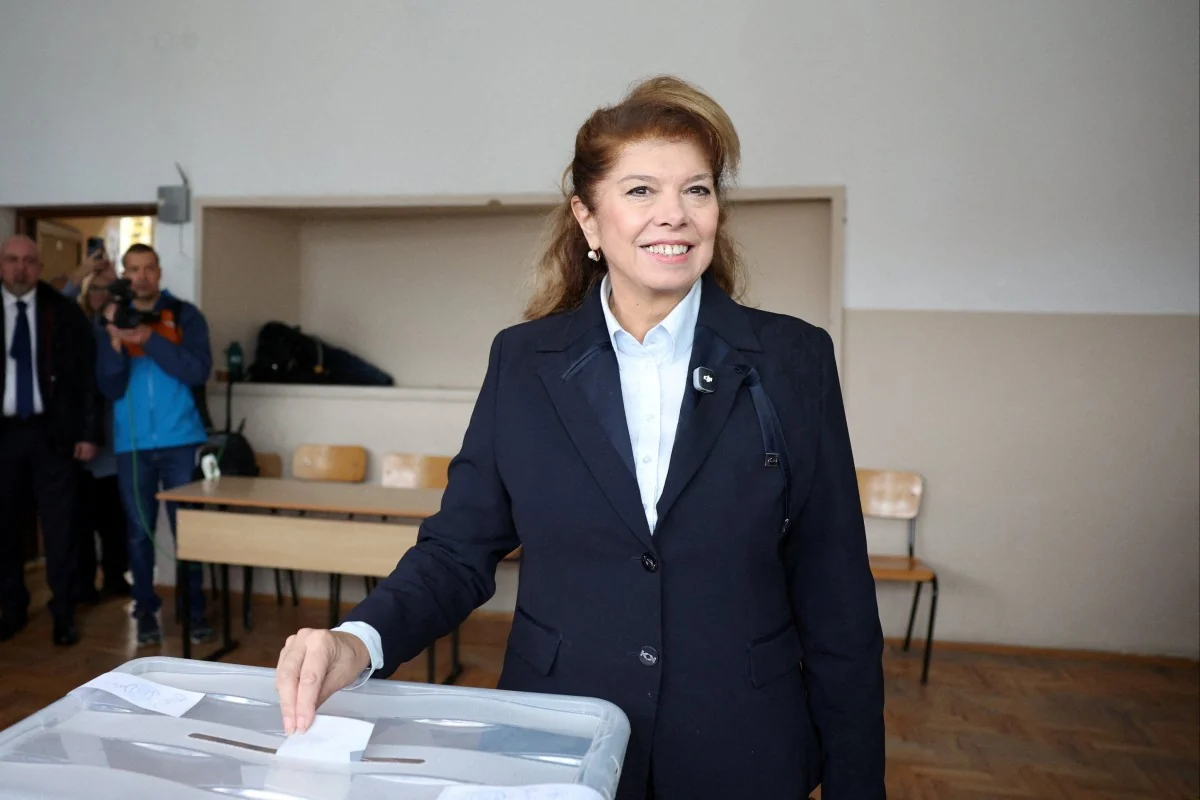
Acting President Iliana Iotova won Sunday’s presidential runoff in Bulgaria, defeating Andrey Gyurov, a banker and former caretaker prime minister backed by the pro-Western opposition. Iotova, a longtime ally of Prime Minister Rumen Radev, claimed victory late Sunday in Sofia with Radev at her side.
The Central Election Commission’s final count, with 100% of precinct protocols processed and posted at 1:15 a.m. CST Monday, gives Iotova 1,093,852 votes, or 57.566%. Gyurov received 750,251 votes, or 39.483%. Another 56,080 voters, or 2.951%, chose “I support no one,” an option printed on every Bulgarian ballot that lets voters reject all candidates while still casting a valid vote.
Iotova, 62, becomes the first woman elected head of state in Bulgaria, a European Union and NATO member of about 6.4 million people on the Black Sea.
Her victory leaves the presidency in the hands of an ally of the prime minister, whose Progressive Bulgaria party endorsed her and holds a majority in parliament.
Inside the country, the result was lopsided: Iotova and her running mate, Kiril Valchev, now vice president-elect, carried 28 of Bulgaria’s electoral districts, while Gyurov and his running mate, Georgi Kandev, carried three, BTA reported.
Among Bulgarians voting abroad, the result reversed. Gyurov won 56.36% of the votes cast outside the country, a majority for the candidate who lost nationally by 18 points.
A victory claimed beside the prime minister
Iotova said her campaign message had focused on “incomes, peace and the challenges that lie ahead.”
According to the state news agency BTA, she thanked Progressive Bulgaria and then turned to the prime minister, saying, “Mr Radev, we would not have succeeded without you.”
“Today, the Bulgarian people have chosen the future over the past,” Radev said. “They have opted for normalcy and a stable, clear path forward.”
European Commission President Ursula von der Leyen congratulated Iotova on X, writing that she looked forward to continuing joint work “from security and defence to our competitiveness and energy independence.” She closed: “For a strong Bulgaria in a strong Europe.”
From running mate to head of state
Iotova, born Oct. 24, 1964, according to the presidency’s official biography, is a former journalist and member of the European Parliament. She was elected vice president on Radev’s ticket in 2016 and again in 2021.
She became acting president in January, when Radev resigned the presidency to run for parliament. His new party, Progressive Bulgaria, won the April parliamentary election outright, taking 131 of the National Assembly’s 240 seats, and Radev became prime minister. Her bid was backed by Progressive Bulgaria and the Bulgarian Socialist Party.
Gyurov, 50, is a former deputy governor of the Bulgarian National Bank. Iotova herself appointed him caretaker prime minister in February. His interim cabinet was sworn in Feb. 19 to organize the April 19 parliamentary election, and he handed power to Radev’s government on May 8. He ran for president as an independent with the support of the pro-Western opposition.
Moscow, Kyiv and Brussels
Iotova, who has campaigned as a “president of peace,” opposes military aid to Ukraine without questioning Bulgaria’s membership in the EU or NATO, AFP reported. She has said that “peace can come only through negotiations.” Radev has advocated dialogue with Moscow.
Gyurov signaled closer alignment with the West. He criticized Iotova in a television debate for not explicitly blaming Russia for the war, and said after casting his ballot that he had voted for a “secure, stable and European Bulgaria.”
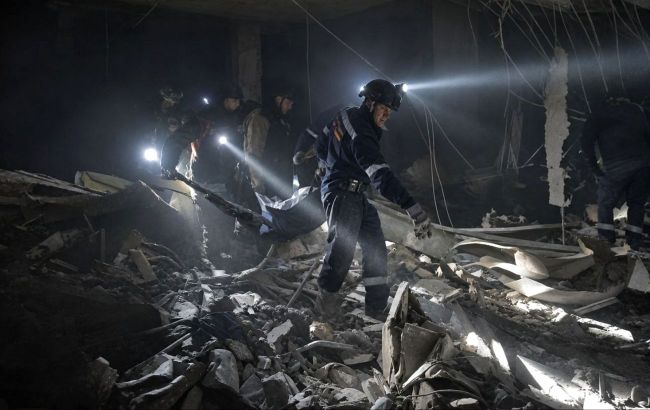
The campaign played out against drone attacks on commercial ships in the Black Sea in October, several of them in Bulgaria’s exclusive economic zone. AFP, counting attacks off Bulgaria across the month, reported 21 people missing. The deadliest came Oct. 13, when the HS Dignity sank off Krapets, a village in Shabla municipality; Bulgaria’s transport ministry said six crew were rescued and 10 were unaccounted for when it ended the search. Drones hit the Chelsea 3 near Byala the same night, and all 15 crew were rescued. On Oct. 20, NATO said it would send additional patrol aircraft, radar, drones and investigators to the region. NATO, Bulgaria and Romania have not formally attributed the attacks. Radev summoned the Russian ambassador and said that while there was no conclusive evidence, “the logic suggests that the outcome benefits the Russian Federation.”
Iotova responded by calling for a moratorium on drone strikes against civilian shipping, an initiative she said she coordinated with Romania and Turkey, the Brussels Signal reported.
A low-turnout race
The runoff followed an Oct. 25 first round in which Iotova led with 34.76% of the vote and Gyurov took 31.95%. Fewer than a quarter of eligible voters took part, the lowest participation in any Bulgarian presidential election since the end of communist rule.
Participation rose on Sunday but stayed low. Exit polls and preliminary figures put runoff turnout at roughly 27% to 30%; the commission’s official figure had not been posted.
Bulgaria’s president has limited powers, and the office is widely described as largely ceremonial. The president commands the armed forces and can return legislation to parliament, but cannot dismiss the prime minister. Presidents serve five-year terms and may be reelected once.
A concession and an opposition rebuke
Gyurov conceded Sunday night. “This is how the Bulgarian citizens have voted,” he said, adding that the results had to be accepted as they stood. He told reporters that his campaign had “laid a solid foundation upon which we can build.”
Assen Vassilev, who chairs the opposition party Continue the Change, called the result a “red card” for the government over its handling of prices and incomes, BTA reported.
Iotova remains acting president until her five-year term begins when the current one expires in January.
Author

We cover the world’s chaos so you don’t have to scroll twelve feeds to understand it.
Sign up for Atlas newsletters.
Stay up to date with curated collection of our top stories.