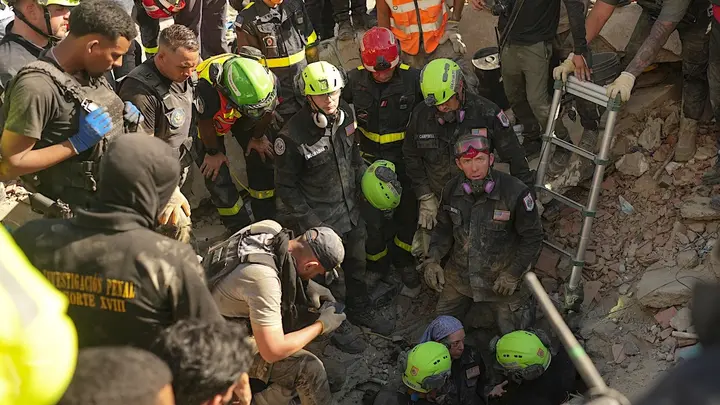
The death toll from the twin earthquakes that struck Venezuela on Wednesday reached at least 1,450 by Sunday, as rescue crews pressed on through the rubble of the country's northern coast and tens of thousands of people remained unaccounted for.
The quakes, with magnitudes of 7.2 and 7.5, hit roughly 40 seconds apart near San Felipe at about 6 p.m. local time, leveling buildings across Caracas and the coastal state of La Guaira. The near-simultaneous shocks gave many residents no time to flee, and the shallow depth of the tremors magnified the damage at the surface.
The Toll
Interim President Delcy Rodríguez announced the figure of 1,450 dead on Sunday, calling it the most brutal natural catastrophe in the country's history. She said about 3,150 people remained hospitalized with injuries, 12,721 had been displaced, and 774 buildings had collapsed.
The number of missing dwarfs the confirmed dead, and the counts vary widely depending on the source. The government has spoken of hundreds missing or trapped, while a website promoted by the country's political opposition listed just under 50,000 people as unaccounted for on Sunday, down slightly from about 55,000 a day earlier.
Those tallies carry caveats. Some entries likely include people who simply cannot reach loved ones because of downed cellphone networks, and some reports may be duplicates. To help families, authorities launched an online registry, localizapacientes.com, where users can search by name or national ID to see whether a person is receiving hospital treatment anywhere in the country.
The U.S. Geological Survey estimated that more than 10,000 deaths were possible from quakes of this size, a figure that would rank them among the deadliest in Latin America over the past century.
A Narrowing Window
By the weekend, the clock had become the central concern. Disaster experts generally describe the first 72 hours as the critical window for pulling people out alive before dehydration, crush injuries, and lack of oxygen sharply cut survival odds. That window closed Saturday evening, three days after the quakes.
The leader of the 80-strong Swiss rescue team, Sebastian Eugster, said his crews had located several people alive in the rubble with the help of their eight search dogs but had not been able to reach them in time. He noted that survival chances drop steeply once the 72-hour mark passes, though access to food and water can extend that window.
Even so, rescuers kept finding survivors. The government said at least 33 people had been pulled out alive by Saturday evening, including several children. In La Guaira on Sunday, a mix of teams from Virginia, France, and Venezuela extracted a man who had been trapped for four days, still clutching his phone, followed by his young son. A Colombian team freed an 11-year-old boy named Moises from about 10 feet of rubble, his eyes covered to shield them from the daylight; his mother and sister were killed. Mexican rescuers carried another boy from a collapsed building in Caraballeda. U.S. crews drew attention for pulling a 9-month-old infant and her mother from the wreckage with only minor injuries.
Hundreds of aftershocks have complicated the work. Officials reported 512 by Sunday, up from 430 the day before, keeping already weakened buildings at risk of further collapse and leaving many residents sleeping outdoors in plazas, parks, and makeshift camps.
The Response and Its Strains
International help has poured in. Foreign governments deployed 2,624 rescuers by Sunday, along with 137 search dogs, 49 vehicles, and roughly 84 tons of equipment and medical supplies. Teams from Mexico, El Salvador, Switzerland, Spain, Colombia, and elsewhere joined tens of thousands of Venezuelan responders.
The United States has been among the largest contributors. A senior administration official said Saturday that nearly 250 specialized civilian rescuers had been sent, along with aid planes, mobile hospitals, and the amphibious ship USS Fort Lauderdale. Task forces from Virginia, Florida, and Los Angeles County were on the ground, the latter bringing 71 personnel, six canine teams, and 84,000 pounds of equipment. The Pentagon said it was expanding support with aircraft and satellite imagery to guide relief planners. A funding package worth hundreds of millions of dollars was expected to be announced within days, on top of the $150 million the Trump administration had already pledged.
Yet the official Venezuelan response has drawn criticism. Residents in the hardest-hit areas reported seeing few state rescue teams and complained of scant heavy equipment, with families and volunteers digging through concrete themselves in the early days. The government militarized La Guaira and restricted access along the main road, saying traffic was blocking emergency vehicles, and required a safe-conduct pass obtained from the military in Caracas.
The disruption opened the door to disorder. Looting broke out in La Guaira shortly after the quakes, hitting pharmacies, supermarkets, and small shops. Residents also leveled accusations against police and military personnel, some of whom were accused of stealing from homes and from the dead. Observers noted the pattern echoed the 1999 La Guaira disaster, when landslides killed more than 10,000 and were likewise followed by crime and official abuse.
Logistics and the Political Backdrop
Moving aid into the country has proven difficult. Runway operations partially resumed at Simón Bolívar International Airport in Maiquetía, but damage to airport infrastructure limited the flow of supplies, and blocked access routes hampered efforts to reach areas like Caraballeda, where the 12-story Residencia Nautilus apartment block collapsed and became one of the largest rescue sites.
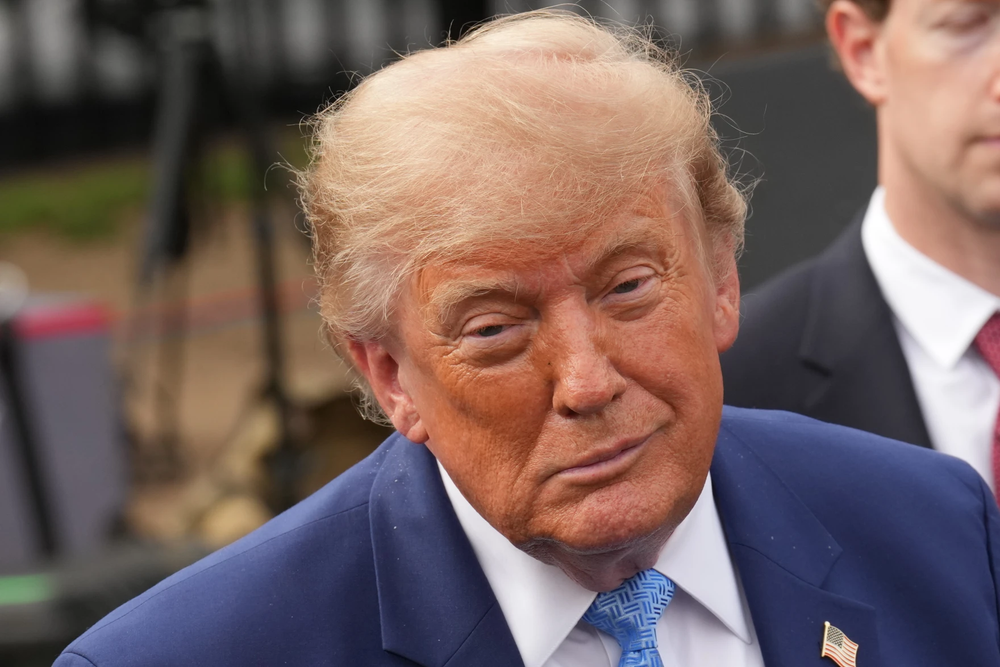
The catastrophe carries political weight. Rodríguez has led the government since her predecessor, Nicolás Maduro, was taken into U.S. custody in a January raid, and she has cast herself as an agent of change despite having served as Maduro's vice president. Pope Leo used his Angelus address Sunday to voice solidarity with Venezuelans and thank the rescue workers laboring through what officials described as critical hours.
Author

We cover the world’s chaos so you don’t have to scroll twelve feeds to understand it.
Sign up for Atlas newsletters.
Stay up to date with curated collection of our top stories.