Afghanistan accused Pakistan's military Monday night of striking a drug rehabilitation hospital in the capital, Kabul, killing at least 400 people and wounding approximately 250 others — the deadliest single incident in three weeks of escalating cross-border fighting between the two countries.
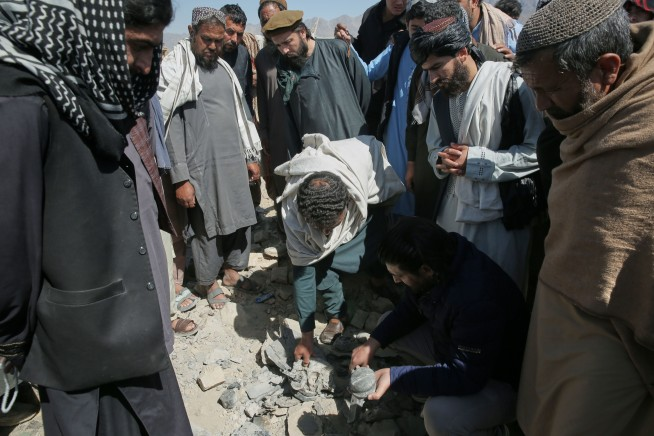
The strike hit the Omar Addiction Treatment Hospital at around 9 p.m. local time, according to Hamdullah Fitrat, the Taliban government's deputy spokesman. The facility was a 2,000-bed center in the eastern part of the city. Fitrat posted on X that rescue teams were still at the scene working to control a fire and recover bodies from the rubble, and warned that the death toll could rise further.
Health Ministry spokesman Sharafat Zaman said all parts of the hospital had been destroyed during a television interview. He added that 3,000 drug users were undergoing treatment at the center at the time of the attack. Television stations posted footage showing firefighters struggling to extinguish flames among the ruins of the building. Loud explosions had rocked the city at approximately 9 p.m., with plumes of smoke visible from the Shahr-e-Naw and Wazir Akbar Khan areas. Omid Stanikzai, 31, a security guard at the hospital, told reporters he heard jets patrolling the sky before the strike. "There were military units all around us. When these military units fired on the jet, the jet dropped bombs and a fire broke out," he said.
Pakistan denied hitting any civilian sites. Mosharraf Zaidi, spokesman for Prime Minister Shehbaz Sharif, dismissed the allegations as baseless and said no hospital was targeted in Kabul. Pakistan's Ministry of Information said the strikes "precisely targeted military installations and terrorist support infrastructure, including technical equipment storage and ammunition storage of Afghan Taliban" and Afghanistan-based Pakistani militants in Kabul and Nangarhar province. It described Taliban spokesman Zabihullah Mujahid's claims as "false and misleading" and aimed at stirring sentiment to cover what it called "illegitimate support for cross-border terrorism."
Three Weeks of Open War
The hospital strike came hours after Afghan officials said the two sides had exchanged fire along their shared border earlier Monday, killing four people — including two children — in Afghanistan's southeastern Khost province. Mortar shells fired from Pakistan overnight struck villages and destroyed several homes, said Mustaghfar Gurbaz, a spokesman for the provincial governor.
The current conflict erupted in late February when Pakistan launched airstrikes inside Afghanistan that Kabul said killed civilians. Afghanistan launched retaliatory attacks. Pakistan formally declared it was in "open war" with Afghanistan on February 27. The clashes broke a ceasefire that Qatar had brokered in October 2025, after an earlier round of fighting killed dozens of soldiers, civilians, and suspected militants.
Pakistan's government has consistently accused Afghanistan's Taliban administration of providing safe haven to the Pakistani Taliban — known as Tehrik-e-Taliban Pakistan, or TTP — as well as outlawed Baloch separatist groups and other militants who carry out attacks on Pakistani civilians and security forces. The Taliban denies those charges. Pakistan's defense minister characterized the situation as an "open war." Pakistani President Asif Ali Zardari said the Taliban crossed a "red line" last week when Afghan drones struck and injured several Pakistani civilians. In response, Pakistan's air force struck equipment storage sites and "technical support infrastructure" in Afghanistan's Kandahar province over the weekend. Kabul said Pakistan hit two locations, including an empty security site and a drug rehabilitation center that sustained minor damage — a claim Pakistan rejected.
Mujahid condemned Monday night's strike on X, accusing Pakistan of "targeting hospitals and civilian sites to perpetrate horrors" and calling it "a crime against humanity." Afghanistan's administrative Deputy Prime Minister Abdul Salam Hanafi said defending sovereignty was the duty of all citizens and expressed regret over civilian casualties from Pakistani strikes, saying the war had been imposed on Afghanistan.
The Civilian Toll and UN Response
Earlier Monday, the UN Security Council unanimously adopted a resolution calling on Afghanistan's Taliban rulers to immediately step up efforts to combat terrorism. The resolution did not specifically name Pakistan, but condemned "in the strongest terms all terrorist activity including terrorist attacks" originating from Afghan territory. It also extended the UN political mission in Afghanistan, known as UNAMA, for three months.
The UN had previously warned that the fighting between the two countries was producing a rising civilian toll. UN figures showed that 73 civilians were killed and 193 wounded during the first two weeks of the clashes alone — before the Monday night strike on the hospital. The World Food Programme separately said Sunday it had begun mobilizing to provide food aid to more than 20,000 families displaced in Afghanistan by the conflict.
Pakistan's Information Minister Attaullah Tarar said Sunday that Pakistan's military had killed 684 Afghan Taliban forces since fighting began — a claim the Taliban rejected. Afghanistan's Defense Ministry and other officials said Afghanistan had killed more than 100 Pakistani soldiers. Neither claim could be independently verified.
Diplomatic Efforts Have Stalled
Attempts by outside parties to end the fighting have produced little progress. China said Monday that its special envoy had spent a week mediating between the two sides and urged an immediate ceasefire. Qatar's earlier brokered ceasefire was already broken when Pakistan launched fresh airstrikes.
The Gulf Arab countries that have historically helped mediate disputes between Pakistan and Afghanistan are currently consumed by Iran's retaliatory attacks on their territory amid the U.S.-Israeli war with Iran, leaving a significant gap in available diplomatic leverage.
Michael Kugelman, a South Asia expert at the Atlantic Council, assessed the situation in direct terms. "The Arab Gulf nations that mediated previous rounds of Afghanistan-Pakistan talks are now bogged down by their own war," he said. "Pakistan appears intent to keep hitting targets in Afghanistan, and the Taliban is determined to retaliate with operations on Pakistani border posts, and, potentially, with asymmetric tactics — from launching drones to sponsoring militant attacks in wider Pakistan."
"There are no off-ramps in sight," Kugelman said.
Author

We cover the world’s chaos so you don’t have to scroll twelve feeds to understand it.
Sign up for Atlas newsletters.
Stay up to date with curated collection of our top stories.