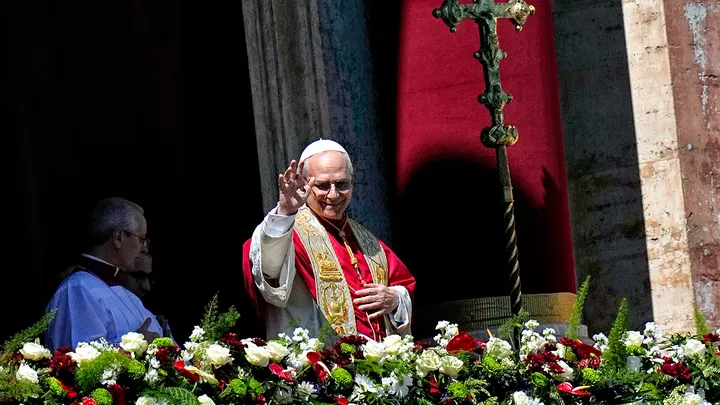
Pope Leo XIV arrived in Algeria on Monday, opening an 11-day trip across four African countries and beginning what is his most ambitious foreign journey since becoming pope. The visit started in Algiers, where he was received by President Abdelmadjid Tebboune before heading into a first day built around state protocol, interfaith symbolism, and the themes the Vatican has attached to the tour: peace, dialogue, migration, corruption, and Africa’s place in the global order.
The trip will take Leo from Algeria to Cameroon, Angola, and Equatorial Guinea, covering roughly 18,000 kilometers over 18 flights and 11 cities and towns. Vatican officials have said he is scheduled to deliver 25 speeches over the course of the tour. The scale of the trip alone underscores the significance the Holy See is placing on Africa, where Catholicism is growing faster than in most other regions of the world. More than one-fifth of the world’s Catholics now live on the continent, and Africa accounted for more than half of the Church’s new baptisms in the most recent Vatican statistics.
Leo’s first stop was also historically distinct. Algeria had never before hosted a pope. That fact alone gave the arrival ceremonial weight, but the choice of Algeria also reflected a specific personal and theological link. Leo is the first pope from the Augustinian order, and Algeria is the land of St. Augustine of Hippo, the North African theologian whose writings have shaped Leo’s public identity from the start of his papacy.
Why Algeria Came First
Algeria is not the most Catholic country on Leo’s itinerary. In fact, it is the least Catholic of the four. Vatican and press figures put the Catholic population there at under 10,000 among roughly 47 to 48 million people, the overwhelming majority of them Sunni Muslim. That made Algeria a notable place to open a tour designed partly to highlight the fastest-growing continent in global Catholicism. The explanation lies less in demography than in symbolism, history, and Leo’s own formation.
As an Augustinian, Leo has repeatedly described himself as a son of Augustine. On this trip he is set to visit Annaba, the modern city built near ancient Hippo, where Augustine served as bishop. Before becoming pope, Robert Francis Prevost had visited Algeria as leader of the Augustinian order, and Vatican coverage has presented the stop as personally meaningful in a way the later legs of the tour are not.
But the Algeria visit is not only devotional. It is also a test case for the kind of interreligious diplomacy Leo appears to want to emphasize. His schedule in Algiers included the Great Mosque, one of the largest in the world, and the Basilica of Our Lady of Africa, a place that has long been described as a site of Christian-Muslim encounter. The trip’s stated purpose in Algeria is to promote coexistence and build bridges between the Christian and Muslim worlds.
That message fits Algeria’s own social and political setting. The country’s Christian minority is small and largely foreign, but the Catholic presence has long tried to define itself not through numbers but through schools, social work, and dialogue. Local church leaders have framed the visit as recognition of that work and as an opportunity to show a model of coexistence rather than conversion politics.
The Message Leo Delivered on Day One
Leo’s first public words in Algeria centered on peace, justice, and historical memory. At the Martyrs’ Memorial in Algiers, he paid tribute to the victims of Algeria’s war of independence from France and said peace requires a reconciled spirit grounded in forgiveness. Later, in remarks to political leaders, diplomats, and civil society figures, he moved from Algeria’s history to a broader critique of the present international system. He referred to “continuous violations of international law” and “neocolonial tendencies,” language that connected African historical experience with current conflicts and power imbalances.
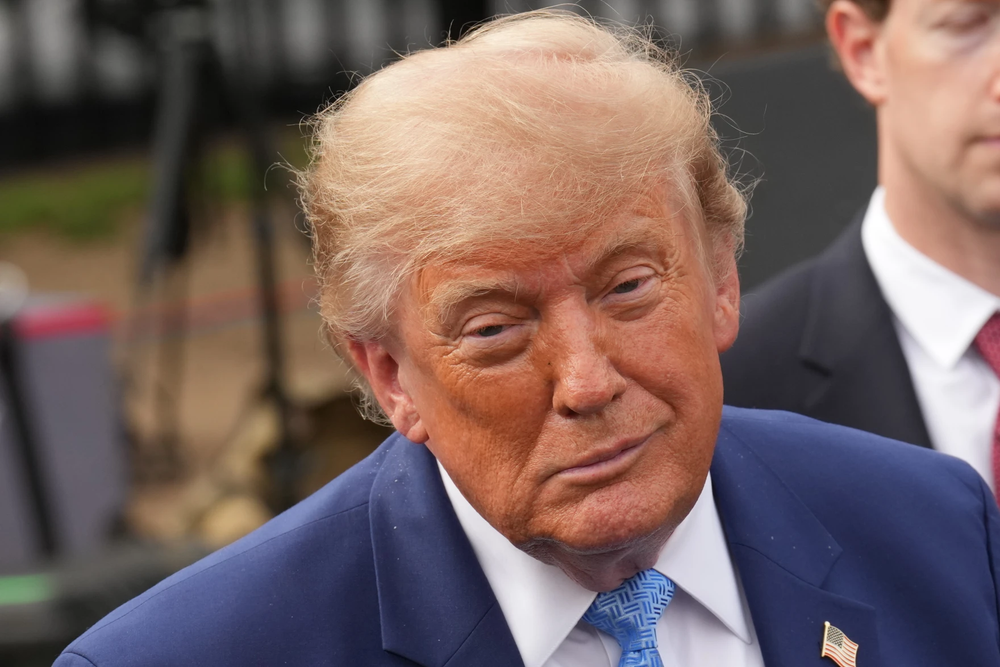
Those comments were delivered against the backdrop of a public dispute with President Donald Trump over Leo’s criticism of the U.S.-Israeli war on Iran. Trump had attacked the pope before the trip, calling him weak and politically liberal. Leo did not engage that dispute directly in Algeria, but on the flight to Algiers he made clear that he did not intend to alter his line. He said he would continue speaking against war and in favor of dialogue and multilateral relations.
That context mattered because it colored the opening of the tour without changing its central purpose. Leo’s remarks in Algeria were broader than the Iran conflict. They were aimed at the way power is exercised in international affairs and at the recurring role Africa has played as both a victim and witness of outside domination. His use of the term “neocolonial” placed the speech in a frame larger than day-to-day diplomacy. It also signaled that this trip will not be confined to liturgy and pastoral visits. Leo appears ready to use it as a platform for commentary on governance, extraction, and the ethical conduct of states.
The Vatican has been explicit that likely themes across the four-country journey include exploitation of natural resources, political corruption, migration, youth, family life, and interfaith dialogue. Those topics connect the countries on the itinerary even though they differ sharply in history, religion, and political system. Algeria offered the first setting in which Leo could tie those issues together under the language of peace and dignity.
What the Africa Tour Is About
The larger significance of the trip lies in what it says about the direction of Leo’s papacy and the place of Africa in the contemporary Catholic Church. Africa is no longer treated by the Vatican as a peripheral mission field in the older sense. It is now one of the demographic centers of global Catholicism, and in several of the countries Leo will visit, Catholics make up more than half the population. Cameroon and Angola are major Catholic countries in relative terms, while Equatorial Guinea is one of the most Catholic states in Africa by percentage.
The trip also places Leo in direct contact with some of the continent’s most difficult questions. In Cameroon, he is expected to address peace in the northwest, where separatist violence has persisted for years. In Angola, the emphasis is expected to shift toward reconciliation, poverty, and the long legacy of civil war despite the country’s oil and mineral wealth. In Equatorial Guinea, corruption and the conduct of political authority are expected to be unavoidable subjects given the country’s long-ruling government and concentration of wealth from oil.
Algeria, then, serves as both a symbolic first step and a statement of method. Leo began in a Muslim-majority country where the Catholic population is tiny, where the memory of colonialism remains politically active, and where St. Augustine gives the pope a personal point of entry. That choice suggests he is trying to frame the tour not simply as a visit to large Catholic crowds, though those will come later, but as a journey through the political, religious, and historical realities that shape Africa’s place in the Church and in the world.
By the end of the first day, the essential contours of the trip were already clear. Leo had arrived in Africa not only to celebrate the Church’s growth there, but to make the continent central to a wider argument about peace, coexistence, historical memory, and the misuse of power. Algeria was the opening chapter of that case. Cameroon, Angola, and Equatorial Guinea will show whether he intends to press it further.
Author

We cover the world’s chaos so you don’t have to scroll twelve feeds to understand it.
Sign up for Atlas newsletters.
Stay up to date with curated collection of our top stories.