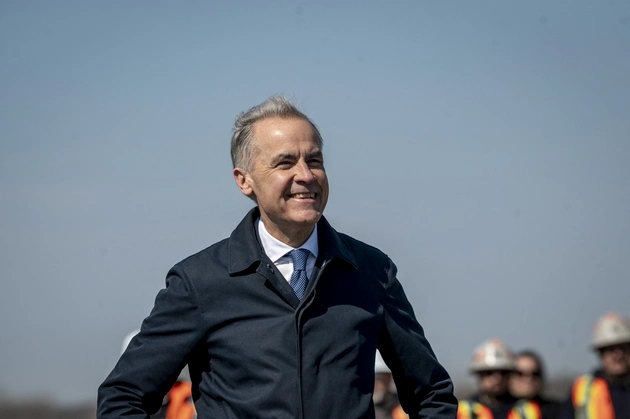
Mark Carney clinched a parliamentary majority for his Liberal government on Monday night, completing one of the most unusual paths to consolidated power in Canadian political history. The rookie prime minister — a private citizen just 16 months ago — assembled his majority not through a single decisive election but through a combination of special election victories and an unprecedented wave of defections from rival parties.
Liberal candidate Danielle Martin claimed victory in the Toronto riding of University-Rosedale around 10 p.m., pushing the party to 172 seats in the 343-seat House of Commons and giving Carney command of Parliament. The Liberals subsequently won a second Toronto seat in Scarborough Southwest, bringing their total to 173 and providing a slightly more comfortable margin. Results in the Quebec riding of Terrebonne — where the Liberals won by a single vote in last year's federal election before the result was overturned by the Supreme Court — remained too close to call late Monday.
No modern Canadian government has ever built a majority this way. Carney fell three seats short of one when he won the federal election last spring, but five opposition lawmakers — four Conservatives and one New Democrat — crossed the floor to join his caucus in the months that followed. Monday's wins finished the job.
"This is not the time for politics as usual, for petty differences, for political point-scoring," Carney told party members at a Liberal convention in Montreal over the weekend. "United, we will build 'Canada strong,' a Canada for all."
What a Majority Means
The practical consequences are substantial. Carney can now pass legislation without negotiating with opposition parties, control the agenda on House committees, and govern without the constant threat of a confidence vote bringing down his government. Minority governments in Canada typically last less than two years. The majority means Carney does not have to call another election until 2029.
"He will be able to pass legislation without having to go to the opposition to secure enough votes," said Andrew McDougall, assistant professor in Canadian politics at the University of Toronto.
The Liberals had relied on selective Conservative support to move economic and trade-related bills through Parliament during the past year. That arrangement worked but was slow. The government introduced 26 bills in the House of Commons since taking office, but only 11 received royal assent — and five of those were routine spending authorizations.
The first move of the majority government, according to two senior officials who spoke on condition of anonymity, will be an announcement Tuesday morning on relief for Canadians facing surging gas and diesel prices driven by the U.S.-Israeli war on Iran. Carney has previously said he is considering removing the federal gas tax to "cushion the blow for Canadians."
The Defection Strategy
The floor crossings that brought Carney to the doorstep of a majority were without precedent in their scope and speed. Only the governments of John A. Macdonald, Canada's first prime minister, and Jean Chrétien saw more politicians defect to the ruling party.
The most recent was Marilyn Gladu, a longtime Conservative MP and former chemical engineer, who switched parties last Wednesday. "Canada needs a serious leader who can address the uncertainty that has arrived due to the unjustified American tariffs," she said, thanking Carney for inviting her into "the large Liberal tent."
Gladu's defection was not without controversy. She holds anti-abortion views that clash with longstanding Liberal orthodoxy — under Justin Trudeau, candidates were required to be pro-choice. She also previously supported the "freedom convoy" during the pandemic and opposed a ban on conversion therapy. Carney said Gladu had committed to voting with the government on reproductive rights and that the party's core values had not changed.
Not everyone in the party was satisfied. Supriya Dwivedi, a columnist and former Trudeau adviser, wrote on X: "Guys, maybe we should all re-read Values. It's possible we all missed the part where Carney said we don't need to actually have any."
Scott Reid, a political adviser and former communications director to Liberal prime minister Paul Martin, took a different view. He described the defections as a reflection of the Trump effect on Canadian politics — a desire for stability that has led lawmakers to set aside partisanship. "What we're watching is the quietest assembly of a union government we've ever witnessed," he said.
Poilievre's Problem
The results are a serious blow to Conservative leader Pierre Poilievre, who just over a year ago was projected to win a federal election by more than 20 points. He won the election narrowly, then watched four of his own MPs abandon his caucus for the Liberals.
Conservative vote share dropped significantly in all three Monday races. In Scarborough Southwest, the party was on pace for roughly 20 percent — down from 30 percent in the last general election. In University-Rosedale, the Conservative candidate fell from second to third place. In Terrebonne, the party's candidate pulled just 3 percent, compared to over 18 percent in 2025.
Poilievre survived a leadership review in January with strong caucus support, but no challenger has emerged and the losses continue to mount. Liberal MPs have been openly courting additional Conservative defectors. Conservative MP Billy Morin told reporters the Liberals were "trying to poach me."
Reid assessed Poilievre's position bluntly. "If you had said to me two years ago that Pierre Poilievre is going to lose a federal election despite having a 25-point lead, lose his home riding, and then lose four members of parliament and surrender the parliamentary majority to his chief rival — well, you've just described a political dead person."
Recent polling from Nanos shows more than half of Canadians prefer Carney as prime minister, with just 23 percent choosing Poilievre.
The Agenda Ahead
Carney won office on the argument that Donald Trump had upended the world order and that Canada needed to respond with bold economic and security measures. He has announced major increases in military spending, traveled to Asia and Europe seeking trade diversification, and set an ambitious target to double non-U.S. exports to 300 billion Canadian dollars by 2030.
With a majority, the legislative path for those plans clears considerably. Key items on the agenda include new trade agreements with India, Thailand, the Philippines, and Saudi Arabia — all of which could be implemented by year's end. A defense investment agency has been established to expedite procurement, with bids for a new submarine fleet due by the end of April. An AI bill designed to protect Canadian data from foreign tech companies, which the Trudeau government failed to pass for lack of opposition support, can now move forward.
The government also faces a looming NATO summit in Ankara in July, where Carney will need to demonstrate progress toward the alliance's new 5 percent of GDP defense spending target by 2035.
Domestically, the pressure shifts. With no opposition to blame for legislative gridlock, Carney owns the outcomes. Grocery prices are up more than 20 percent since 2022. Unemployment sits at 6.7 percent. Gas prices are climbing because of the Middle East conflict. Opposition parties have already begun arguing that Carney's rhetoric about economic transformation has not translated into relief for ordinary Canadians.
"What a majority does is, it actually gives you time to effectively plan," Liberal MP Jonathan Wilkinson said. "That's what this country needs right now, given what's going on globally."
Author

We cover the world’s chaos so you don’t have to scroll twelve feeds to understand it.
Sign up for Atlas newsletters.
Stay up to date with curated collection of our top stories.