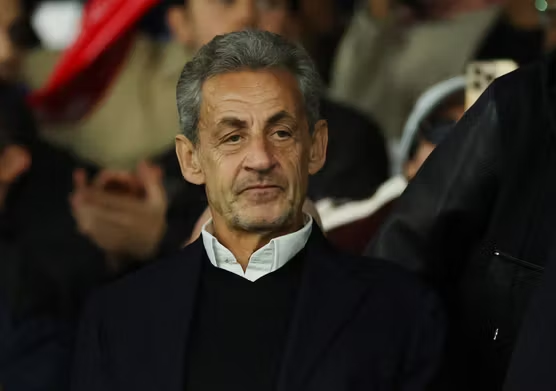
Former French president Nicolas Sarkozy returned to court in Paris to appeal his conviction in the case centered on alleged Libyan financing of his 2007 presidential campaign. The appeal hearing reopened one of the most consequential legal proceedings involving a former French head of state, revisiting a ruling that last year sentenced Sarkozy to five years in prison for criminal conspiracy linked to an alleged effort to obtain support from the regime of Muammar Gaddafi. The retrial is scheduled to run until June 3.
Under French procedure, the appeal functions as a full retrial rather than a narrow review of legal errors. The court is set to reexamine testimony, documentary evidence, and the findings that underpinned the September conviction. Sarkozy, who denies wrongdoing, returns to court once again presumed innocent under the law while the appeal is heard.
The case has already carried historic consequences. Sarkozy became the first former president of modern France to serve prison time after beginning his sentence in October 2025, although he was released after 20 days pending the appeal. His release came under judicial supervision, including restrictions on leaving France.
What the Lower Court Found
The September ruling found Sarkozy guilty of criminal conspiracy in connection with what prosecutors described as an effort between 2005 and 2007 to secure Libyan money for his successful presidential campaign. Judges concluded that Sarkozy had allowed close associates to establish contacts with Libyan officials in an attempt to obtain campaign financing. At the same time, the court stopped short of finding proof that Sarkozy himself sealed a direct deal with Gaddafi or that Libyan funds were definitively shown to have entered his campaign accounts.
That distinction remains central to the appeal. The lower court’s judgment established criminal conspiracy, but not the receipt or use of Libyan funds by the campaign in a conclusively documented way. Sarkozy’s lawyers appealed immediately after the conviction, arguing that the ruling did not support the severity of the sentence or the broader allegations of an illicit funding arrangement.
The prosecution theory has long been that Sarkozy’s entourage, acting while he was interior minister, negotiated with Libyan officials in 2005. In exchange for potential financial backing, investigators alleged that the Libyan regime expected diplomatic rehabilitation and a restoration of standing on the international stage after years of isolation tied to terrorism cases, including the 1988 Lockerbie bombing and the 1989 bombing of a UTA flight over Niger.
The appeal court will revisit not only Sarkozy’s conviction but, effectively, the factual structure of the entire case. One report on the proceedings noted that the retrial covers Sarkozy and multiple co-defendants, including former ministers and close political allies.
Why the Case Is So Significant
Sarkozy’s legal position is exceptional not only because he is a former president, but because this case is one part of a broader accumulation of convictions and investigations that have followed him since leaving office in 2012. He has already received two definitive convictions in separate matters. One involved an influence-peddling case in which he wore an electronic ankle monitor for several months. Another concerns illegal financing of his failed 2012 reelection bid, for which he still faces further sentence implementation.
Those cases form the wider legal context in which the Libya appeal is being heard. Sarkozy remains an influential figure on the French right despite no longer holding office and despite years of legal exposure. The combination of his prior convictions and the Libya case has made his post-presidential trajectory unique in recent French politics.
The prison sentence in the Libya case also drew particular notice because the lower court ordered immediate incarceration, citing what it described as the “exceptional gravity” of the conviction. That led to Sarkozy’s brief imprisonment in Paris before his release pending appeal.
The prosecution’s broader corruption argument has also been echoed by anti-corruption groups, which described the case as touching directly on the integrity of democratic institutions and the rule of law. Their intervention reflects how the case has come to symbolize more than a personal legal dispute. It has become a test of how France handles allegations that foreign money may have intersected with a presidential campaign.
Sarkozy’s Defense and Broader Political Shadow
Sarkozy has consistently denied any illicit arrangement with Libya and has described the accusations as politically motivated. His defense has centered on attacking the interpretation of ambiguous or indirect evidence and rejecting the prosecution’s assertion that a criminal association existed around him.
In recent months, he has also tried to shape the public narrative around his legal battles. After his release, he published a prison memoir titled Diary of a Prisoner, in which he described the conditions of detention and cast his incarceration as unjust. The book also drew attention for political remarks that suggested he still sees himself as part of a larger realignment on the French right, including possible future cooperation between traditional conservatives and the far right.
That political undertone matters because Sarkozy’s legal cases have never existed in isolation from his continuing relevance inside conservative politics. Even outside office, he remains a reference point in debates over leadership, strategy, and alignment on the French right. The appeal therefore unfolds with both judicial and political consequences in view.
The Libya case has also generated additional legal risk beyond the appeal itself. Sarkozy and his wife, Carla Bruni, face the possibility of another trial over allegations that a key witness in the Libya case was approached with a bribery effort involving an intermediary from the paparazzi world. Both deny wrongdoing.
What the Appeal Could Change
The appeal presents several possible outcomes. The court could uphold the conviction and sentence, overturn the judgment entirely, or alter both the legal reasoning and the punishment. Because prosecutors have also challenged parts of the original judgment in some reporting, the retrial could revisit acquittals on other counts as well, potentially widening Sarkozy’s legal exposure rather than narrowing it.
If convicted again, Sarkozy faces a potential sentence of up to 10 years in prison under the charges being retried. That possibility gives the appeal unusually high stakes, even for a defendant already burdened by prior convictions.
The case also comes at a time when Sarkozy is trying, unsuccessfully so far, to limit the practical impact of his other sentences. A French court recently rejected his effort to merge punishments from separate cases, meaning that his 2012 campaign-financing sentence still has to be served independently.
For now, the appeal returns the case to its starting point in procedural terms, but not in public significance. The facts under review are years old, the allegations are well known, and Sarkozy’s political and legal history is already established. What remains undecided is whether the conviction that sent a former president to prison will survive a second, fuller examination in court.
Author

We cover the world’s chaos so you don’t have to scroll twelve feeds to understand it.
Sign up for Atlas newsletters.
Stay up to date with curated collection of our top stories.