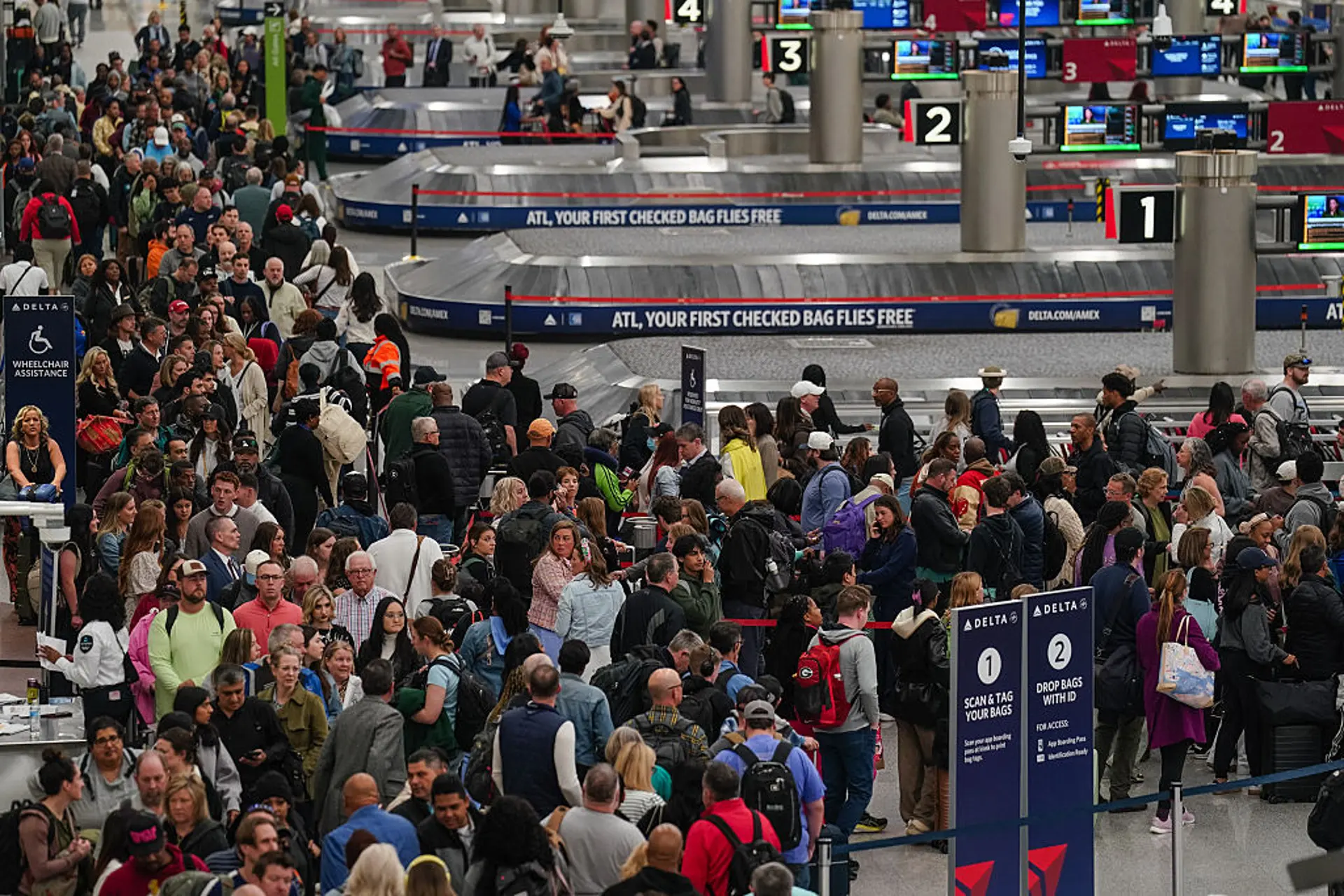
The lines at some of the country's busiest airports have continued to get worse as the government shutdown stretches further. TSA officers are quitting. Others are simply calling off their shift. The ones who remain are working without pay.
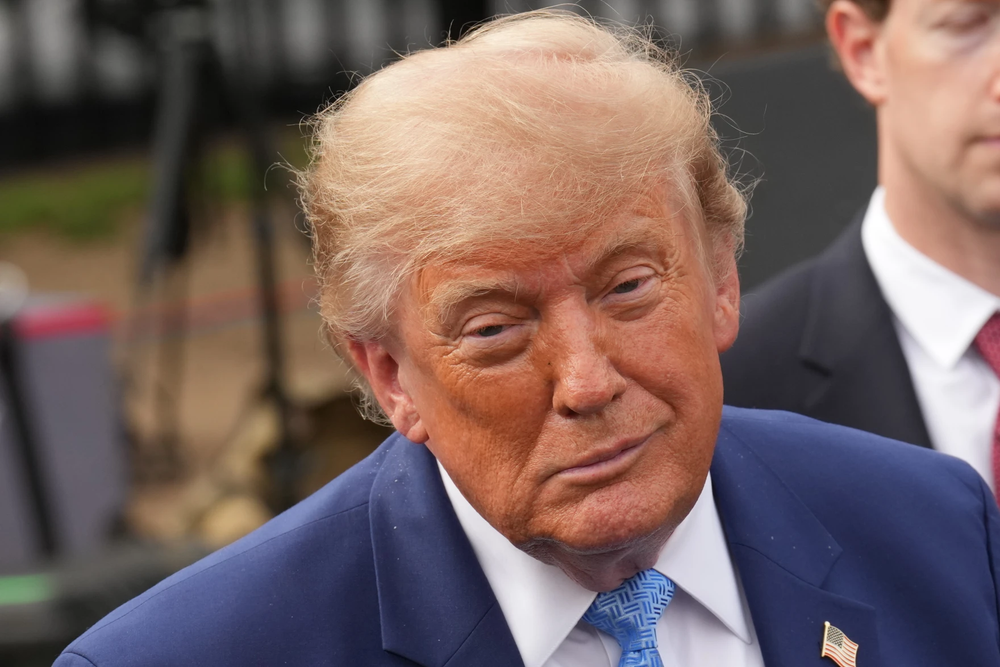
That is the condition the Transportation Security Administration finds itself in after several weeks of a partial Department of Homeland Security shutdown, and it is what drove President Donald Trump to announce on March 22 that Immigration and Customs Enforcement agents would be sent to U.S. airports to help absorb the pressure.
The scale of the attrition is significant. Reports put the number of TSA resignations since the shutdown began somewhere between 376 and more than 400. Callout rates at airports including Houston Hobby climbed well above normal. Roughly 50,000 TSA employees have been working without compensation. At Chicago's O'Hare and Midway airports, the security delays became severe enough to draw widespread attention.
What the Administration Said
Trump announced the deployment through a Truth Social post, instructing ICE to "GET READY" and indicating he wanted agents at airports by Monday. A day earlier, he had raised the prospect as a warning to congressional Democrats, tying it directly to the standoff over DHS funding.
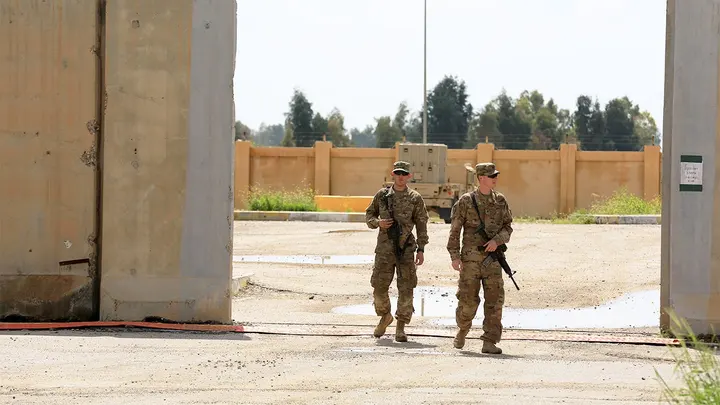
Tom Homan, the administration's border enforcement chief, followed up with details. He said ICE agents would not be doing TSA work; they aren’t allowed to. Airport passenger screening requires specific federal training and legal authority that ICE personnel do not hold. Homan described their role as support: monitoring entrances and exits, handling crowd flow, managing the surrounding environment so that TSA officers could concentrate on the checkpoints themselves.
He also acknowledged that the plan was still being worked out. How many agents would go, which airports would get them first, how command would be divided between the two agencies. None of that had been settled publicly when Homan spoke.
The Limits of What ICE Can Do
Whatever the politics around the deployment, the operational ceiling is real. ICE agents will not be running X-ray machines or conducting screenings. That work belongs to TSA by law and by training, and it is not transferable on short notice to another federal workforce.
The practical question, then, is how much non-screening work ICE can absorb and whether that is enough to meaningfully move the lines. If TSA officers are spending time on functions outside the checkpoint: crowd management, entry monitoring, general flow, then pulling that work off their plates could theoretically let them focus where it counts.
But the mechanics of integrating ICE personnel into airport security operations are not simple. Airports run on tight coordination and defined chains of command. Where ICE fits into that structure, and who supervises joint operations at the checkpoint level, was still unresolved in reporting available as of March 22.
The Political Dimension
Airports made this fight visible in a way that most federal shutdowns are not. A disrupted agency tucked inside a bureaucracy is abstract. A two-hour security line is not.
Trump's announcement used that visibility deliberately. His framing connected immigration enforcement to domestic travel disruption, two areas of federal policy that rarely intersect, and it handed the administration a concrete example of what it said the shutdown was costing the public. His criticism landed squarely on Democrats.
On the other side, critics pushed back on the idea of deploying an immigration enforcement agency inside civilian travel hubs, arguing it muddied the separation between immigration enforcement and civil aviation security. The concern was less about what ICE agents would actually be doing and more about what their presence signals in a space that millions of ordinary travelers move through every week.
What Remains Unknown
As of the reporting date, a number of basic questions did not have public answers. The exact number of agents to be deployed had not been released. The list of airports had not been confirmed. Whether this would remain a temporary measure tied to the current shutdown or become a usable model for future funding lapses was not addressed.
The most important unknown is the simplest one: whether any of it actually shortens the lines. ICE's contribution, if it stays within the bounds Homan described, is indirect. The screening bottleneck stays with the TSA. What changes, if the plan works, is how much of the surrounding work gets lifted off TSA officers who are already stretched thin. That is a narrow margin, and whether it is enough remains to be seen.
Author

We cover the world’s chaos so you don’t have to scroll twelve feeds to understand it.
Sign up for Atlas newsletters.
Stay up to date with curated collection of our top stories.