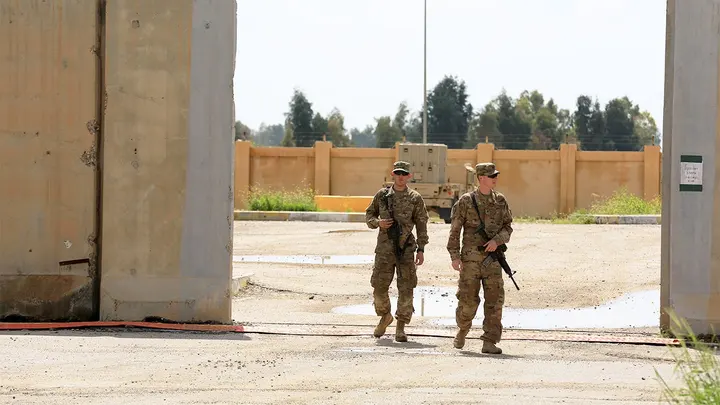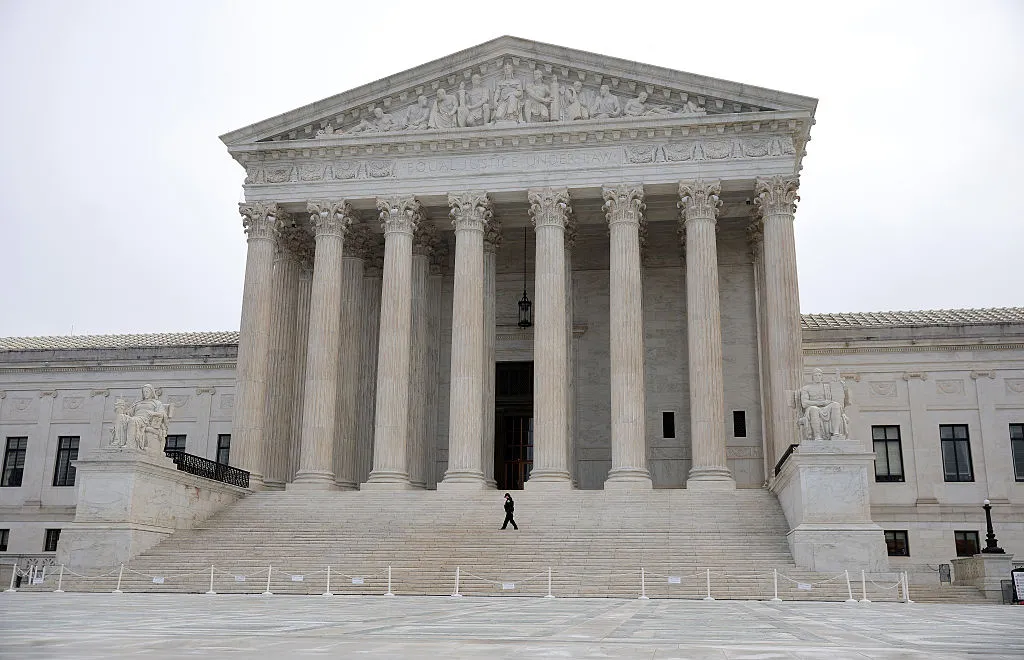
The Supreme Court appeared likely Tuesday to hand the Trump administration a win on immigration, with a majority of justices signaling during oral arguments that federal law does not require border agents to process asylum seekers who have not yet physically crossed into the United States. The case, Noem v. Al Otro Lado, centers on a practice known as "metering," under which Customs and Border Protection officers stationed at ports of entry along the U.S.-Mexico border turn back migrants before they step onto American soil.
The policy is not currently in effect. But the Trump administration is fighting to overturn lower court rulings that blocked it, arguing metering remains a "critical tool" that should be available if border conditions demand it. Assistant to the Solicitor General Vivek Suri put the government's position plainly during the roughly 80 minutes of oral argument: "You can't arrive in the United States while you're still standing in Mexico. That should be the end of this case."
The case turns on two words in the Immigration and Nationality Act. Under federal law, any noncitizen who is "physically present in the United States" or who "arrives in the United States" has the right to apply for asylum. The legal fight is over what "arrives in" means — and whether it covers someone standing at the threshold of a port of entry who is physically blocked by a border agent from stepping across.
The Grammar War
What followed Tuesday was an extended, sometimes testy debate over prepositions, verb tenses, and the spatial logic of arriving somewhere without actually being there. It consumed much of the session.
Justice Samuel Alito framed the question with a blunt analogy. "Do you think someone who comes to the front door of a house and knocks at the door has arrived in the house?" he asked Kelsi Corkran, the attorney representing the immigrant rights groups challenging the policy. "The person may have arrived at the house."
Corkran argued there was no meaningful distinction, calling it a matter of ordinary prepositional usage. "I arrive at my house, or I arrive in my yard when I'm going through the gate," she said. She contended that Congress used the present tense intentionally to describe a process — and that when a border officer physically blocks someone mid-arrival, that process is interrupted but has already begun.
Justice Neil Gorsuch pressed further, asking whether someone standing at the edge of the Rio Grande, one step short of the midpoint, had "arrived." He asked whether a person atop the border wall would have a stronger claim than someone at the bottom of it. Justice Amy Coney Barrett wanted to know the "magic thing" that distinguishes someone who has arrived from someone who has not, if physical presence inside the country is not the standard.
Chief Justice John Roberts raised the problem of queues. If a line of 50 people forms at a port of entry, does only the person at the front qualify as having arrived? "It depends kind of on how long the line is, right?" he asked.
The Government's Case
Suri argued that the statutory framework draws a clear territorial line. He pointed to the Supreme Court's 1993 decision in Sale v. Haitian Centers Council, which held that federal immigration law and the U.N. Refugee Convention do not apply to noncitizens outside the United States — in that case, Haitian refugees intercepted on the high seas. If Congress had intended to expand protections beyond U.S. territory when it enacted the "arrives in" language three years later, Suri argued, it would have said so explicitly.
He described metering not as a permanent bar but as a processing measure. "It's saying our port is at capacity today, try again some other day," Suri told the justices. The alternative, he said, was either dangerous overcrowding at ports of entry or the kind of mass catch-and-release that occurred under the Biden administration. He said he did not know exactly how many people were paroled during that period but added that it "would not surprise me if it was in the millions."
Most of the conservative justices appeared receptive to the government's textual argument. Even Justice Elena Kagan, who raised concerns about statutory redundancy in the government's reading, engaged closely with the text in ways that did not clearly break against the administration.
The Challengers Push Back
Corkran and the immigrant rights groups behind the suit argued that for more than three decades, government regulations acknowledged the obligation to inspect and process noncitizens attempting to enter the country at ports of entry. She said metering represented a sharp break from that practice, first adopted in 2016 and formalized two years later.
Justice Ketanji Brown Jackson raised a practical objection to the government's position. Under its reading, she noted, a person who tries to do everything by the book — approaching a port of entry to seek asylum — could be turned away with no recourse. But someone who crosses illegally and then requests asylum would have their application considered. "Why on earth" would Congress create such an incentive, Jackson asked.
Justice Brett Kavanaugh was less moved by that argument. He told Corkran the court's only task was "trying to figure out what 'arrives in' means," suggesting the potentially inequitable outcomes should not drive the interpretation.
Justice Sonia Sotomayor took the broadest view among the liberal justices, invoking the 1939 voyage of the MS St. Louis, a German ship carrying 937 Jewish refugees that was turned away from Cuba, the United States, and Canada. Most passengers were returned to Europe. Some 254 of them died in the Holocaust. "That's what we're doing here," Sotomayor said.
A Live Case or a Hypothetical?
Jackson repeatedly argued the court should not reach the merits at all. The metering policy was rescinded by the Biden administration in 2021 and has not been reinstated. Without an active policy, Jackson said, the justices were dealing in abstractions. "I don't understand what we are doing other than advising the government in sort of the abstract as to whether or not this kind of thing is lawful," she said. "We don't have an actual policy."
Her colleagues did not appear persuaded. Barrett clarified to Suri that her earlier questions about whether the administration planned to reinstate metering were not intended to suggest the case was moot. Other justices noted that the lower court's class-wide injunction blocking the policy remains in effect — meaning the government cannot use metering even if it wanted to.
Suri told the court that the administration would reinstate the practice "when border conditions justify" but declined to predict what those conditions might look like.
The case arrives alongside a packed immigration docket. Next month, the justices will hear the administration's challenge to birthright citizenship. They have also agreed to take up the government's effort to curtail Temporary Protected Status protections, with arguments expected in late April.
A decision in Noem v. Al Otro Lado is expected by the end of June.
Author

We cover the world’s chaos so you don’t have to scroll twelve feeds to understand it.
Sign up for Atlas newsletters.
Stay up to date with curated collection of our top stories.