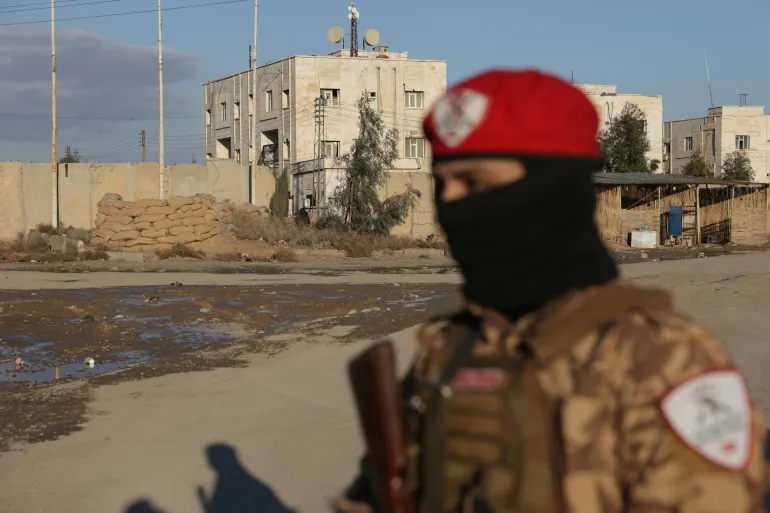
A ceasefire agreement between Syria's government and the Kurdish-led Syrian Democratic Forces appeared to collapse Monday, just one day after it was signed. Fighting erupted around two prisons holding Islamic State militants in northeastern Syria, and an unknown number of IS detainees escaped amid the chaos.
The clashes represented the most significant breakdown in negotiations since Syrian President Ahmad al-Sharaa began pushing to bring Kurdish-controlled territory under central government authority following the fall of Bashar al-Assad in December 2024.
Prisons Fall as Fighting Resumes
Syrian government forces and SDF fighters exchanged fire around two detention facilities holding IS members on Monday. The SDF confirmed it had lost control of Shaddadi Prison in Hasaka province, located roughly 31 miles from the Iraqi border, according to the Associated Press.
The Syrian army announced it had entered the city of al-Shaddadi and imposed a curfew following what it described as the escape of IS detainees. The army called for information on those who fled as search operations continued throughout the area, according to the Syrian state news agency SANA.
The two sides traded accusations over responsibility for the breakout. Damascus claimed the SDF had deliberately released IS prisoners, while the Kurdish-led force said government-affiliated fighters had attacked the facility and freed the militants inside. The Syrian Observatory for Human Rights published footage appearing to show fighters opening prison gates and doors, according to the Washington Examiner.
The SDF also reported clashes around al-Aqtan prison on the outskirts of Raqqa. Nine of its fighters were killed and 20 wounded in fighting there, the group said in a statement.
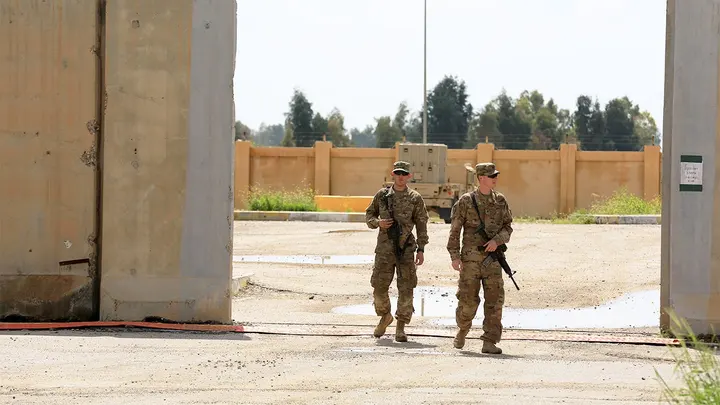
An Associated Press reporter observed a U.S. convoy entering the prison area, apparently to mediate between the two sides. Washington maintains relations with both the Syrian government and the SDF.
Ceasefire Deal Unravels
The fighting came just hours after what had appeared to be a sweeping agreement to end nearly two weeks of conflict. Under the deal announced Sunday, the SDF agreed to withdraw from Raqqa and Deir el-Zour provinces—two Arab-majority areas the Kurdish-led force had controlled for years—and to merge its fighters into the Syrian national army.
President al-Sharaa signed the agreement and told journalists it represented a "victory for all Syrians," according to SANA. SDF commander Mazloum Abdi, who was scheduled to travel to Damascus on Monday for implementation talks, confirmed acceptance of the deal in a video statement, saying the group had agreed "to stop the bloodshed," the AP reported.
The 14-point agreement stipulated that the SDF would hand over administrative and military control of the two provinces to the government, including civilian institutions, border crossings, and oil and gas fields. It also required the transfer of prisons and camps holding IS fighters and their family members to government authority, according to the BBC.
Critically, SDF fighters were to merge into the ministries of defense and interior "on an individual basis"—not as separate Kurdish units, as the SDF had previously demanded. This represented a significant concession from the Kurdish force, which had sought to preserve some degree of autonomy within the Syrian state.
Stakes for Islamic State Detainees
The SDF controls more than a dozen prisons in northeastern Syria where approximately 9,000 IS members have been held for years without trial, according to the Associated Press. Many of the detained militants are believed to have participated in atrocities committed after IS declared a caliphate across large portions of Syria and Iraq in June 2014.
Beyond the prisons, the SDF also oversees al-Hol and Roj camps in Hasaka province, which hold tens of thousands of people—mostly women and children linked to IS fighters. A 2024 Amnesty International report documented 27 detention centers and two camps housing alleged IS members, with the State Department estimating 8,950 male detainees and 43,250 non-combatants, including roughly 25,000 children under 12.
The detainees hail from approximately 60 countries. Their fate has been a persistent concern for the United States and other coalition members since the collapse of the IS caliphate in 2019.
Kamaran Palani, an analyst at the London School of Economics Middle East Centre, told Al Jazeera that the IS prisoners posed "a huge regional threat." He noted that many detainees and their family members would likely welcome integration into the Syrian state. "We are not talking about a few hundred ISIS prisoners; we are talking about thousands of them," he said.
U.S. and Regional Response
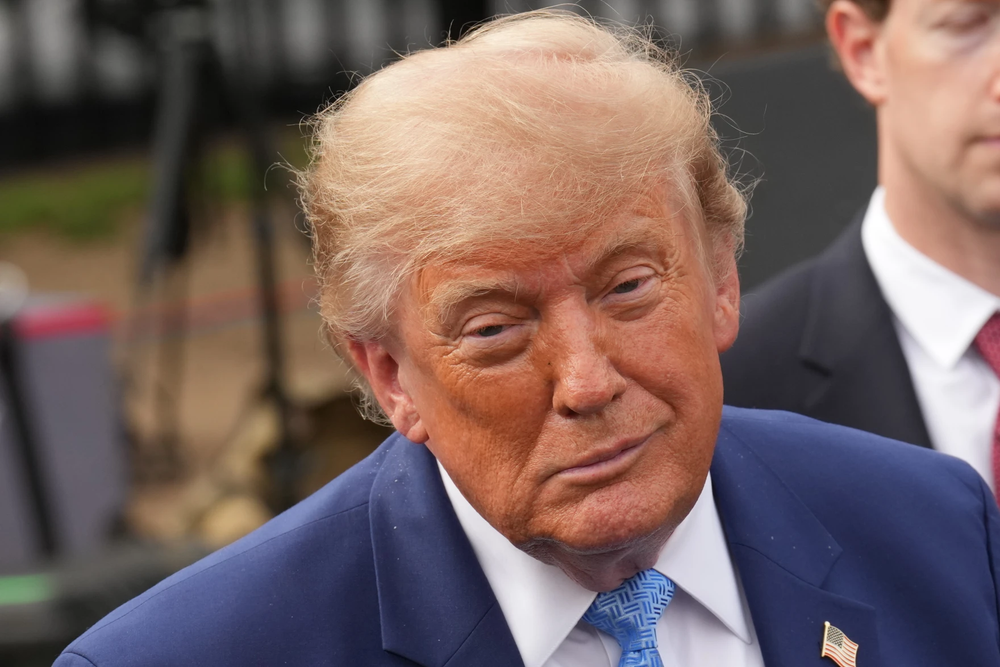
President al-Sharaa spoke by telephone with President Donald Trump on Monday as fighting continued. According to a statement from the Syrian president's office, the two leaders discussed "the importance of preserving the unity and independence of Syrian territory" and "the need to guarantee the rights and protection of the Kurdish people." They also agreed to continue cooperation in combating IS.
U.S. special envoy Tom Barrack, who had met with al-Sharaa on Sunday, praised the ceasefire agreement as "a pivotal inflection point, where former adversaries embrace partnership over division." He said the United States would support the implementation process while safeguarding American interests in defeating IS remnants.
Senator Lindsey Graham of South Carolina issued a sharp warning. "If Syrian government forces continue to advance in the north toward Raqqa, I will push for reimposing Caesar Act sanctions on steroids," he wrote on X. He added that continued fighting would "permanently damage relationships between the U.S. and the new Syrian government."
Turkish President Recep Tayyip Erdogan also weighed in, warning the SDF against delaying compliance with the Damascus agreement. "Procrastination, resistance, and playing for time by hiding behind various excuses will benefit no one," he said, according to the AP. Ankara considers the SDF a terrorist organization due to its ties to the Kurdistan Workers' Party, which has waged a long insurgency in Turkey.
Kurdish Forces Call for Resistance
Late Monday, the SDF issued a statement calling for "all of our youth" to "join the ranks of the resistance." The group compared the current situation to its 2014 defense of Kobani against IS forces.
"Just as our comrades in 2014 forged a historic resistance in Kobani and turned it into a graveyard for the Islamic State group... today we affirm with the same resolve that we will turn our cities into a graveyard for the new IS-minded people who are directed by Turkey," the statement read, according to the Associated Press.
The SDF also accused government fighters of "beheading prisoners from our forces and recording it on video... in the style of ISIS." Damascus did not immediately respond to those allegations.
The Kurdish-led force, which once controlled nearly a quarter of Syrian territory, now holds only Hasaka province. IS was defeated in Iraq in 2017 and in Syria two years later, but sleeper cells continue to carry out attacks in both countries.
Author

We cover the world’s chaos so you don’t have to scroll twelve feeds to understand it.
Sign up for Atlas newsletters.
Stay up to date with curated collection of our top stories.