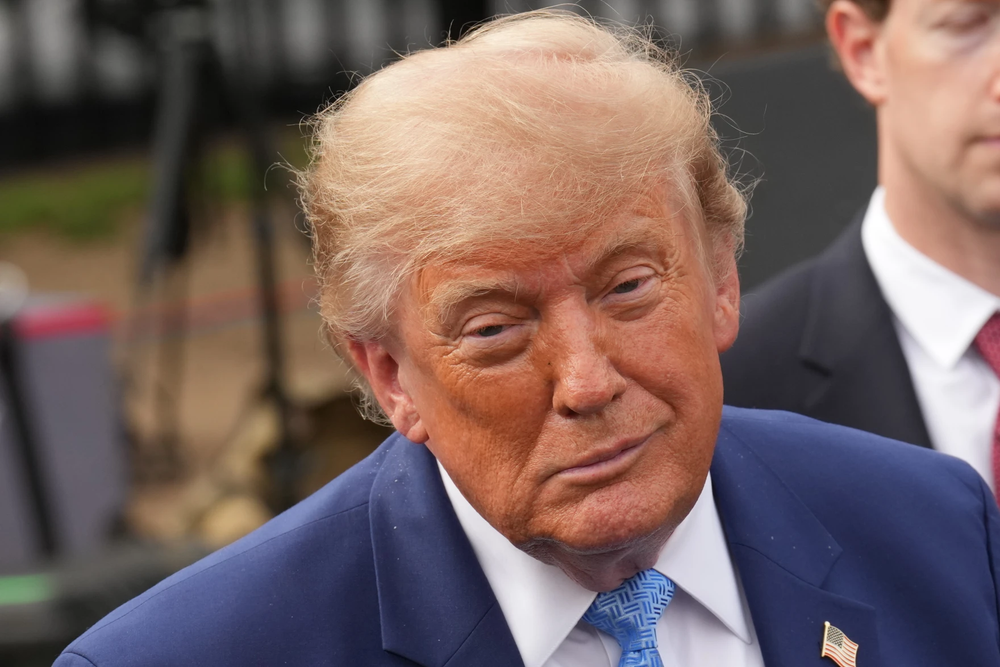
President Donald Trump on Saturday called on a coalition of major powers to dispatch warships to the Strait of Hormuz, the narrow waterway through which one-fifth of the world's oil and liquefied natural gas normally flows, as the Iran war entered its third week with no end to the shipping blockade in sight.
"Many Countries, especially those who are affected by Iran's attempted closure of the Hormuz Strait, will be sending War Ships, in conjunction with the United States of America, to keep the Strait open and safe," Trump wrote on Truth Social Saturday. He named China, France, Japan, South Korea, and the United Kingdom as countries he hoped would contribute vessels, and pledged that in the interim, U.S. forces would continue striking Iran's shoreline and "shooting Iranian Boats and Ships out of the water."
Trump acknowledged in the same post that Iran retained the ability to threaten commercial shipping in the strait despite the sustained air campaign against its military infrastructure. "It would be easy for them to send a drone or two, drop a mine, or deliver a close-range missile somewhere along, or in, this Waterway, no matter how badly defeated they are," he wrote. The admission came after Trump separately declared that the U.S. had destroyed "100% of Iran's Military capability" — a claim Iran's IRGC navy chief, Alireza Tangsiri, immediately rejected, calling it false.
The appeal to form a naval coalition came the morning after U.S. Central Command conducted strikes on Kharg Island, the hub through which roughly 90 percent of Iran's crude oil exports pass. Trump said the strikes hit only military targets and deliberately spared the island's oil infrastructure — but warned that would change if Iran refused to allow safe passage through the strait.
Muted Responses From Allies
None of the countries Trump named made any commitments in the days following his call. The responses were careful and noncommittal across the board.
Britain's Energy Secretary Ed Miliband told Sky News that the United Kingdom was "intensively looking with our allies at what can be done," but emphasized that ending the war was the "best and surest" way to reopen the strait. South Korea's Foreign Ministry said it "takes note" of Trump's request and would "closely coordinate and carefully review" the situation. Japanese Prime Minister Sanae Takaichi was scheduled to meet Trump at the White House Thursday, with expectations running high that the strait would feature prominently in the conversation.
China's embassy in Washington issued a statement saying "all parties have the responsibility to ensure stable and unimpeded energy supply" and that Beijing would "strengthen communication with relevant parties" for de-escalation — language that made no specific commitment. Energy Secretary Chris Wright told NBC Sunday that he had been "in dialogue" with some of the countries Trump named, and said he expected China "will be a constructive partner" in reopening the strait.
France said a naval escort mission was possible but premature. A French official told reporters Saturday that conditions in the strait were "not currently in place as it remains an active theater of war," and that any escort operation would take "several weeks" to organize. President Emmanuel Macron had previously indicated he was working with partners in Europe, India, and Asia on a potential international escort mission, but stressed it could only happen when circumstances permitted and fighting had subsided.
European Union foreign ministers were set to discuss Monday whether the bloc's existing Aspides naval mission in the Red Sea could be extended to the Strait of Hormuz. Germany's foreign minister expressed skepticism, noting that Aspides had not proven effective in the Red Sea and questioning whether expanding it would provide greater security.
Iran's Position
Iran's Foreign Minister Abbas Araghchi pushed back Sunday on the framing coming out of Washington. Speaking on CBS's Face the Nation, he said the strait was not fully closed — only to ships from the United States, Israel, and their allies.
"As a matter of fact, the Strait of Hormuz is open," Araghchi said. "It is only closed to the tankers and ships belonging to our enemies — those who are attacking us and their allies. Others are free to pass."
He also flatly rejected Trump's claim that Iran was eager to negotiate an end to the war. "We don't see any reason why we should talk with Americans, because we were talking with them when they decided to attack us," Araghchi said, referencing the Oman-mediated indirect talks that were underway before the February 28 strikes began. "There is no good experience talking with Americans."
Two Indian-flagged tankers carrying liquefied petroleum gas crossed the strait safely Saturday morning after New Delhi negotiated directly with Tehran. India's Ports Minister Rajesh Kumar Sinha confirmed the transit. A Turkish-flagged vessel had similarly passed through earlier in the week after Ankara secured its own bilateral clearance, with 14 more Turkish ships still awaiting permission. Iran's new supreme leader, Ayatollah Mojtaba Khamenei, separately issued a written statement vowing to keep the strait closed to U.S. and Israeli-linked shipping.
The Military Picture
The U.S. Navy has not yet escorted any commercial vessels through the strait, despite Trump's public statements that such escorts were coming. Joint Chiefs Chairman Gen. Dan Caine told reporters at a Pentagon briefing that reopening the strait required continued degradation of Iran's ability to threaten shipping before any large-scale escort operation could proceed.
"Before I think we want to take anything through there at scale, we want to make sure that we do the work pursuant to our current military objectives to do that safely and smartly," Caine said. He described the strait as "a tactically complex environment" and said U.S. forces were continuing to target Iran's minelaying operations, naval bases, and missile systems along the coastline.
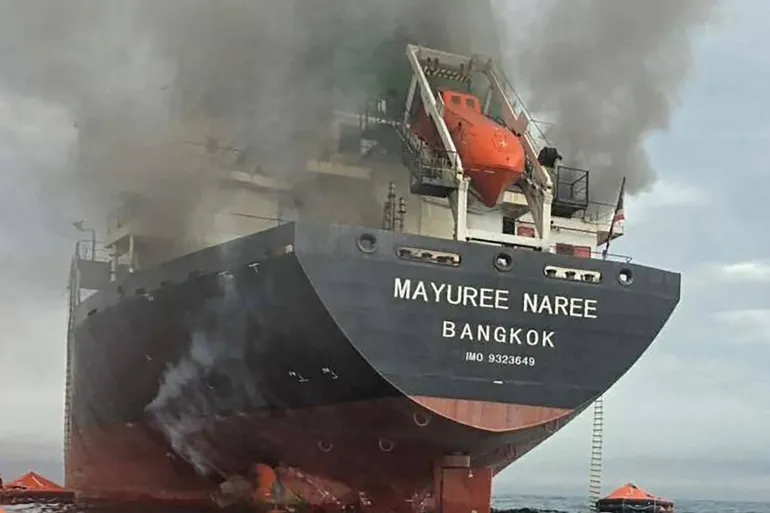
Historical transit volume through the strait averaged approximately 138 vessel transits per day. On March 13, a British naval advisory to commercial shipping counted just five cargo transits and a single tanker transit over the preceding seven days. Roughly 400 oil and product tankers remain idle in the Gulf, according to MarineTraffic data.
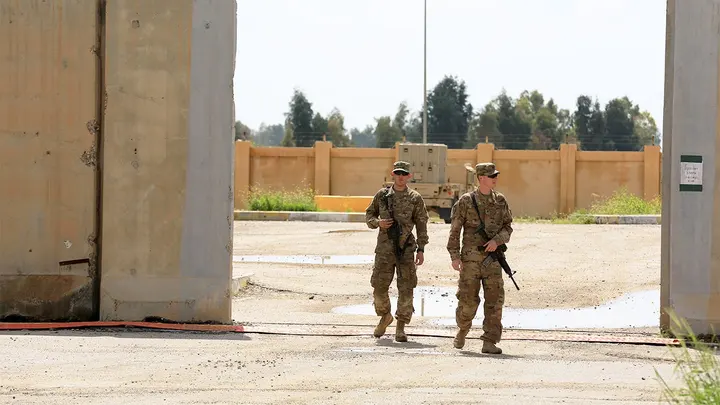
The Pentagon confirmed separately Saturday that six U.S. Air Force service members were killed when a KC-135 refueling aircraft crashed in western Iraq while supporting operations against Iran. The names of all six were released: Maj. John A. Klinner, Capt. Ariana G. Savino, Tech. Sgt. Ashley B. Pruitt, Capt. Seth R. Koval, Capt. Curtis J. Angst, and Tech. Sgt. Tyler H. Simmons.
The Economic Toll
Gas prices in the United States have risen roughly 23 percent since the war began February 28. The International Energy Agency announced Sunday it was releasing nearly 412 million barrels from emergency reserves held by its member countries — described as by far the largest emergency release in the organization's history — with Asian members moving immediately and European and American reserves set to flow from the end of March.
The strait's closure is also threatening global food supply chains. The waterway is a primary corridor for LNG exports, which serve as feedstock for the nitrogen-based fertilizers used in growing staple grains that account for more than 40 percent of global caloric intake. India invoked emergency powers to protect 333 million households dependent on liquefied petroleum gas for cooking. The United Nations humanitarian chief warned that "millions of people are at risk" if humanitarian cargo cannot move safely through the passage.
Andreas Krieg, a Middle East security analyst at King's College London, said the naval coalition call reflected the absence of a broader plan. Iran, he noted, did not need a functional navy to keep the strait disrupted — it only needed to strike occasionally to keep maritime insurers away from the waterway. Sending warships without a diplomatic framework in place, he said, would expose expensive military assets to cheap but potentially effective Iranian projectiles.
Author

We cover the world’s chaos so you don’t have to scroll twelve feeds to understand it.
Sign up for Atlas newsletters.
Stay up to date with curated collection of our top stories.