President Donald Trump announced on Sunday, Oct. 11, that Russia and Ukraine had agreed to stop attacking each other’s energy systems. Within hours, Ukraine said Russian strikes had hit power plants in Kyiv and Kharkiv, and Moscow had not confirmed any deal.
“Effective immediately, there is an ENERGY CEASEFIRE in the War between Russia and Ukraine. Both parties have agreed. Do not break it! Thank you for your attention to this matter,” Trump wrote on Truth Social at 10:16 a.m. ET (9:16 a.m. CT). He gave no terms, duration or monitoring plan.
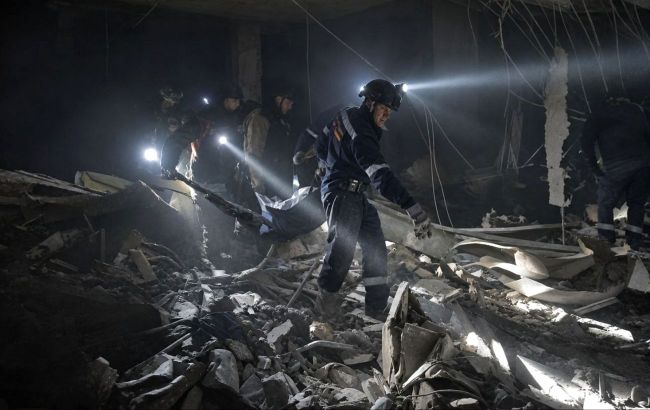
The post covered energy targets only, and a White House official told Axios it referred to a potential deal for both sides to stop hitting oil refineries, with power plants and energy grids possibly to follow. Nothing in it covered the war’s deadliest recent attack. On Saturday, Oct. 10, Russian glide bombs struck apartment buildings in Zaporizhzhia, killing 23 people, including four children, according to Ukrainian officials.
Ukrainian President Volodymyr Zelenskyy told Axios the announcement “was news for me. But if Russians agree to an energy ceasefire, Ukraine will agree.” He added: “If President Trump negotiated it with Putin, please tell us when the ceasefire begins. We are ready, and we will accept it.”
Strikes continued after the post
In his evening address, Zelenskyy said Ukraine was “ready to refrain from striking Russian energy infrastructure — and we count on the same readiness from Russia.”
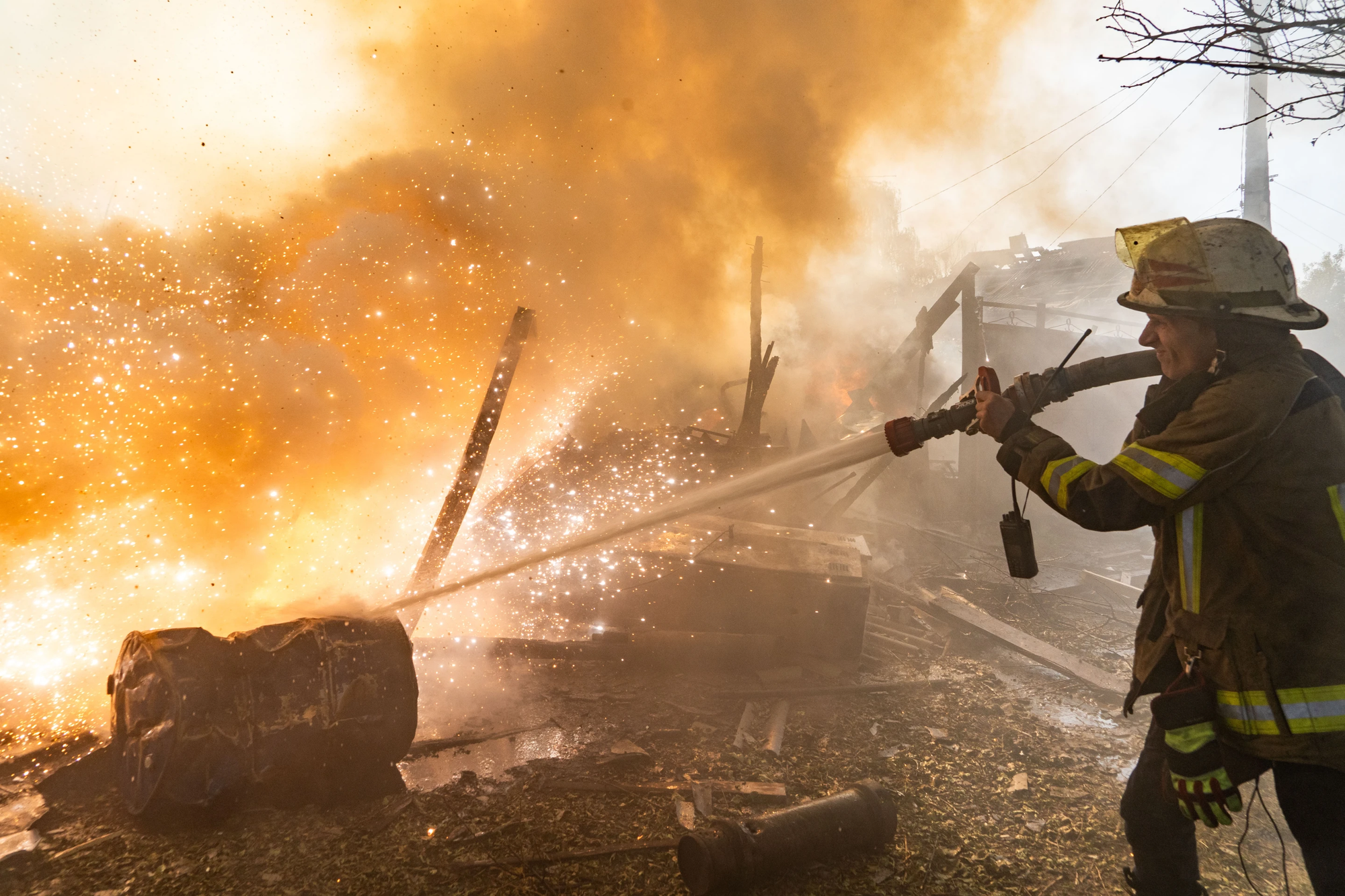
“Unfortunately, Ukrainian skies have been infested with Russian ‘shaheds’ all day today,” he said. “Just now, there was a strike on CHP-5 in Kharkiv — on Kharkiv’s energy infrastructure.”
He reported the Kharkiv strike around 8 p.m. Kyiv time (noon CT), and his office said it came after Trump’s post. On X, Zelenskyy said a Shahed drone had earlier hit a power plant in Kyiv, causing outages in many districts, and that “all of this happened AFTER” Trump’s statement.
Kremlin spokesman Dmitry Peskov did not confirm a deal on Monday, Oct. 12. Asked by reporters whether an energy ceasefire had in fact been agreed, he said: “Contacts are continuing. When we have something to say on this topic, we will certainly inform you,” according to the Russian state news agency RIA Novosti, which carried the remarks at 1:05 p.m. Moscow time (5:05 a.m. CT). On Zelenskyy’s offer to hold elections after a 60-day total ceasefire, Peskov said that “we do not want a ceasefire, we want long-term peace and are ready to do everything possible” to achieve it.
On Sept. 10, Peskov said Kyiv, in “a very difficult situation,” was proposing not a lasting settlement but “a truce regarding the area that constitutes its Achilles’ heel.”
Trump made a similar claim on Sept. 14, saying both countries had agreed not to hit each other’s energy targets. The next day Peskov called it “a very good idea” but said safe passage for oil tankers and the lifting of sanctions were also needed. Russian strikes continued.
Three of Yandex’s five data centers in four days
The announcement came hours after a drone attack shut down a data center in the city of Vladimir, east of Moscow, run by Yandex, the tech company often called Russia’s Google.
Around 4 a.m. Moscow time Sunday (8 p.m. CT Saturday), Yandex Cloud reported a power failure at the site. “The data center’s operation has been completely suspended. There are no casualties,” its alerts channel on Telegram said later, adding that the platform was in emergency mode.
Vladimir region Gov. Alexander Avdeyev said a drone hit an infrastructure facility near the city, causing a fire, and that residents of nearby buildings were evacuated.
It was the third Yandex site hit since Thursday, Oct. 8, when a drone attack shut down the company’s data center in Sasovo, in the Ryazan region. On Friday, Oct. 9, drones partly disabled its data center in the Kaluga region. That makes three of Yandex’s five data centers hit in four days.
Yandex runs Russia’s most popular search engine, apps for navigation, music and food orders, and a cloud platform used by businesses. The independent Russian outlet Astra reported outages Sunday in Kazakhstan, Belarus and Armenia. Users complained of problems with Yandex Go ride-hailing, Yandex Pay and food delivery, according to The Insider, another independent outlet.
Ukraine had not claimed the Vladimir strike as of Sunday night. It has been open about the others. “We always respond in mirror-like fashion,” Zelenskyy said Oct. 8, after Russian strikes on Ukrainian data centers. On Oct. 9, he called the Kaluga attack “our tit-for-tat response.”
Pressure on Zelenskyy
Trump has pressed Zelenskyy for weeks to stop striking Russian refineries, and on Friday his administration eased sanctions on Russian diesel. Of Zelenskyy that day, he said, “He wants to make problems for our farmers, our ranchers, with diesel fuel.”
“I said to him, ‘Do what you want. Don’t hit refineries. There’s plenty of targets. Don’t hit refineries.’ And he went out and he hit,” Trump told reporters at the White House on Saturday, Oct. 10. “He better damn well stop.”
He added: “I think it’s time for Ukraine to get a new president.”
Zelenskyy answered on ABC’s “This Week” on Sunday with a counteroffer that depends on Moscow: elections, but only after a full 60-day ceasefire. “Give us two months, 60 days off. Total ceasefire, 60 days, and we will organize elections,” he said. “With all respect to President Trump, it’s up to our society, up to our people to choose one or another leader.” Elections have been suspended under martial law, in force since February 2022.
American chips in a Russian data center
Yandex said in 2021 that Sasovo housed two of its three supercomputers, built around Nvidia A100 chips and used to train its YandexGPT model. The company has declined to say whether they were damaged.
In August 2022, Nvidia disclosed that the U.S. government had imposed a license requirement on future exports of A100 chips to China and Russia.
Allies respond
“The UK strongly supports President Trump’s call today for a sustained energy ceasefire to start now,” British Prime Minister Andy Burnham said Sunday.
French President Emmanuel Macron said France “unreservedly supports” a “genuine energy truce” acceptable to Ukraine. Neither mentioned Russian confirmation.
Zelenskyy said Sunday that Ukraine had proposed many de-escalatory steps and that Putin “had one answer to all of them — ‘nyet.’”
Twenty-seven hours after Trump announced that both parties had agreed, the Kremlin said contacts were continuing.
Author

We cover the world’s chaos so you don’t have to scroll twelve feeds to understand it.
Sign up for Atlas newsletters.
Stay up to date with curated collection of our top stories.