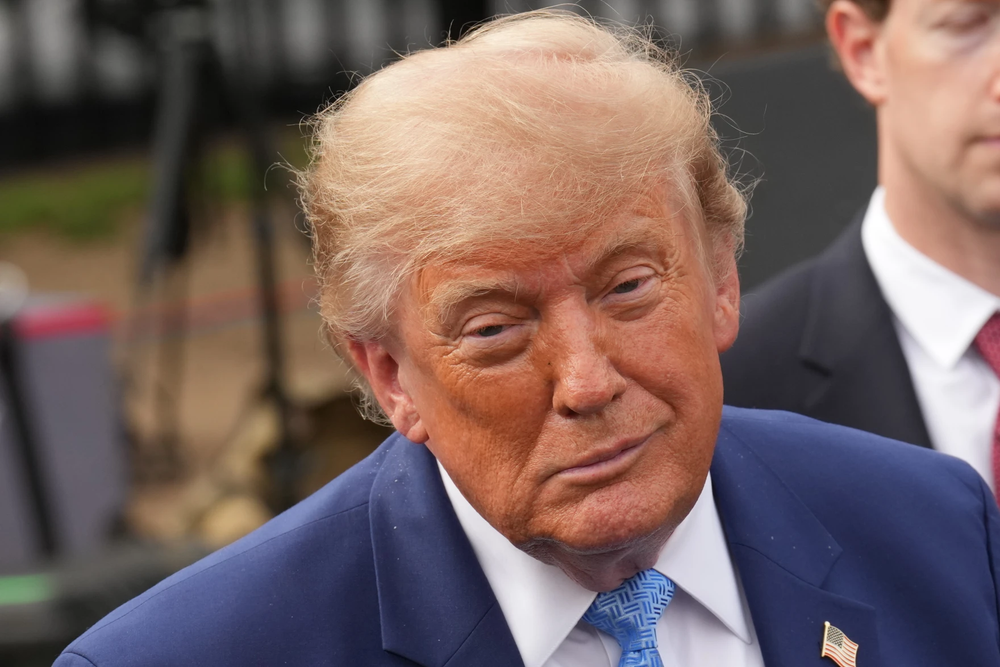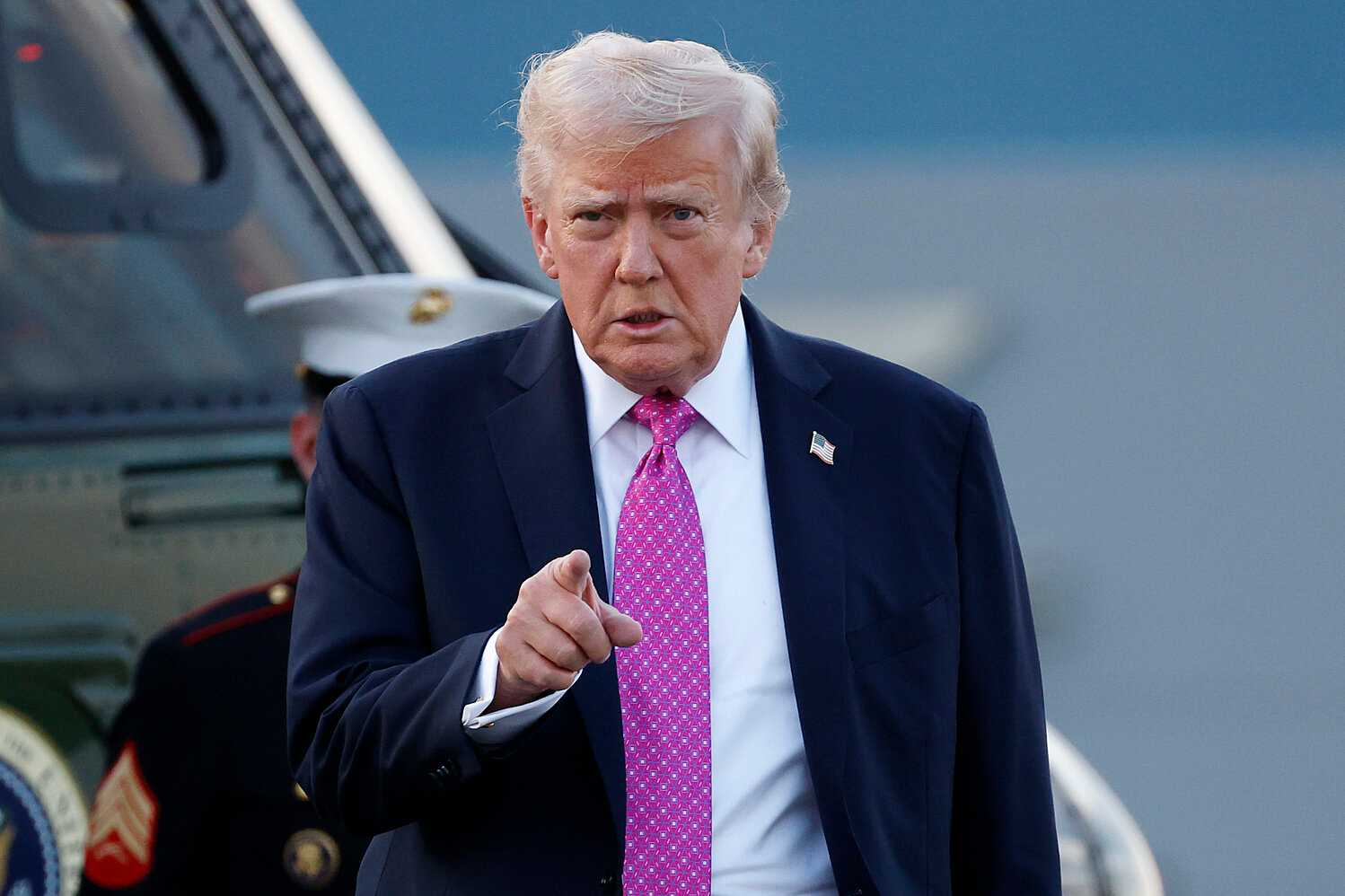
President Trump issued his most explicit and aggressive threats against Iran on Easter Sunday, promising to destroy the country's power plants and bridges on Tuesday if Tehran does not reopen the Strait of Hormuz — and telling Fox News that if no deal is reached, he is "considering blowing everything up and taking over the oil."
"Tuesday will be Power Plant Day, and Bridge Day, all wrapped up in one, in Iran," Trump wrote on Truth Social early Sunday. "There will be nothing like it!!! Open the Fuckin' Strait, you crazy bastards, or you'll be living in Hell — JUST WATCH! Praise be to Allah."
In a follow-up post, Trump specified the deadline: "Tuesday, 8:00 P.M. Eastern Time." The White House did not respond to questions about whether this indicated a time when strikes would begin.
The threats cap a pattern of escalating deadlines Trump has set and then extended since the war began on February 28. On March 21, he gave Iran 48 hours to open the strait or face strikes on power plants. Two days later, he said "productive" conversations had led him to delay. On March 26, he extended the deadline by 10 days — to April 6 at 8 p.m. Eastern — at what he described as Iran's request. On March 30, he warned the U.S. would destroy Iran's oil wells, Kharg Island, and power plants if no deal materialized. Now that 10-day window has arrived, and Trump appears to have shifted the deadline forward by one day to Tuesday.
The Sunday posts came hours after Trump announced the successful rescue of the second crew member from an F-15E Strike Eagle shot down over Iran on Friday — an operation Trump called "an Easter Miracle."
Trump Says a Deal Could Come Monday — or the War Expands
In at least seven interviews on Sunday, Trump oscillated between optimism about a deal and maximalist threats of destruction. He told Fox News that Iranian negotiators have been granted "immunity from death" so they can continue talks, and that a deal could happen "as soon as Monday."
"I think there's a good chance tomorrow. They're negotiating now," Trump said. He added that Iran had already conceded the key point of abandoning its nuclear weapons program. "The big thing is they're not going to have a nuclear weapon. They're not even negotiating that point, it's so easy. That's already been conceded."
But in an interview with NBC News, Trump said that if no deal materializes, "we're blowing up the whole country." When asked about civilian infrastructure, he said, "I don't want to talk about that." Pressed on whether anything was off the table, he said "very little." He told The Hill that he was not ruling out ground troops.
In a separate interview with Axios, Trump said there was a "good chance" of a deal before his deadline, but if nothing is agreed upon by Tuesday, "I am blowing up everything over there."
The president's language drew criticism from both parties. Senator Tim Kaine, a Virginia Democrat on the Armed Services Committee, called the rhetoric "embarrassing and juvenile" and said it raised risks for U.S. service members. Former Representative Marjorie Taylor Greene, previously among Trump's most vocal defenders before her recent resignation from Congress, called on members of his administration to "fall on their knees and beg forgiveness from God and stop worshipping the President and intervene in Trump's madness."
The Council on American-Islamic Relations condemned Trump's use of "Praise be to Allah" in the context of threats of violence, calling it "a disturbing willingness to weaponize religious language."
House Intelligence Chairman Rick Crawford, an Arkansas Republican, took the opposite view. "I wouldn't toy with him if I were the Iranians," he said. "He has a lot of backbone."
Iran's Response
Iran showed no public willingness to comply with Trump's demands. The Islamic Revolutionary Guard Corps warned Sunday that attacks on U.S. economic interests in the region would be intensified if strikes on civilian targets in Iran continue.
Iran's U.N. mission called Trump's threat "clear evidence of intent to commit war crime." Iranian Culture Minister Sayed Reza Salihi-Amiri said Trump "constantly shifts between contradictory positions" and that Iranian society "generally does not pay attention to his statements."
Iran's parliamentary speaker, Mohammad Bagher Ghalibaf, addressed Trump directly on social media. "Your reckless moves are dragging the United States into a living HELL for every single family, and our whole region is going to burn because you insist on following Netanyahu's commands," he wrote.
A top Iranian adviser, Ali Akbar Velayati, warned that Tehran could also disrupt the Bab el-Mandeb Strait off the Arabian Peninsula, a separate chokepoint leading to and from the Red Sea. An Iranian presidential spokesperson said the Strait of Hormuz would reopen only if some transit revenues were used to compensate Iran for war damages.
American intelligence assessments, reported last week, indicated Iran is unlikely to open the strait soon because control of the waterway provides the only meaningful leverage Tehran holds over the United States.
Iran did, however, continue to selectively allow passage. Iraq thanked Tehran Sunday for allowing tankers carrying Iraqi oil through the strait. A French container ship, three Omani tankers, and a Japanese gas carrier also transited on Friday. China confirmed that three Chinese ships passed through last week.
The Escalating Cost
Iran responded to Israeli strikes on its petrochemical facilities by hitting infrastructure across the Gulf on Sunday. In Kuwait, Iranian drone attacks damaged power plants, a petrochemical facility, and knocked a water desalination station offline. In Bahrain, a drone struck a national oil company storage facility. In the UAE, four people were injured when debris from an intercepted Iranian projectile hit Khor Fakkan port, and fires at a Ruwais petrochemical plant forced a halt to operations.
In Israel, authorities searched for three people in Haifa after an apartment building was struck. In Lebanon, Israeli strikes killed four people in Beirut and at least 11 across the country on Easter Sunday. More than 1,400 people have been killed in Lebanon and over a million displaced since the war expanded.
More than 1,900 people have been killed in Iran since February 28. Thirteen U.S. service members have died and more than 300 have been wounded. Nineteen people have been killed in Israel.
The economic fallout continues to spread. The average U.S. gasoline price hit $4.11 a gallon on Sunday, up from below $3 when strikes on Iran began. San Francisco became the first American city where average diesel prices topped $8 a gallon. Jet fuel prices have more than doubled since January. Indonesia has introduced fuel rationing. The EU has urged member states to reduce oil consumption. Five European finance ministers have called for a windfall tax on energy companies profiting from the crisis.
Bahrain's foreign minister warned the U.N. Security Council that the Hormuz disruption threatens global food security and could push an additional 45 million people into acute hunger.
What Happens Tuesday
The question now is whether Trump follows through or extends the deadline again. He has done so three times already. When asked Sunday whether he would push the deadline back once more, he said, "I don't want to talk about it."
Diplomatic efforts continued in the background. Oman held discussions with Iranian officials on proposals for "smooth transit" through the strait. Egypt's foreign minister spoke with U.S. envoy Steve Witkoff, Iranian Foreign Minister Abbas Araghchi, and Turkish and Pakistani counterparts. Russia confirmed Araghchi also spoke with Foreign Minister Sergey Lavrov. Pakistan has said it would soon host talks between the U.S. and Iran.
U.S. allies have grown increasingly frustrated with Washington's approach. French President Emmanuel Macron criticized the lack of coordination before the initial strikes and rejected Trump's push for European nations to enter offensive operations to reopen the strait. "They cannot then complain about not being supported in an operation they decided on their own," Macron said Thursday. "It is not our operation." The United Kingdom convened 41 countries last week to discuss plans for reopening the waterway, placing blame on Tehran.
Representative Jake Auchincloss, a Massachusetts Democrat and Marine veteran, offered what may be the most concise criticism of the administration's position. "Iran recognizes that, in fact, their control over the Strait is even more strategically vital to them than the development of a nuclear weapon," he said. While the United States remains militarily unmatched in its ability to destroy targets, Auchincloss added, "strategically, this war has been a failure."
Trump is scheduled to hold a press conference with military officials at the White House on Monday at 1 p.m. Whether that event previews a diplomatic breakthrough or a new round of strikes will depend on what happens in the next 36 hours.
Author

We cover the world’s chaos so you don’t have to scroll twelve feeds to understand it.
Sign up for Atlas newsletters.
Stay up to date with curated collection of our top stories.