President Donald Trump said Sunday he must decide whether to make a deal with Iran or “finish them off.” Qatari mediators visited Tehran the same day, and officials from Saudi Arabia, Turkey and Pakistan are due there Monday. The U.S.-Israeli war on Iran began Feb. 28th.
What Washington says on the record
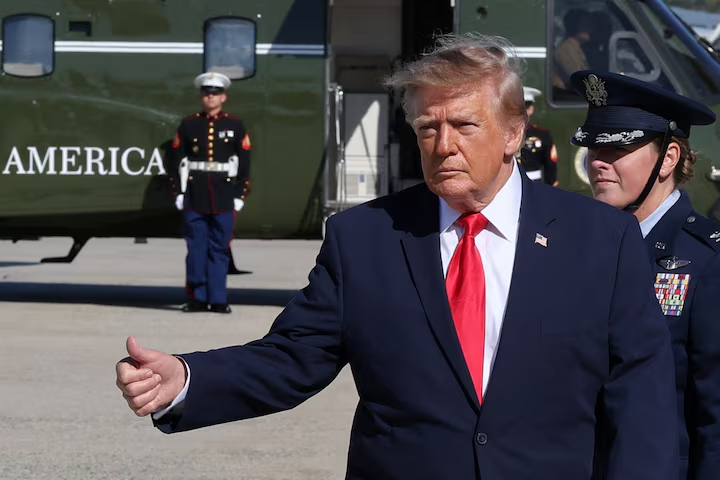
In a phone interview on Fox News’ “Sunday Morning Futures,” Trump told host Larry Kudlow: “Do I make a deal with them or do I finish them off?” The wording is from the Roll Call Factba.se transcript of that Oct. 25 broadcast.
Two days earlier, at a Fort Myers, Fla., rally, Trump said, “We may do another little Epic Fury,” using the U.S. military’s name for the war, Reuters reported Oct. 23.
Asked Sunday whether he planned to attack Iran, Trump suggested he would be foolish to telegraph that, the Associated Press reported. He then said: “No. There will not be a strike today.”
The White House’s on-record position is a pledge. “The United States will not be attacking Iran at any time prior to the midterm elections,” White House spokeswoman Anna Kelly said in a statement to ABC News on Oct. 22. Trump made the same commitment in an Oct. 8 Truth Social post, archived by trumpstruth.org.
Descriptions of post-election planning come from unnamed sources. ABC reported Oct. 22, citing two Israeli sources, that Israeli and U.S. forces had drawn up plans for joint strikes that would almost certainly come after the election. A White House official told ABC the administration does not comment on “sensitive military plans that may or may not exist.” The Pentagon declined to comment.
CNN reported, citing two U.S. officials, that U.S. forces can begin major operations “within 96 hours of receiving” an order from Trump. Some current and former officials told CNN the order could come any time before year’s end, most likely after the midterms. The officials said Trump appears to lean toward major action but has not decided, and that he has previously leaned toward action, then backed off at the last moment. A senior Pentagon official told CNN: “The Department is a planning organization, and its job is to develop and execute military options ordered by the President.”
The Senate rejected an Iran war powers resolution 49-50 on Sept. 24, the AP reported then. The Senate Daily Press lists only pro forma sessions through Nov. 5, and no pending Iran war powers resolution turned up in the sources reviewed.
Competing accounts on Hormuz
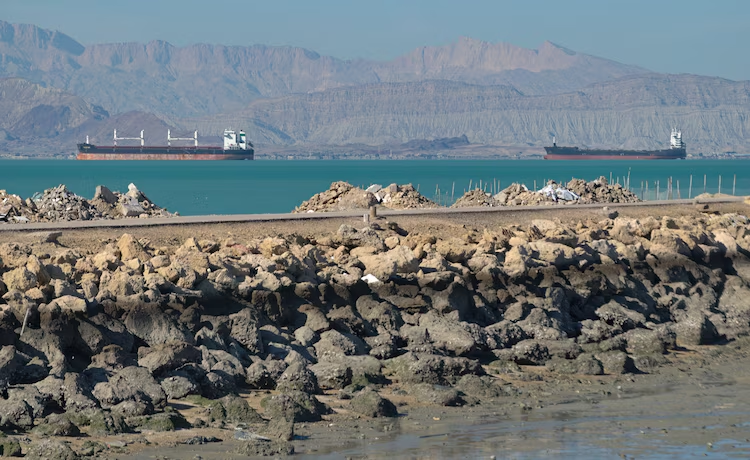
Trump told Kudlow: “Remember, we now control the Hormuz Strait.”
U.S. Central Command said Sunday that its commander, Adm. Brad Cooper, flew over the strait and that primary transit routes were “free and clear of Iranian sea mines.” CENTCOM said more than 3,000 commercial vessels had transited with its support over six months and over 95% had passed safely in recent months.
Iran’s ambassador to Pakistan, Reza Amiri Moghadam, said Saturday that Tehran had told Pakistani mediators it would reopen the strait if Washington lifted its naval blockade, the AP reported. Tasnim, a Revolutionary Guard-affiliated news agency, quoted an unnamed source rejecting a separate Al Arabiya report of such an offer. The source said Iran “fundamentally does not accept any equation of the Strait of Hormuz in exchange for the blockade.”
The Saudi front and oil
The U.S. Mission to Saudi Arabia said in an Oct. 25 security alert: “Effective October 23, 2026, the Department of State ordered non-emergency U.S. government employees and U.S. government employee family members to leave Saudi Arabia due to safety risks.”
Reuters reported that the Houthis said they struck pumping stations on Saudi Arabia’s East-West crude pipeline and Riyadh airport. Saudi Arabia said Sunday it intercepted more missiles and drones.
Brent crude futures were down $1.90, or 1.63%, at $114.82 a barrel at 4:59 a.m. CT Monday, Reuters reported. Vandana Hari of Vanda Insights told Reuters that Trump has not dispelled market expectations that strikes could follow the Nov. 3 midterms.
Iran’s public position
Iranian Foreign Ministry spokesman Esmaeil Baghaei told a German broadcaster Sunday, per state media, that messages were still passing between Tehran and Washington through intermediaries and that the diplomatic window had not closed, the AP reported. He said Trump and other U.S. officials repeatedly use the phrase “complete surrender,” which, he said, no Iranian accepts.
Baghaei said Monday that talks with the Saudi, Turkish and Pakistani officials would include “Israel’s expansionist policies, developments in the Palestinian territories and Lebanon, and the repercussions of US and Israeli military action against Iran,” Reuters reported.
Envoys in Tehran
An official briefed on the matter told Reuters that Qatari mediators were in Tehran Sunday in an effort coordinated with the United States.
Saudi Defense Minister Prince Khalid bin Salman, Pakistani army chief Field Marshal Asim Munir and Turkish intelligence chief Ibrahim Kalin are to meet Iranian leaders Monday, Saudi and Iranian officials told Reuters. Ali Bagheri Kani, deputy secretary of Iran’s Supreme National Security Council, was quoted by state-run media as saying the three would join a joint meeting, Reuters reported. Saudi Deputy Minister for Public Diplomacy Rayed Krimly said on X the visit supports de-escalation and mediation led by Qatar and Pakistan.
The AP reported a few hours ago that the delegations were in Tehran for meetings and the agenda had not been set. DPA, citing Iranian state television, reported at 7:03 a.m. CT that the officials were meeting in Tehran, and Tasnim quoted Baghaei calling the visit a practical step toward consultations. As of about 7:40 a.m. CT, searches of Reuters, Al Jazeera, Anadolu and Iran International turned up no published statement or readout from those meetings.
Author

We cover the world’s chaos so you don’t have to scroll twelve feeds to understand it.
Sign up for Atlas newsletters.
Stay up to date with curated collection of our top stories.