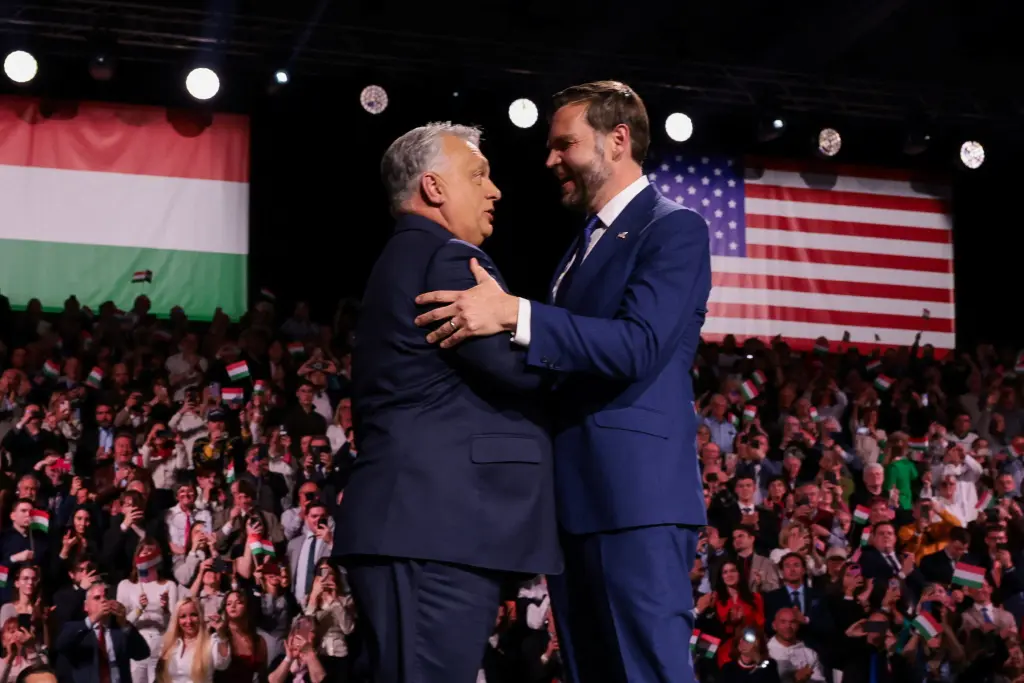
Vice President JD Vance arrived in Budapest on Tuesday for a two-day visit aimed squarely at boosting Hungarian Prime Minister Viktor Orbán's reelection bid, an unusual intervention by a senior U.S. official in a foreign election that underscored the Trump administration's deep investment in keeping its closest ideological ally in Europe in power.
Speaking before more than a thousand Orbán supporters at a sports arena rally dubbed a "Day of Friendship" event, Vance made no attempt to obscure the purpose of his trip. "We have got to get Viktor Orbán reelected as prime minister of Hungary, don't we?" he told the crowd. He called Orbán "one of the only true statesmen in Europe" and framed the election in civilizational terms, urging attendees to "stand for Western civilization" and go to the polls on Sunday.
Hungary votes April 12 in what has become the most competitive race Orbán has faced in two decades. His nationalist Fidesz party is trailing the center-right Tisza party, led by Péter Magyar, in most independent polls. One late-March survey showed Tisza with 56 percent support among decided voters compared to 37 percent for Fidesz, though other polls showed a tighter margin with a substantial bloc of undecided voters still in play.
Trump Endorses by Phone
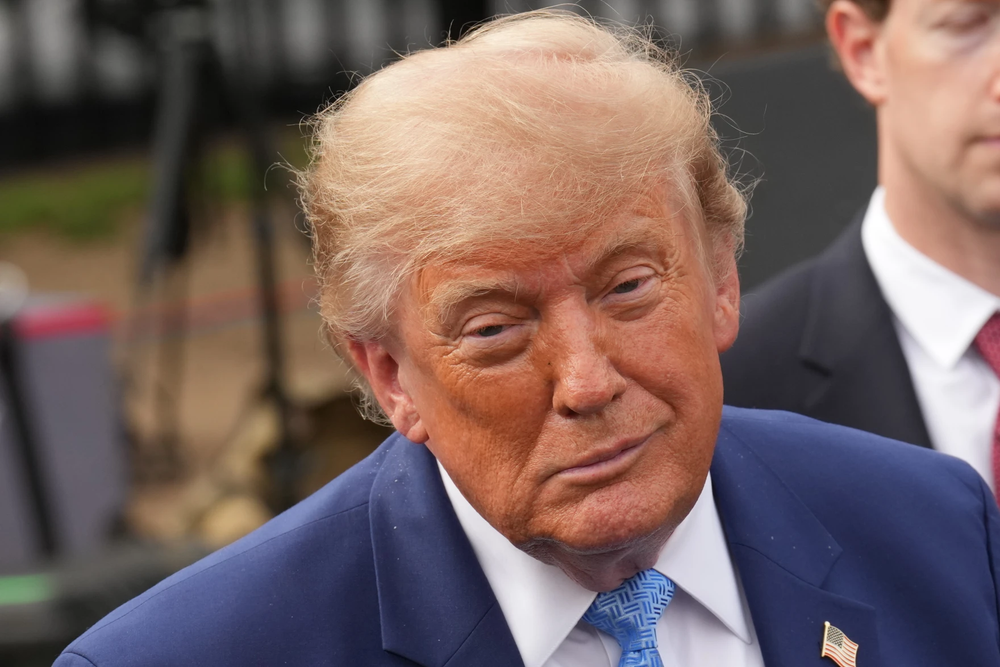
The rally featured a live phone call between Vance and President Trump, though the moment did not go entirely as planned. Vance dialed Trump from the lectern on speakerphone, only to reach an automated message informing him the voicemail box was full. He hung up and tried again, this time reaching the president, who asked for a moment before addressing the crowd.
Trump endorsed Orbán directly, telling the audience he loved Hungary and calling the prime minister "a fantastic man." He praised Orbán for keeping migrants from entering the country. Trump has endorsed Orbán's reelection multiple times in recent weeks, including via video message at last month's Conservative Political Action Conference event in Budapest, where he offered his "complete and total endorsement."
Earlier in the day, Vance and Orbán held a joint press conference in which Vance told the prime minister, "The president loves you, and so do I, because you're such an important part of what has made Europe strong and prosperous." His office said the visit was intended to strengthen cooperation on energy, technology, and defense.
The Opposition Responds
Magyar, the Tisza party leader who is favored in polling, pushed back sharply against the visit. In a social media post, he urged international actors — from Ukraine to Serbia, from Russia to America — not to interfere in Hungary's elections. "This is our country," he wrote. "Hungarian history is not written in Washington, Moscow, or Brussels — it is written in Hungary's streets and squares."
The friction highlighted the unusual nature of Vance's trip. Orbán has repeatedly condemned any expressions of support for his opponent by European Union partners as foreign meddling, yet welcomed the direct campaign involvement of the American vice president without apparent reservation.
Vance appeared to acknowledge the dynamic when asked whether the U.S.-Hungary relationship could suffer if Orbán lost. He said Washington would "of course" work with whoever wins, "because we love the people of Hungary," before adding confidently that "Viktor Orbán is, of course, going to win."
Magyar responded positively to the assurance of continued partnership regardless of outcome, saying a Tisza-led government would regard the United States as a key partner within NATO and floated the idea of inviting Vance and Trump to Budapest in October for the 70th anniversary of the 1956 Hungarian Revolution.
Why Washington Is Invested
The administration's engagement in Hungary's election reflects a broader pattern. Secretary of State Marco Rubio visited Budapest and spoke favorably of Orbán in February. The White House's alignment with Orbán fits its stated preference for what it describes as "patriotic European parties" — movements that share its positions on immigration, national sovereignty, and skepticism of multinational institutions.
For Moscow, the stakes are equally significant. Orbán's government has consistently worked to slow EU sanctions against Russia over its war in Ukraine and last month vetoed a 90 billion euro EU loan to Kyiv that other member states considered critical to Ukraine's continued defense. Orbán's campaign has been shadowed by reports of close coordination between his government and the Kremlin, including a leaked recording of his foreign minister, Péter Szijjártó, coordinating with Russian counterpart Sergei Lavrov on efforts to help Russian entities win relief from EU sanctions.
Separately, a transcript published this week showed Orbán telling Russian President Vladimir Putin that he was willing to assist him in settling the war in Ukraine and was "at your service." Szijjártó did not deny the leaked recording but downplayed its significance, saying he communicated the same positions publicly and privately.
Orbán's Vulnerabilities
Despite the administration's backing, Orbán faces headwinds that extend beyond the polling deficit. Hungary has recorded among the lowest annual growth rates in Europe, currently at 0.4 percent, and endured peak inflation of 26 percent in 2023 — the highest on the continent. Magyar has centered his campaign on allegations of entrenched corruption in government procurement that has enriched members of Orbán's family and inner circle, as well as chronic underinvestment in healthcare and education.
Trump's own standing in Europe has also complicated the calculus. A Hungarian source sympathetic to Orbán, speaking anonymously, acknowledged that Trump has increasingly alienated Europeans on the nationalist right — beginning with threats to take control of Greenland, which the source called "really offensive," and continuing through the economic uncertainty generated by the war in Iran. Even conservatives who cheered Vance's combative speech at the Munich Security Conference last year are now less enthusiastic about the administration, raising questions about whether American support can close the gap for Fidesz.
Vance is scheduled to speak Wednesday at Mathias Corvinus Collegium, a Budapest cultural foundation that has become a hub for nationalist conservative thought and has been financed in part through a stake in MOL, the Hungarian energy conglomerate that profits from Russian energy supplies. The rally Tuesday evening and the speech Wednesday represent the most direct campaign assistance the Trump administration has provided to a foreign leader's reelection effort.
Author

We cover the world’s chaos so you don’t have to scroll twelve feeds to understand it.
Sign up for Atlas newsletters.
Stay up to date with curated collection of our top stories.