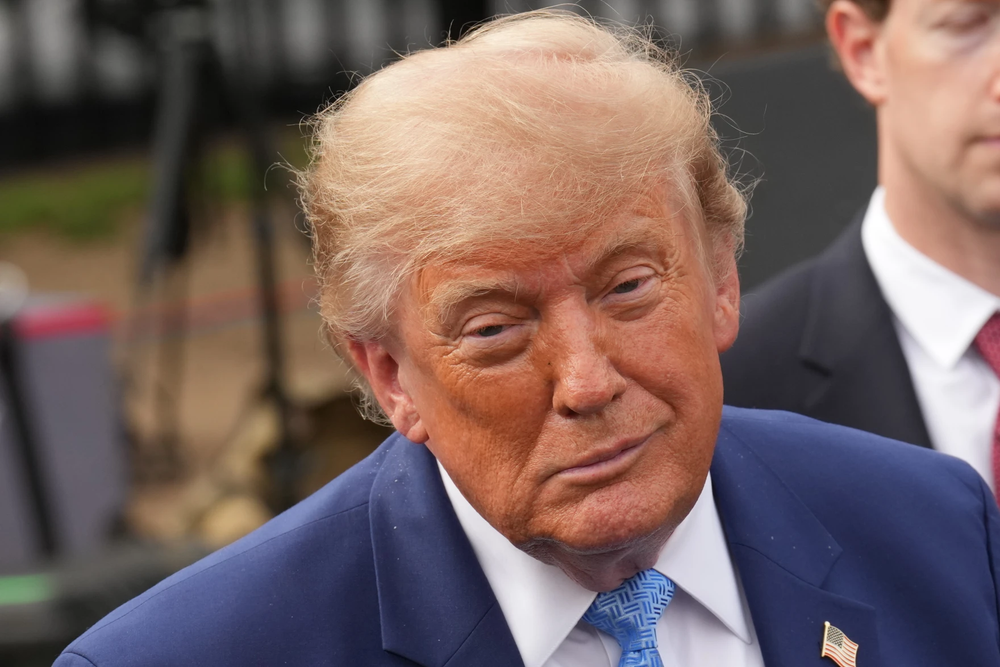
President Trump announced Friday that Vice President JD Vance "is now in charge of 'FRAUD' in the United States" and will carry the title of "fraud czar" — a role the president said will focus primarily on Democratic-run states where he alleges massive theft of taxpayer money has gone unchecked.
"His focus will be 'EVERYWHERE,' but primarily in those Blue States where CROOKED DEMOCRAT POLITICIANS, like those in California, Illinois, Minnesota, Maine, New York, and many others, have had a 'free for all' in the unprecedented theft of Taxpayer Money," Trump wrote on Truth Social. He claimed the scale of fraud was so large that eliminating it could "literally" balance the federal budget. He did not provide evidence for that assertion.
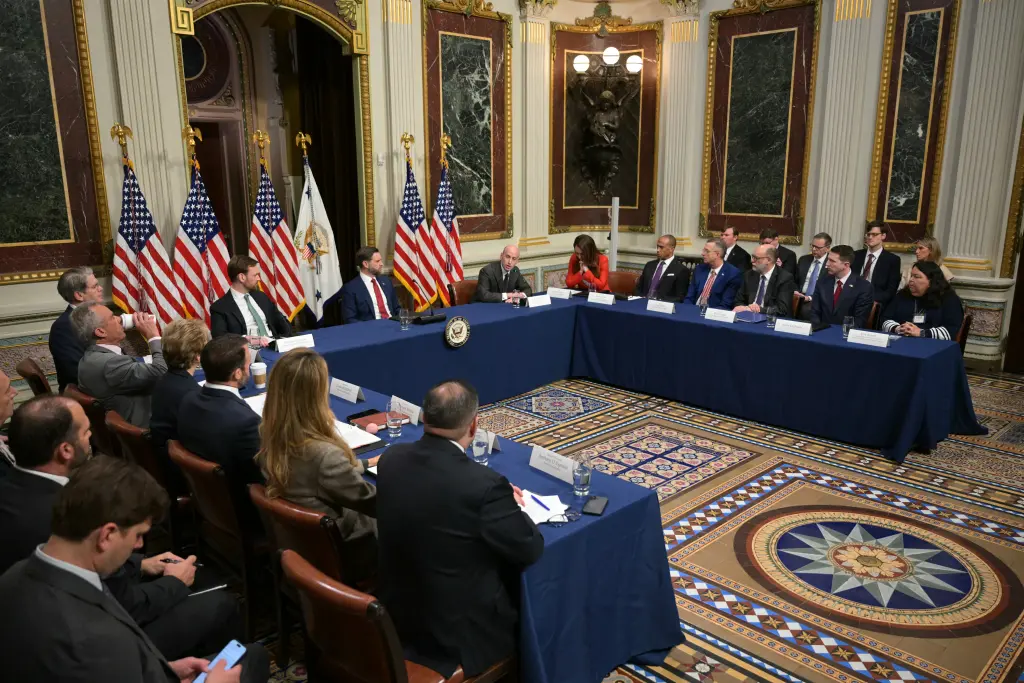
The announcement formalizes a role Vance has been building for months. Trump signed an executive order on March 16 establishing a national anti-fraud task force chaired by the vice president, designed to "coordinate and accelerate a comprehensive national strategy to stop fraud, waste, and abuse within Federal benefit programs." Vance held the task force's first meeting on March 27. A new assistant attorney general position focused specifically on fraud enforcement was created earlier this year, and Colin McDonald was sworn into that role by Vance on April 1.
Trump said Friday that "raids have already started in L.A." — a reference to the arrest of eight individuals the day before on charges related to a $50 million health care fraud scheme in and around Los Angeles.
The California Crackdown
The Los Angeles arrests were the task force's first major public enforcement action. Federal prosecutors charged three nurses, a chiropractor, a psychologist, and three others in separate cases involving fraudulent Medicare claims for hospice care. Prosecutors said the defendants submitted tens of millions of dollars in claims for patients who were not terminally ill.
One of those charged, licensed vocational nurse Lolita Beronilla Minerd, allegedly operated a hospice company that filed more than $9 million in fraudulent Medicare claims. Prosecutors said her company listed numerous patients at the same addresses, located far from the hospice facility. One elderly couple was paid cash in an envelope each month for enrolling, though neither had a terminal illness. Most legitimate hospice providers discharge fewer than 18 percent of patients, given the nature of end-of-life care. Minerd's company discharged roughly 85 percent.
Centers for Medicare and Medicaid Services Administrator Mehmet Oz said he believes half of the approximately 1,800 hospice providers in the Los Angeles area are fraudulent. Some of the operations targeted in the federal action had patient survival rates approaching 100 percent — an obvious red flag for a program designed for people with six months or less to live.
The White House's rapid response account posted Thursday that Vance's task force had suspended more than 200 hospice and health care providers in California.
California Governor Gavin Newsom pushed back against the framing. He said the state had already revoked 280 hospice licenses over the past two years, banned new hospice licenses in 2021, and filed more than 100 criminal cases related to hospice fraud. Newsom also noted that the state had stopped $125 billion in identity-theft-related fraud on its own. He called the Trump administration "home to the biggest fraudsters on Earth" and said it was wrongly taking credit for addressing problems in programs the federal government manages.
Minnesota at the Center
The fraud investigation's roots run through Minnesota. Vance stepped into the anti-fraud role in February amid a federal probe into what investigators described as roughly $9 billion funneled fraudulently from the state's Medicaid program. The scheme involved phony autism services providers, among other operations. The Justice Department has so far charged 98 individuals in connection with the fraud, 85 of whom are members of the Somali community. Investigators issued 1,750 subpoenas and executed 130 search warrants in the state.
The Trump administration froze federal childcare funding to Minnesota and "temporarily" suspended more than $250 million in the state's Medicaid funding over eligibility concerns. Trump has also pointed to the fraud allegations to justify his administration's aggressive immigration enforcement operations in Minneapolis, which drew national attention after two U.S. citizens were fatally shot by federal agents during enforcement operations in January.
Minnesota Governor Tim Walz has said his state has worked for years to combat fraud and noted that Trump has previously pardoned individuals convicted on fraud charges.
Top White House adviser Stephen Miller described the Minnesota situation at the task force's first meeting in terms that connected fraud directly to immigration. He painted a picture of a Minnesota worker laboring to earn a living while "a Somali refugee who arrived two years ago" lives without financial stress after "lying on a piece of paper" to receive unlimited benefits. Miller said the task force would "demolish" that system.
The Structural Apparatus
The task force Vance chairs is not a small operation. Its first meeting drew a roster of Cabinet officials that included HHS Secretary Robert F. Kennedy Jr., Agriculture Secretary Brooke Rollins, Treasury Secretary Scott Bessent, White House Budget Director Russ Vought, HUD Secretary Scott Turner, Education Secretary Linda McMahon, DHS Secretary Markwayne Mullin, SBA Administrator Kelly Loeffler, VA Secretary Doug Collins, and Department of Labor Inspector General Anthony D'Esposito.
"This is not business as usual," D'Esposito said at the meeting. "We are going on offense against fraud. We will track it, expose it, and shut it down."
Andrew Ferguson, the Federal Trade Commission chairman who serves as the task force's vice chairman, described fraud as an "existential" crisis. "If we fail to address it, the fabric of our nation will swiftly unravel," he said.
Vance described the effort as requiring a "whole-government approach" and said anti-fraud protections that had existed across the federal government "were actually turned off by the Biden administration." He did not specify which protections he was referring to.
The new assistant attorney general for fraud enforcement, Colin McDonald, reports directly to the vice president and the president — a reporting structure that bypasses the normal chain of command within the Justice Department. Vance originally announced the creation of that position in January, saying it would initially focus on Minnesota but would have "nationwide jurisdiction."
Oz said in February that the administration would also pursue health care fraud allegations in Maine and other states. "We estimate there's $100 billion of fraud coming out of the programs that administer Medicare, Medicaid and the like," Oz told radio host John Catsimatidis.
Critics Call the Effort Partisan
The decision to focus the fraud investigation primarily on Democratic-run states has drawn criticism from both governors targeted by the effort and from outside observers who say the selective focus reveals political motivation rather than a neutral law enforcement priority.
Newsom and Walz have both pointed to their own states' anti-fraud records and questioned why the administration is not investigating fraud in Republican-led states with equal vigor. Critics have also noted that Trump has pardoned individuals convicted of fraud, a point both governors raised publicly.
The Vance-led task force's explicit focus on "Blue States" is unusual for a federal law enforcement initiative, which traditionally targets fraud based on the scale and nature of the alleged conduct rather than the political affiliation of state leadership. Fraud in federal benefit programs exists across all 50 states, and the Government Accountability Office has documented waste and abuse in programs administered by both Republican and Democratic state governments.
Trump did not provide evidence Friday for his claim that eliminating fraud in Democratic states could balance the federal budget. The federal deficit for fiscal year 2025 exceeded $1.8 trillion.
Vance has positioned the fraud portfolio as a signature issue heading into the 2026 midterms, where Republicans are defending narrow congressional majorities. The arrests in Los Angeles and the ongoing Minnesota investigation give the administration tangible enforcement actions to point to. Whether the effort expands beyond the states Trump named Friday — and whether it produces convictions at the scale the administration has suggested — will determine whether it is remembered as a law enforcement campaign or a political one.
Author

We cover the world’s chaos so you don’t have to scroll twelve feeds to understand it.
Sign up for Atlas newsletters.
Stay up to date with curated collection of our top stories.