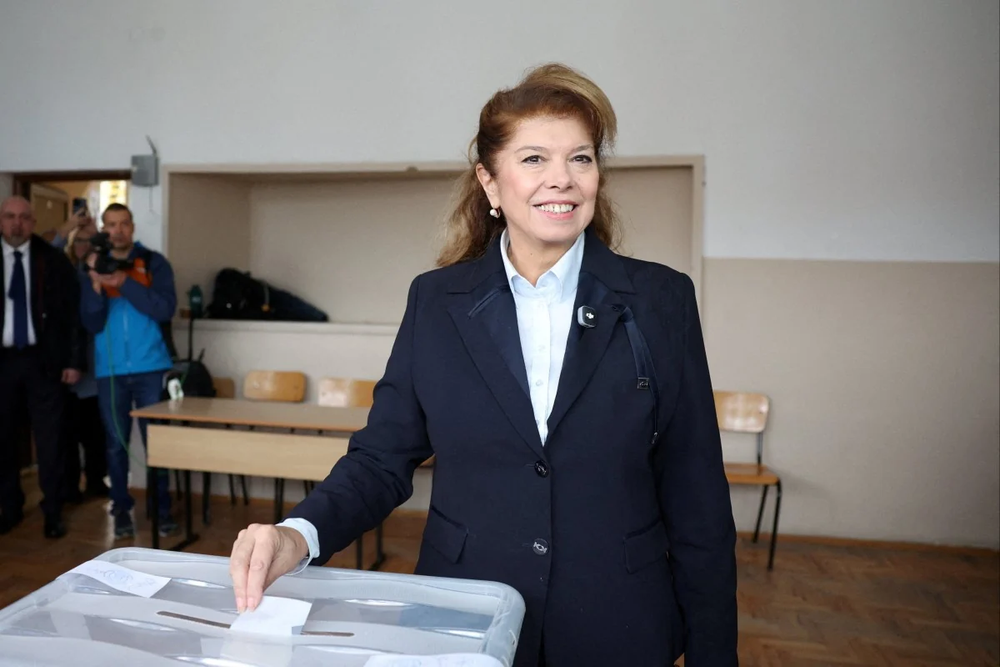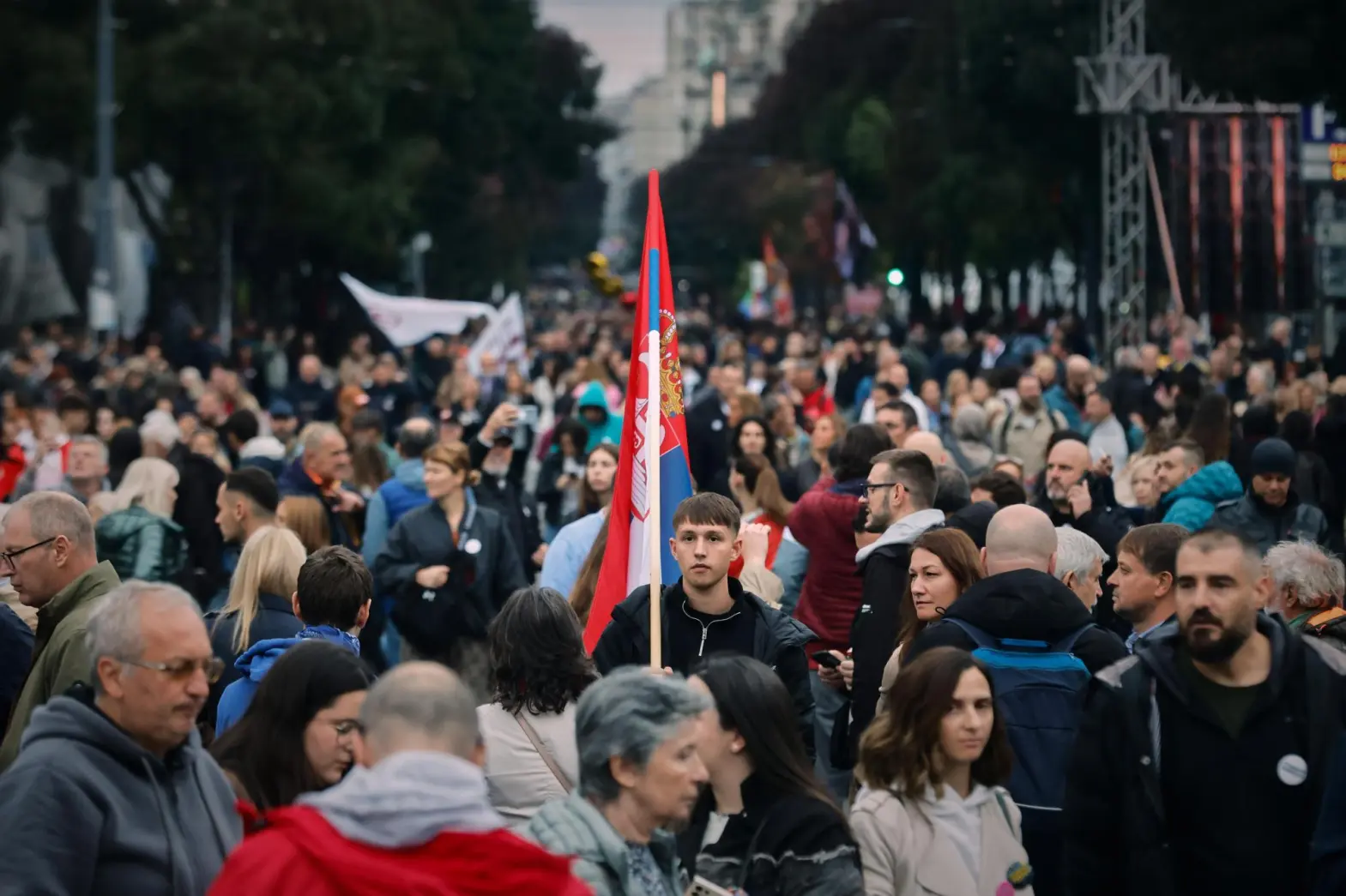
Aleksandar Vučić, who led the Serbian Progressive Party’s ticket in Sunday’s snap parliamentary election, conceded defeat that evening to the student-backed Student List. He based his statement on a sample, not a final count.
Serbia’s Republic Electoral Commission (RIK) had not declared final results as of Monday morning Central Time. Its tally released Monday, from 8,135 of 8,392 polling stations, gave the Student List 52.65% of the vote and Vučić’s list 39.22%, Tanjug reported.
What Vučić said, and what each number counts
Polls closed at 2 p.m. CT (8 p.m. in Belgrade). Vučić announced the outcome at his party’s election-night event about an hour and a half later, AP reported.
“We still do not have final results,” he said, according to the Guardian. “On the basis of a sample … it is clear that we have lost these elections, the Student List has won, they will have between 135 and 140 seats and we will have 105.” Parliament has 250 seats. In the Serbian transcript published by Politika, he said “oko 105,” or about 105.
Later in the address, in Radio Free Europe/Radio Liberty’s English translation, he said: “I want people to know that this was the legitimization of a revolution carried out by the people with direct support from various European countries and the American deep state, the one that opposes President Trump.” Republika’s Serbian transcript has “duboke američke države.” In the same translation, he called his opponents “merely carrying out dirty work devised by someone else.” Reuters, in its own English, quoted him as saying “we are used to being in the opposition.”
Other figures count different things:
Pollsters CeSID and Ipsos: a projection from 99.3% of the sample gave the Student List 141 seats and Vučić’s list 103, with 53% and 38.8% of the vote, RTS reported Monday.
RIK, in its 8,135-station tally: the Student List had 2,246,423 votes and Vučić’s list 1,673,241. On that same tally, RIK data published by RTS showed 4,269,403 voters, or 68.81% of registered voters, with 257 stations still to be processed.
Turnout during the day ran lower against a smaller count. At 7 p.m. in Belgrade, or 1 p.m. CT, the Guardian reported 67.6% from CeSID and Ipsos.
From the Novi Sad collapse to the snap vote
A concrete canopy at Novi Sad’s railway station collapsed on Nov. 1, 2024, killing 16 people, Reuters reported. Construction Minister Goran Vesić announced Nov. 4 that he would resign, according to a Tanjug report on the Serbian government’s website. The first large Novi Sad protest followed Nov. 5, according to Civic Initiatives, a Serbian nonprofit.
On Nov. 21, prosecutors detained 11 people, including Vesić, Reuters reported. Students and professors at Belgrade’s Faculty of Dramatic Arts were attacked Nov. 22, which Civic Initiatives said set off the student blockades. Novi Sad prosecutors indicted 13 people Dec. 30, including Vesić, the group said.
Prime Minister Miloš Vučević resigned Jan. 28, 2025, as did Novi Sad’s mayor, Civic Initiatives said. The BBC reported that Vučić and his party deny corruption allegations.
ODIHR’s interim report said Vučić called this election Sept. 9 and resigned the presidency on Sept. 27 to lead the Progressive Party’s list. AP and Reuters reported he was seeking to become prime minister.
U.S. and international reaction
On Oct. 20, ahead of the vote, a bipartisan group of senators led by Jeanne Shaheen, D-N.H., said in a statement they “urge all parties to respect the vote count and relevant processes for verifying electoral results.” The co-signers were Roger Wicker, R-Miss.; Dick Durbin, D-Ill.; Chuck Grassley, R-Iowa; Chris Murphy, D-Conn.; Joni Ernst, R-Iowa; and Thom Tillis, R-N.C.
Republican Rep. Joe Wilson, co-chair of the Helsinki Commission, told RFE/RL: “The Serbian people earned this incredible victory through sheer determination and a commitment to restore the rule of law in their country.”
Kremlin spokesman Dmitry Peskov said Monday, according to TASS: “We acknowledge the results of the elections held in Serbia.”
European Council President António Costa and European Commission President Ursula von der Leyen posted near-identical messages on X, each saying: “We stand ready to support reforms on the rule of law, media freedom, the fight against corruption and strong democratic institutions.”
Euronews reported July 8, citing three diplomats, that eight of the EU’s 27 member states opposed opening Serbia’s next accession cluster. One diplomat cited rule-of-law problems and non-alignment with sanctions.
Monitors, complaints and the legal timeline
For voters abroad, RIK set 93 polling stations in 37 countries for 102,147 registered voters, CRTA reported. RIK voted 20 to 7 to hold voting everywhere from 7 a.m. to 8 p.m. Serbian time, CRTA said, putting 13 stations and 10,851 voters partly overnight. CRTA calculated Chicago voting from 1 a.m. to 2 p.m. local time and New Zealand from 7 p.m. Sunday to 8 a.m. Monday.
The Student List said Oct. 13 that it had appealed to the Administrative Court. The court dismissed the appeals, saying in a ruling dated Oct. 16 that RIK applied the law correctly, Fonet reported. AP reported some diaspora voters cast ballots in the middle of the night.
On Sunday, CRTA’s program director, Raša Nedeljkov, said “a large number of irregularities continue to be recorded,” the Guardian reported.
After the vote, Vučić said his party would not file lawsuits, appeals or objections with the Administrative Court, Index.hr reported.
International observers are scheduled to present preliminary findings at 9 a.m. CT Monday, according to the OSCE’s election office.
Local commissions have 96 hours from the close of polls to adopt summary reports. Counted from the 8 p.m. Belgrade close, that is, by our arithmetic, 2 p.m. CT on Thursday, Oct. 29. RIK then has 96 hours from receiving all reports to publish overall results, and 10 days to assign seats.
Author

We cover the world’s chaos so you don’t have to scroll twelve feeds to understand it.
Sign up for Atlas newsletters.
Stay up to date with curated collection of our top stories.