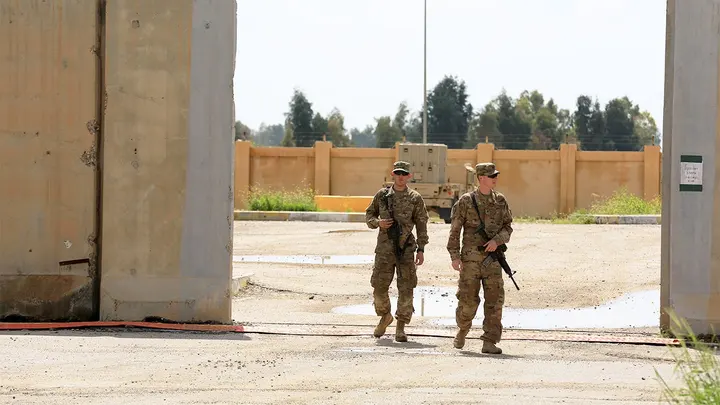
The Pentagon is considering deploying up to 10,000 additional ground troops to the Middle East, a move that would mark the largest single surge of American combat power into the region since the war with Iran began on February 28. The proposed deployment would include infantry units and armored vehicles, supplementing the roughly 5,000 Marines and several thousand 82nd Airborne paratroopers already ordered to the theater.
A senior U.S. defense official said a decision is expected next week. The troops would come from different combat units than those already dispatched and would likely be positioned within striking distance of Iran and Kharg Island, Tehran's primary oil export terminal off its southern coast.
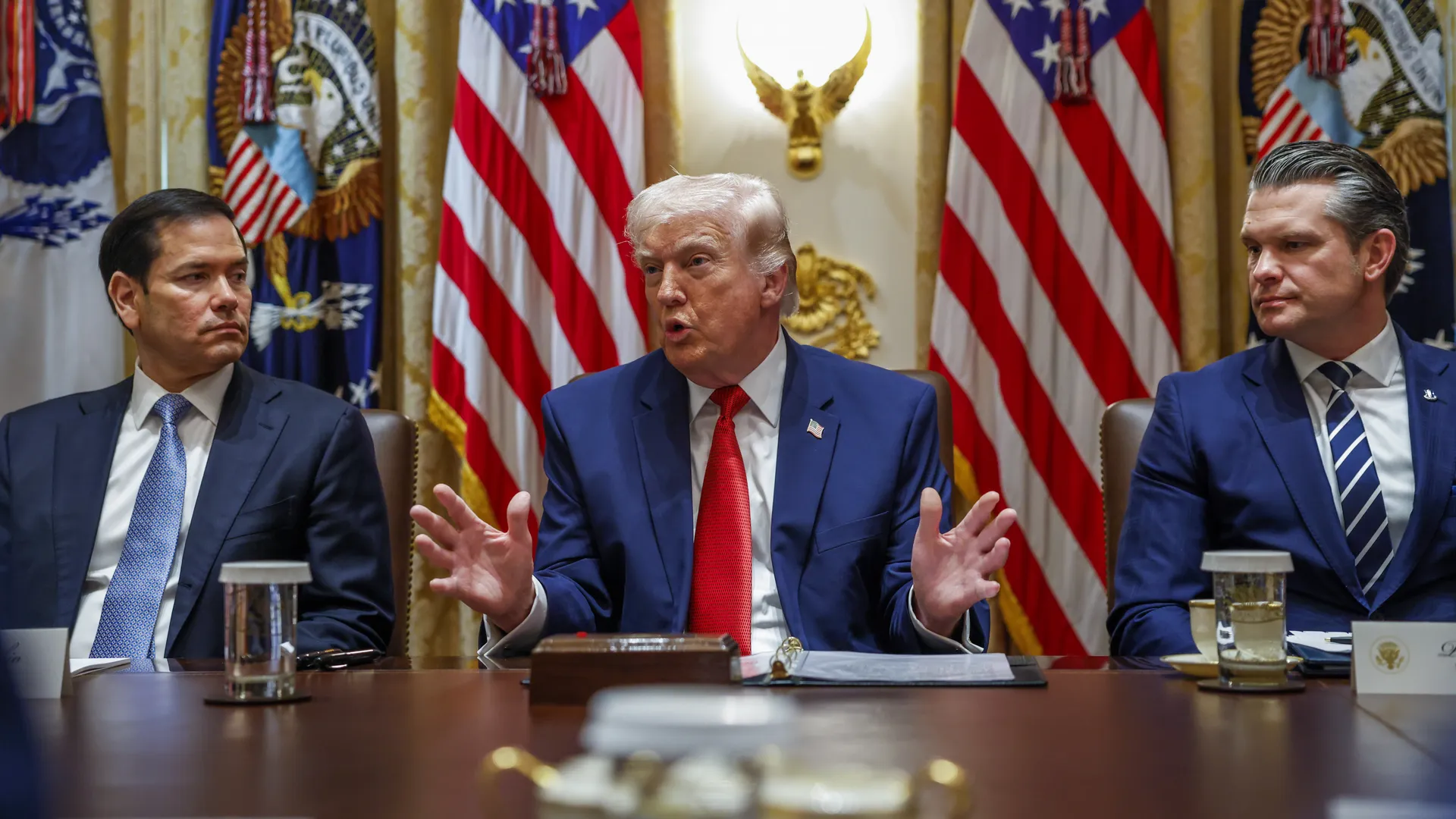
The buildup is unfolding on two tracks simultaneously. President Trump says the United States is negotiating with Iran on a deal to end the war. Iran has not agreed to high-level talks and has publicly denied that any direct negotiations are taking place. The troop surge signals that Washington is preparing military options for a potential ground operation even as it pursues diplomacy — a posture the administration has framed as giving the president "maximum flexibility."
"All announcements regarding troop deployments will come from the Department of War," deputy White House press secretary Anna Kelly said. "As we have said, President Trump always has all military options at his disposal."
U.S. Central Command, which oversees military operations in the region, declined to comment on the proposed deployment.
The Force Already in Theater
The U.S. military presence in the Middle East already exceeds 50,000 service members. In recent weeks, the Pentagon has ordered a pair of Marine Expeditionary Units to the region — one arriving this week, another now deploying — adding approximately 5,000 Marines and thousands of sailors. The command element of the 82nd Airborne Division has been directed to deploy with an infantry brigade consisting of roughly 2,000 troops.
The 82nd Airborne is the Army's premier rapid-response force, trained to parachute into contested territory and secure airfields on short notice. The Marine units carry capabilities suited to embassy support, civilian evacuation, and amphibious operations — a skill set that has fueled speculation about a possible move on Kharg Island or Iran's coastline.
The Trump administration has discussed using ground forces on Iranian shores to secure the Strait of Hormuz and Kharg Island. The possibility of deploying troops to secure Iran's stockpile of highly enriched uranium has also been raised internally. Iran has threatened to mine the Persian Gulf if it detects an imminent landing.
Adding 10,000 more combat troops would bring the total American military footprint in the region well above 60,000, a force posture not seen since the early years of the Iraq War.
Congress Wants Answers
Lawmakers from both parties emerged from classified Pentagon briefings on Wednesday dissatisfied with the information they received. The briefings were led by mid-level defense officials, not senior Pentagon leadership, and multiple members of Congress said they were left with more questions than answers.
House Armed Services Committee Chairman Mike Rogers, who supported the initial decision to strike Iran in late February, said the committee is not getting enough detail about what military options are being considered and why. "We want to know more about what's going on, what the options are and why they're being considered," Rogers told reporters. "And we're just not getting enough answers on those questions."
Sen. Tim Kaine said he did not "feel better informed" about the prospect of ground troops in Iran after the Senate briefing. Sen. Richard Blumenthal said he was "more fearful than ever" that the United States is heading toward a ground war, arguing that the administration's objectives — reopening the Strait of Hormuz, destroying missile capacity, halting uranium enrichment, changing the regime — cannot be achieved without a physical military presence.
Rep. Nancy Mace posted on social media after the House briefing that the justifications presented publicly for the war did not match the military objectives described in the classified session. "This gap is deeply troubling," she wrote. "The longer this war continues, the faster it will lose the support of Congress and the American people."
Rep. Gil Cisneros said he learned more about the situation from reading the newspaper than from the Pentagon's classified brief. Sen. Elizabeth Warren said she lacks confidence the administration has a clear exit strategy.
The White House Position
White House press secretary Karoline Leavitt said Wednesday that the United States is "very close to meeting the core objectives of Operation Epic Fury" and that the military mission "continues unabated." She added a warning directed at Tehran: "President Trump does not bluff and he is prepared to unleash hell. Iran should not miscalculate again. Their last miscalculation cost them their senior leadership, their navy, their air force and their air defense system."
The Pentagon has developed military options for what officials have described as a "final blow" in Iran, potentially combining a massive bombing campaign with the use of ground forces. Trump has not made a decision on any of these scenarios, but sources familiar with the planning say he is prepared to escalate if diplomatic efforts do not produce results soon.
The U.S. military has struck more than 10,000 targets inside Iran since the war began. Admiral Brad Cooper, commander of U.S. Central Command, said Wednesday that American forces have destroyed roughly two-thirds of Tehran's naval, missile, and drone production capacity. Iran's death toll has surpassed 1,500. Thirteen U.S. service members have been killed.
Defense officials also discussed a $200 billion supplemental funding request that the Pentagon has pitched to the White House and Congress, though the formal request has not yet been submitted to Capitol Hill. House Speaker Mike Johnson said supplemental Pentagon funding would "probably" be included in a second reconciliation bill that could pass with only Republican votes.
Diplomacy and Force on Parallel Tracks
The troop buildup runs directly alongside the administration's diplomatic push. The U.S. has submitted a 15-point ceasefire proposal to Iran through Pakistani intermediaries. The plan demands a full rollback of Iran's nuclear program, the reopening of the Strait of Hormuz, and an end to Tehran's proxy strategy across the region. Iran has publicly rejected the terms and issued its own set of conditions.
Trump delayed a threatened strike on Iran's power grid earlier this week, citing diplomatic progress. But the parallel military buildup suggests the delay may have been as much about positioning forces as buying time for talks.
According to a recent Reuters/Ipsos poll, 65 percent of American adults believe Trump will order a large-scale ground invasion of Iran. Secretary of State Marco Rubio said Thursday that the war in the Gulf would last "weeks not months" and that U.S. ground troops would not be needed — a statement that sits uneasily alongside the Pentagon's active planning for exactly that contingency.
Sen. Mark Kelly said the administration's goals, plans, and "any kind of timeline or exit" strategy remain "unclear." Sen. Dan Sullivan said defense officials told senators the military had made "significant progress" on the four objectives set by the administration. Whether that progress is enough to avoid a ground war — or whether the 10,000 troops being weighed are the clearest answer — may be decided in the coming days.
Author

We cover the world’s chaos so you don’t have to scroll twelve feeds to understand it.
Sign up for Atlas newsletters.
Stay up to date with curated collection of our top stories.